

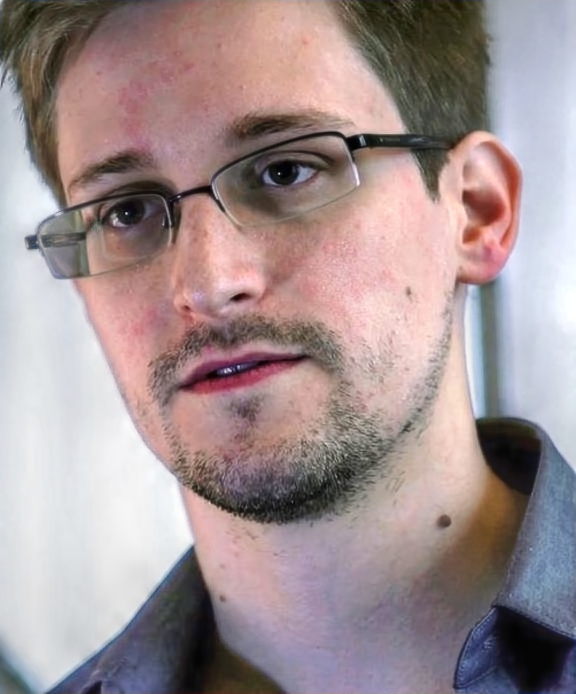
Corporate fraud does not collapse on its own. It is exposed by individuals who possess specific knowledge, face real personal risk, and decide to act anyway. The pattern repeats across decades and industries: an insider observes conduct they cannot reconcile with what the public and shareholders are being told, raises concerns internally, is ignored or threatened, and eventually goes outside the organization — to a regulator, a journalist, or Congress. What follows is the documented record of individuals who took that path and the consequences, legal and institutional, that followed.

Mark Felt and Watergate: The Template (1972)
William Mark Felt Sr. was Associate Director of the FBI — the second-highest position in the Bureau — when the Watergate break-in occurred on June 17, 1972. For more than two years, Felt served as the primary covert source for Washington Post reporters Bob Woodward and Carl Bernstein, guiding their reporting under the pseudonym "Deep Throat." His identity remained secret until he confirmed it himself in a 2005 Vanity Fair article at the age of 91.
Felt's motivations were not entirely idealistic. He was reportedly passed over for the FBI directorship after J. Edgar Hoover's death in 1972, a slight he reportedly resented. He was later convicted (and subsequently pardoned by President Reagan) of authorizing illegal break-ins against Vietnam War protesters. The historical significance of Watergate does not rest on Felt's personal motivations. It rests on what his information enabled: documented reporting that connected the White House to a criminal cover-up and produced the first presidential resignation in U.S. history.
The Watergate case established a template that would be repeated in corporate contexts: an insider with access to incriminating information, a route to external disclosure, and an institution — in this case the press — capable of processing and publishing that information. What it did not produce was durable whistleblower protection law. That would come later, driven by corporate disasters.
Jeffrey Wigand and Big Tobacco (1995-1996)
Jeffrey Wigand served as Vice President of Research and Development at Brown and Williamson Tobacco Corporation, the third-largest U.S. tobacco company, from 1989 until his termination in 1993. His role gave him direct knowledge of the company's internal research on nicotine addiction, the deliberate manipulation of nicotine levels to sustain dependency, and the addition of ammonia compounds to cigarettes — a process that increased the speed and intensity of nicotine delivery to the brain.
In 1994, the CEOs of the seven largest U.S. tobacco companies testified before Congress that they believed nicotine was not addictive. Wigand, who was present in the industry at a research level, knew this testimony was false. He was bound by a confidentiality agreement and initially declined to speak publicly. In 1995, he agreed to be interviewed by CBS News's 60 Minutes. CBS initially refused to air the interview under pressure from lawyers who cited the risk of a tortious interference lawsuit from Brown and Williamson. The interview aired in February 1996 after the Wall Street Journal reported on the story independently.
Brown and Williamson filed a lawsuit against Wigand in Mississippi, obtained a restraining order, and waged a sustained campaign to discredit him — a 500-page document alleging personal misconduct was distributed to journalists. Most of the claims were independently investigated and found to be false or unsubstantiated. Wigand was divorced, received death threats, was placed under FBI protection, and lost his healthcare coverage at a time when his child required significant medical care.
The 1998 Tobacco Master Settlement Agreement — under which the four largest U.S. tobacco companies agreed to pay a minimum of $206 billion over 25 years to 46 states and to restrict advertising practices — was the direct legislative consequence of the combination of state attorney general lawsuits, Congressional scrutiny, and public disclosure to which Wigand's testimony contributed. His story was the basis for the 1999 film The Insider.
Erin Brockovich and Pacific Gas and Electric (1993-1996)
Erin Brockovich was a legal clerk — not a lawyer — working for attorney Ed Masry in Hinkley, California, when she noticed that medical records had been included in a real estate case file without explanation. She investigated, discovering that Pacific Gas and Electric had been storing wastewater contaminated with hexavalent chromium (chromium-6) in unlined ponds that had leached into the groundwater supply of Hinkley, a small town in the Mojave Desert.
Chromium-6, used as a corrosion inhibitor in cooling towers, is a known carcinogen when ingested. Internal PG&E documents revealed the company had been aware of the contamination since the 1960s and had consistently downplayed the health risk to regulators and residents. The company had also, on at least one occasion, told residents the water was safe to drink while internally discussing the contamination problem.
In 1996, PG&E agreed to a $333 million settlement — at the time the largest settlement ever paid in a direct-action lawsuit in U.S. history — split among 333 plaintiffs. The case became the subject of the 2000 film and focused long-term legislative and regulatory attention on chromium-6 standards in drinking water. Subsequent investigation identified over 200 cities across the United States with elevated chromium-6 levels in their water supply. The Environmental Working Group used Brockovich's case as a foundation for sustained advocacy on drinking water standards.
Sherron Watkins and the Enron Collapse (2001)
In August 2001, Sherron Watkins was a Vice President at Enron Corporation — then the seventh-largest company in the United States by revenue — when she wrote a one-page memo to Chairman Ken Lay warning that Enron might "implode in a wave of accounting scandals." She described specific special purpose entities — Raptors and Condor vehicles — that she believed were being used to hide hundreds of millions of dollars in losses from Enron's balance sheet.
Watkins's memo did not go to the SEC or to Congress. She gave it to Ken Lay internally, hoping the company would self-correct. Lay referred the memo to the same law firm — Vinson and Elkins — that had helped structure the transactions she was questioning. The firm issued a report finding no significant problems. Enron declared bankruptcy on December 2, 2001 — the largest corporate bankruptcy in U.S. history at the time — wiping out the retirement savings of thousands of employees whose 401(k) plans were heavily invested in company stock.
Watkins's memo became public after Congress subpoenaed Enron documents in early 2002. She testified before the House Energy and Commerce Committee and the Senate Commerce Committee in February 2002. Time magazine named her, along with WorldCom whistleblower Cynthia Cooper and FBI whistleblower Coleen Rowley, as co-Persons of the Year for 2002.
Sarbanes-Oxley: The Direct Legislative Response
The Sarbanes-Oxley Act, signed into law by President George W. Bush in July 2002, was the direct legislative response to Enron, WorldCom, Tyco, and the wave of corporate accounting frauds that followed. Among its provisions: CEOs and CFOs were required to personally certify the accuracy of financial statements, with criminal penalties for false certification. The Act created the Public Company Accounting Oversight Board (PCAOB) to regulate the auditing industry. And critically, Section 806 established federal whistleblower protections for employees of publicly traded companies who report securities fraud — making it illegal to retaliate against them and providing a private right of action. It was the first broad federal whistleblower protection law covering private-sector employees.

Chelsea Manning and the Iraq War Logs (2010)
Chelsea Manning was a U.S. Army intelligence analyst stationed in Iraq when she transmitted approximately 750,000 classified and sensitive military and diplomatic documents to WikiLeaks between late 2009 and early 2010. The disclosure included the Iraq War Logs — 391,832 field reports documenting U.S. military activity in Iraq including unreported civilian casualties, the Collateral Murder video showing a 2007 helicopter attack in Baghdad that killed 12 civilians and two Reuters journalists, 250,000 State Department diplomatic cables, and the Afghan War Diary.
The Iraq War Logs revealed that the U.S. military had tracked at least 109,032 violent deaths in Iraq between 2004 and 2009, including 66,081 classified as civilians — a figure significantly higher than what the Department of Defense had publicly acknowledged. The logs also documented instances in which detainees were transferred to Iraqi security forces who then tortured them, a practice the U.S. was obligated to prevent under international law.
Manning was arrested in May 2010, convicted of violations of the Espionage Act in 2013, and sentenced to 35 years in prison — the longest sentence ever imposed for leaking government secrets to the media at the time. President Obama commuted her sentence in January 2017 after she had served seven years. Her case became a defining one in the debate over the distinction between whistleblowing in the public interest and the unauthorized disclosure of classified information — a distinction that U.S. law did not, at the time, clearly draw.
Reality Winner and the 2016 Election Intelligence Report (2017)
Reality Winner was a 25-year-old NSA contractor in Augusta, Georgia, when she printed and mailed a classified intelligence assessment to The Intercept in May 2017. The document, a five-page NSA report on Russian military intelligence operations against U.S. election infrastructure in 2016, described specific cyberattacks targeting local election officials and voting software companies in the months before the presidential election.
The Intercept published the document in June 2017. Winner was arrested the same day — partially because The Intercept had sent the document to the NSA for comment before publication with creases visible in the scans, allowing investigators to identify the specific printer used and the individual who had accessed the file. She pleaded guilty under the Espionage Act and was sentenced to five years and three months in federal prison, the longest sentence ever imposed for unauthorized release of government information to a reporter at the time.
The intelligence assessment Winner disclosed remains the most specific public documentation of Russian interference in U.S. election infrastructure from a primary intelligence source. The substance of the report was consistent with findings in the subsequent Mueller Report and Senate Intelligence Committee investigation.
Frances Haugen and the Facebook Papers (2021)
Frances Haugen was a product manager on Facebook's civic integrity team when she left the company in May 2021, having spent months systematically copying thousands of internal documents before her departure. A data scientist with a background in algorithmic product design and prior experience at Google, Pinterest, and Yelp, she understood what the documents showed.
The documents — filed with the Securities and Exchange Commission and shared with a consortium of 17 news organizations including the Wall Street Journal, which ran the initial Facebook Files series in September 2021 — established a specific pattern: Facebook's own internal research identified serious harms associated with its platforms, and the company repeatedly chose not to act on that research when doing so would reduce engagement metrics.
Key findings from the internal research: Instagram's own studies found that 32% of teenage girls said that when they felt bad about their bodies, Instagram made them feel worse; the research identified a causal pathway between Instagram use and eating disorders and suicidal ideation in teenage girls. Separately, internal research found that Facebook's algorithm actively amplified inflammatory and divisive content because it generated more engagement, and that the company had reduced the strength of "civic integrity" protections it had implemented around the 2020 U.S. election in the days immediately after the election — over the objections of the researchers who built them — in part to reduce what the company described as the over-correction of conservative content.
Haugen testified before the Senate Commerce Committee on October 5, 2021. Her testimony was notable for its specificity: she was not making general allegations about social media harm. She was citing page numbers in internal documents. She filed eight formal complaints with the SEC alleging that Facebook's public disclosures on these issues were materially misleading to investors.
Facebook (which rebranded to Meta weeks after the hearings) disputed Haugen's characterization of the research, arguing the documents were selectively interpreted. The hearings produced significant legislative momentum behind the Kids Online Safety Act and renewed efforts to update Section 230 of the Communications Decency Act. The FTC separately reopened its investigation into Meta's data practices. The SEC's investigation into whether Meta misled investors about its internal research remained ongoing as of 2024.
Dodd-Frank and the SEC Whistleblower Program
The 2010 Dodd-Frank Wall Street Reform and Consumer Protection Act, passed in response to the 2008 financial crisis, significantly strengthened the legal architecture around financial whistleblowing. Section 922 of the Act created the SEC Whistleblower Program: individuals who provide original information to the SEC that leads to a successful enforcement action with sanctions exceeding $1 million are entitled to an award of 10 to 30 percent of the amount collected.
The program also created anti-retaliation protections allowing whistleblowers to sue employers in federal court and reclaim their jobs, back pay, and attorneys' fees. Unlike Sarbanes-Oxley, which required employees to first report internally, Dodd-Frank allowed direct reporting to the SEC without going through internal channels first — a change that reflected the documented pattern of internal reports being buried or used to identify the reporter.
By fiscal year 2023, the SEC had awarded more than $1.9 billion to over 350 individuals since the program's inception. The largest single award — $279 million — was issued in May 2023 to a single whistleblower who has not been publicly identified. The CFTC's parallel whistleblower program, also created by Dodd-Frank, issued its own record award of $200 million in 2022.
What the Pattern Shows
Across these cases, several patterns repeat. Internal reporting consistently fails: Watkins reported internally at Enron; Haugen's team at Facebook raised objections internally. In each case, the institutional response was to absorb the concern without changing the underlying conduct. The personal cost to the whistleblower is almost always severe before it becomes something else: Wigand lost his marriage and health insurance; Manning served seven years; Winner served five. The institutional response — legal threats, character attacks, confidentiality agreements — is deployed not to address the substance but to deter others.
What has changed over time is the legal infrastructure available to those who go outside. The combination of Sarbanes-Oxley (2002) and Dodd-Frank (2010) created a framework in the financial sector that did not exist when Wigand testified. The Whistleblower Protection Act (1989) covered federal employees but not private sector workers. That gap has narrowed. It has not closed. Employees in industries outside financial services — technology, pharmaceuticals, food production — operate under a patchwork of sector-specific statutes with inconsistent protections.
The documented record of corporate whistleblowing is not primarily a record of heroism, though elements of that are present. It is a record of information asymmetry: institutions that know things the public does not, individuals who cannot reconcile that asymmetry, and the mechanisms — legal, journalistic, legislative — that determine whether the information reaches people who can act on it.