


For most of the twentieth century, the official U.S. government position on unidentified flying objects was simple: they were misidentifications, hoaxes, or the product of overactive imaginations. Project Blue Book closed in 1969 with that conclusion on the record. But internal documents, declassified programs, military sensor data, and a sequence of on-the-record testimonies have systematically dismantled that position over the past decade. What follows is a factual, chronological account of how the most classified subject in modern government became the subject of sworn congressional testimony.
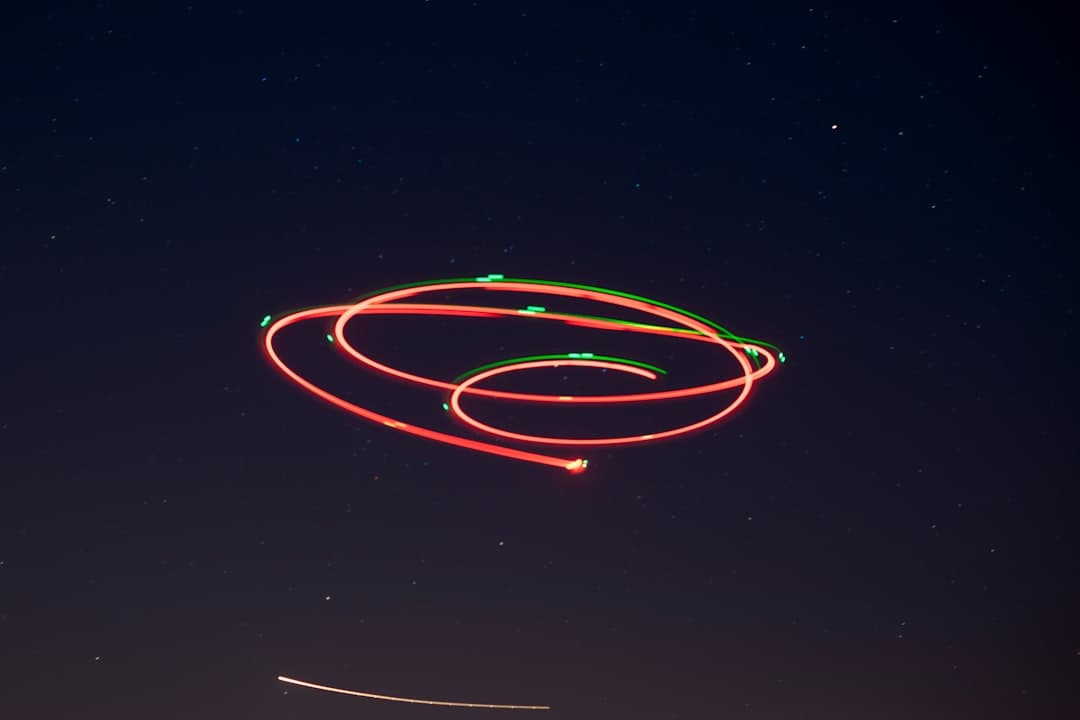
Project Blue Book: The Official Investigation (1952-1969)
The U.S. Air Force launched Project Blue Book in 1952 as the third iteration of its official UFO investigation program, following Project Sign (1947) and Project Grudge (1949). Over its seventeen-year run, Blue Book catalogued 12,618 reported sightings. Of those, 701 were officially classified as "unidentified" — meaning investigators could not determine a conventional explanation even after analysis.
The program was headquartered at Wright-Patterson Air Force Base in Ohio under the direction of officers including Captain Edward Ruppelt, who coined the term "unidentified flying object" as a neutral alternative to "flying saucer." Ruppelt's own 1956 book, The Report on Unidentified Flying Objects, described institutional pressure to explain away sightings regardless of the evidence — a tension that would reappear decades later.
The Condon Report, commissioned by the Air Force in 1966 and led by physicist Edward Condon at the University of Colorado, concluded in 1968 that further study of UFOs was not scientifically justified. This provided political cover for shutting down Blue Book in December 1969. What critics noted at the time — and what subsequent documents confirmed — was that 30% of cases reviewed within the Condon Report remained unexplained by the report's own analysis, a figure Condon did not prominently feature in his summary conclusions.
The files were eventually declassified and are now held at the National Archives. They document a bureaucracy that was simultaneously collecting serious data and publicly minimizing what that data showed.
The Belgium Wave and Physical Evidence (1989-1990)
Between November 1989 and April 1990, Belgium experienced one of the most thoroughly documented mass UFO events in recorded history. More than 13,500 people reported large, silent, triangular craft with bright lights moving at low altitudes across the country. The Belgian Air Force scrambled F-16 fighters on multiple occasions to intercept the objects. On the night of March 30–31, 1990, radar simultaneously tracked the objects from two separate ground stations and from the fighter aircraft themselves.
What made the Belgium wave significant from an evidentiary standpoint was the institutional response. Major General Wilfried De Brouwer of the Belgian Air Force held a press conference and publicly stated that the radar returns were real, the objects were unidentified, and the Air Force had no explanation. He later co-authored academic papers on the subject. The Belgian Society for the Study of Space Phenomena (SOBEPS) produced a two-volume technical study running to nearly 500 pages. This was a government and military establishment openly acknowledging the reality of the phenomena while admitting it had no conventional explanation.
The Phoenix Lights (March 13, 1997)
On the night of March 13, 1997, thousands of Arizona residents — including pilots, law enforcement officers, and then-Governor Fife Symington — reported two distinct events: a V-shaped formation of lights moving silently over the state from Nevada to Tucson, and a separate pattern of orbs that hovered over Phoenix for hours. The National UFO Reporting Center received over 700 calls. Video footage was captured by multiple independent witnesses.
The military's explanation — that the Phoenix lights were flares dropped during training exercises by A-10 aircraft from the Barry Goldwater Range — addressed only the second event, the stationary orbs. It did not account for the earlier formation reported moving across hundreds of miles of airspace at low altitude. Governor Symington initially mocked the event at a press conference, producing an aide dressed in an alien costume. He reversed course in 2007, publicly stating he had personally witnessed the craft and that his earlier response was an attempt to defuse public panic rather than reflect the facts.
AATIP: The Pentagon's Secret Program (2007-2012)
In 2007, at the urging of Senator Harry Reid of Nevada, the Defense Intelligence Agency created the Advanced Aerospace Threat Identification Program (AATIP). The program received approximately $22 million in funding over five years, much of it directed to Bigelow Aerospace Advanced Space Studies (BAASS), a company owned by Robert Bigelow. The funding was tucked into classified defense appropriations bills.
AATIP's focus was not extraterrestrial life in a speculative sense. It was the analysis of advanced aerospace threats that U.S. military personnel were encountering and could not identify. The program produced dozens of technical reports on topics ranging from invisibility cloaking to warp drive physics — analyses of what would be required to build craft exhibiting the flight characteristics being reported.
Luis Elizondo, an intelligence officer who ran or was closely associated with the program, resigned from the Defense Department in October 2017, citing internal opposition to the program and what he described as a failure to take the subject seriously. He wrote a resignation letter to then-Secretary of Defense James Mattis. Within weeks of his resignation, the program was publicly revealed for the first time.
The 2017 New York Times Revelation
On December 16, 2017, the New York Times published a front-page investigation co-written by Helene Cooper, Ralph Blumenthal, and Leslie Kean revealing the existence of AATIP. The article was accompanied by two declassified videos — later a third was added — of military encounters with unidentified aerial objects. These became known as FLIR1 (the "Tic Tac" video), Gimbal, and GoFast.
The Tic Tac video documented an encounter that had occurred in November 2004 off the coast of San Diego involving the USS Nimitz carrier strike group. Commander David Fravor, a highly experienced Navy pilot with 18 years of service at the time, reported intercepting a 40-foot white object shaped like a Tic Tac that had no wings, no rotors, no exhaust plume, and exhibited acceleration and maneuverability that no known aircraft could match. The object descended from 28,000 feet to sea level in seconds, and when Fravor moved to engage, it accelerated away and vanished. It reappeared on radar 60 miles away within seconds.
Fravor gave on-the-record interviews. Other pilots from the Nimitz group corroborated the account. The radar operators who tracked the object were separately interviewed. The Navy formally acknowledged the videos were real and were taken by Navy personnel. This was the moment the subject crossed from fringe speculation to front-page mainstream news with named, credentialed sources on the record.
Navy UAP Encounters and the 2019-2021 Declassifications
Between 2019 and 2021, the Navy and then the Pentagon took a series of unprecedented steps. In April 2019, the Navy issued new guidelines for pilots to report UAP encounters, explicitly acknowledging the subject as a serious safety and intelligence concern. In April 2020, the Pentagon officially released the three UAP videos that had circulated online, stating they were released "in order to clear up any misconceptions by the public on whether or not the footage that has been circulating was real."
Multiple additional Navy pilot encounters were documented for 2014 and 2015 off the East Coast, involving the USS Theodore Roosevelt strike group. Lieutenant Ryan Graves, an F/A-18 pilot, stated that his squadron observed UAPs daily for months. Some appeared on radar but not with the naked eye. Others were visible but produced no radar return. In June 2021, the Office of the Director of National Intelligence released a nine-page preliminary assessment on UAPs, the first formal public report from the intelligence community. It catalogued 144 UAP incidents reported by government sources. Of those, exactly one was explained. The remaining 143 were unresolved.
What the UAP Task Force Found
The ODNI report noted that UAP "clearly pose a safety of flight issue and may pose a challenge to U.S. national security." It identified five potential explanatory categories: airborne clutter, natural atmospheric phenomena, U.S. government or industry developmental programs, foreign adversary systems, and a catch-all "other" category. The report declined to attribute most sightings to any of these categories. On the question of whether the objects were foreign adversary technology — Chinese or Russian hypersonic programs — the report noted that if that were true, it would represent "a potential adversary" that had "achieved a breakthrough" beyond anything in the U.S. inventory.
David Grusch and the 2023 Whistleblower Testimony
In June 2023, David Grusch — a decorated Air Force veteran and former intelligence official who had served on the UAP Task Force and as the National Reconnaissance Office's representative to the UAP Task Force — went on the record with journalists Leslie Kean and Ralph Blumenthal (the same reporter who broke the 2017 AATIP story) and independently with The Debrief, an online outlet covering national security.
Grusch's claims were specific and formal. He stated that the U.S. government possessed "intact and partially intact" non-human origin craft, that a multi-decade program of reverse engineering had been conducted under a framework of unacknowledged special access programs that deliberately circumvented congressional oversight, and that individuals had been harmed — physically and professionally — as a result of efforts to suppress disclosure. He filed complaints with the Intelligence Community Inspector General, which found his complaint "credible and urgent" — the legal threshold required before congressional notification.
On July 26, 2023, Grusch testified under oath before the House Oversight Committee's national security subcommittee. Joining him were Commander David Fravor (the Nimitz pilot) and Lieutenant Ryan Graves (the Roosevelt pilot). The hearing was chaired by Representative Glenn Grothman and Representative Tim Burchett. Both Republican and Democratic members treated the testimony seriously. Grusch, under oath, stated he had spoken to "over 40 witnesses" with direct knowledge of programs involving non-human origin materials and that he had been denied access to those programs when he attempted to investigate them through official channels.
NASA administrator Bill Nelson stated separately in 2023 that he believed the UAP phenomenon was real and had briefed members of Congress to that effect. The Department of Defense established the All-domain Anomaly Resolution Office (AARO) in 2022 as the successor UAP investigation body to the UAP Task Force, with a mandate to coordinate across all military branches and the intelligence community.
The Schumer Amendment and Legislative Push
In July 2023, Senators Chuck Schumer and Mike Rounds introduced the Unidentified Anomalous Phenomena Disclosure Act, modeled structurally on the JFK Records Act of 1992. The amendment would have established a review board with the authority to compel declassification of UAP-related government records and required disclosure of any retrieved materials or reverse-engineering programs.
The amendment passed the Senate 56–40 as an attachment to the 2024 National Defense Authorization Act. In December 2023, House-Senate conference negotiations stripped the most sweeping disclosure provisions from the final NDAA, reportedly under pressure from elements of the intelligence community. A scaled-back version passed, requiring the executive branch to report on UAP programs to the congressional intelligence committees. Schumer publicly stated that the intelligence community had lobbied against the bill and was "very difficult" to work with on the subject.
AARO released its first Historical Record Report in March 2024. The report concluded it had found no verifiable evidence of programs involving extraterrestrial craft or materials. Grusch and his legal team disputed the methodology, arguing the report did not contact key witnesses and that AARO lacked access to the compartmented programs in question.
What Is Actually Established by the Public Record
It is important to separate what the public record establishes from what remains contested. The following are not disputed: the U.S. government ran a classified UAP investigation program funded by defense appropriations; military personnel operating advanced sensor platforms have repeatedly encountered objects they could not identify and that exhibited flight characteristics outside known aerodynamics; those encounters were documented, reported through official channels, and analyzed; the government declassified video footage and formally acknowledged it; a credentialed intelligence official filed a formal whistleblower complaint that was found credible by the ICIG; and that complaint resulted in sworn congressional testimony.
What remains unverified in open sources: the specific claim that non-human origin craft or materials are in government possession. Grusch's testimony established that he was told this by named sources he claims to have interviewed. It did not constitute independent physical evidence.
The trajectory of this subject over the past decade mirrors documented patterns in other areas of government secrecy: internal programs acknowledged long after they ran, sensor data treated as credible by insiders and dismissed publicly, and whistleblowers describing retaliation for pursuing disclosure. Whether the ultimate explanation is foreign adversary technology, uncharacterized natural phenomena, or something more anomalous, the government's engagement with the subject has been documented to be substantially deeper — and longer — than any official public position acknowledged until 2017.