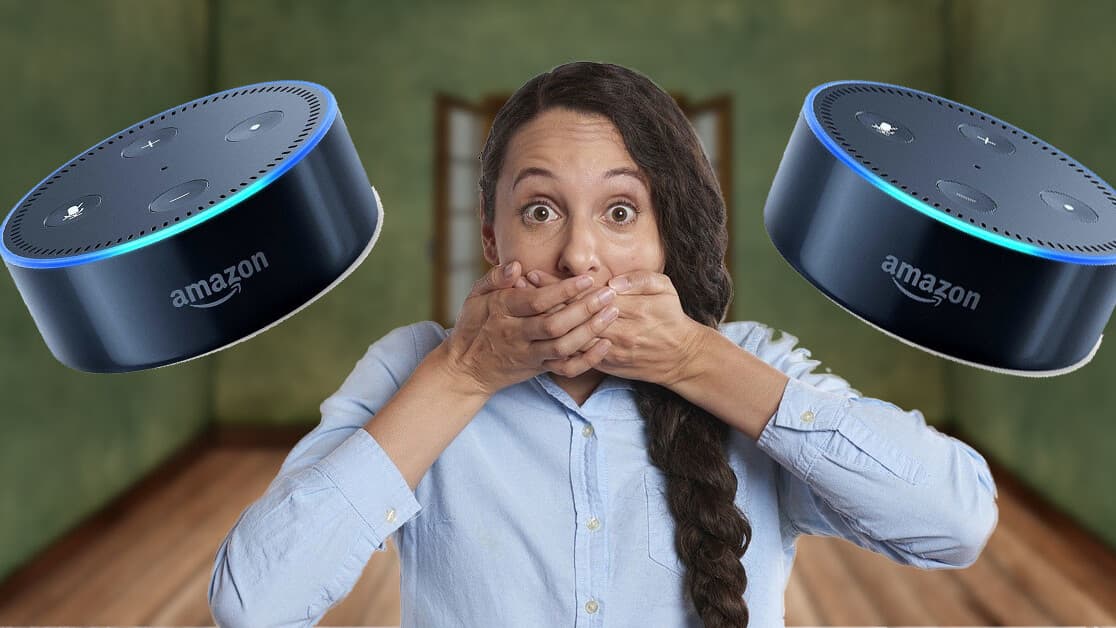
Amazon's Alexa device recorded family conversation and sent audio to random contact without permission. Company initially denied widespread privacy violations.
“This was an extremely rare occurrence and we have implemented additional safeguards to prevent this from happening.”
From “crazy” to confirmed
The Claim Is Made
This is the moment they called it crazy.
A Portland family received an unexpected message: their Amazon Alexa had recorded a private conversation about hardwood flooring and sent the audio file to a random contact in their phone. They hadn't asked it to do anything. The device was simply sitting in their home, supposedly inactive, when it apparently woke itself up and transmitted their words to a stranger.
The incident, reported in 2019, raised an immediate question that millions of Alexa users were asking themselves: if this happened once, how many other times had it happened without anyone noticing?
Users and privacy advocates had long expressed concerns about voice-activated devices recording conversations at all times. The criticism seemed reasonable enough—these devices need to constantly listen for their wake words. But what happened when they accidentally activated? When they misheard background noise as commands? When they simply malfunctioned?
Amazon's initial response was measured. The company acknowledged the incident but characterized it as extremely rare, a one-off technical glitch rather than a systemic problem. They explained that Alexa occasionally misheard words, triggered on accident, and executed unintended commands. The company maintained that their privacy protections were sound and that cases like the Portland family's were anomalies, not evidence of widespread failures.
But as months passed, more reports surfaced. Users across different regions reported similar incidents—Alexa recording conversations it shouldn't have, playing back fragments of private moments, or executing commands nobody gave. In some cases, the device had apparently laughed on its own, adding an unsettling dimension to the privacy concerns. Each new report suggested the problem was more prevalent than Amazon initially admitted.
The company eventually took steps to address the issue. Amazon confirmed that humans reviewed audio recordings to improve Alexa's accuracy, though they said this was optional. They added more transparency to their privacy settings and made it easier for users to delete their voice records. But the damage to trust had already occurred. Users learned that their assumption about how these devices worked—that they only listened after hearing the wake word—was incomplete.
What made this claim particularly significant wasn't that nothing had gone wrong. What mattered was that Amazon had minimized the scope of the problem when the evidence suggested it was more common than acknowledged. The company had the data. They knew how often Alexa misactivated. They had the records of unintended transmissions. Yet the initial response downplayed the scale of the issue.
This case illustrates a pattern worth watching: the gap between what technology companies know internally and what they tell the public. Amazon wasn't lying outright—Alexa's recording of private conversations wasn't intentional. But by characterizing documented incidents as rare flukes rather than engineering challenges that deserved urgent attention, they withheld information that users needed to make informed decisions about having these devices in their homes.
The verification of this claim matters because it established that voice-activated devices were indeed recording and transmitting audio in ways their users didn't expect or intend. That's not alarmism. That's the actual function of the technology, even when it malfunctions. Before trusting your device, you need to know what it's capable of doing—even by accident.
Get the 5 biggest receipts every week, straight to your inbox — plus an exclusive PDF: The Top 10 Conspiracy Theories Proven True in 2025-2026. No spam. No agenda. Just the papers they couldn't hide.
You just read "Amazon Alexa Recorded Private Conversations and Sent Them to…". We send ones like this every week.
No one's said anything yet. Be the first to drop your take.