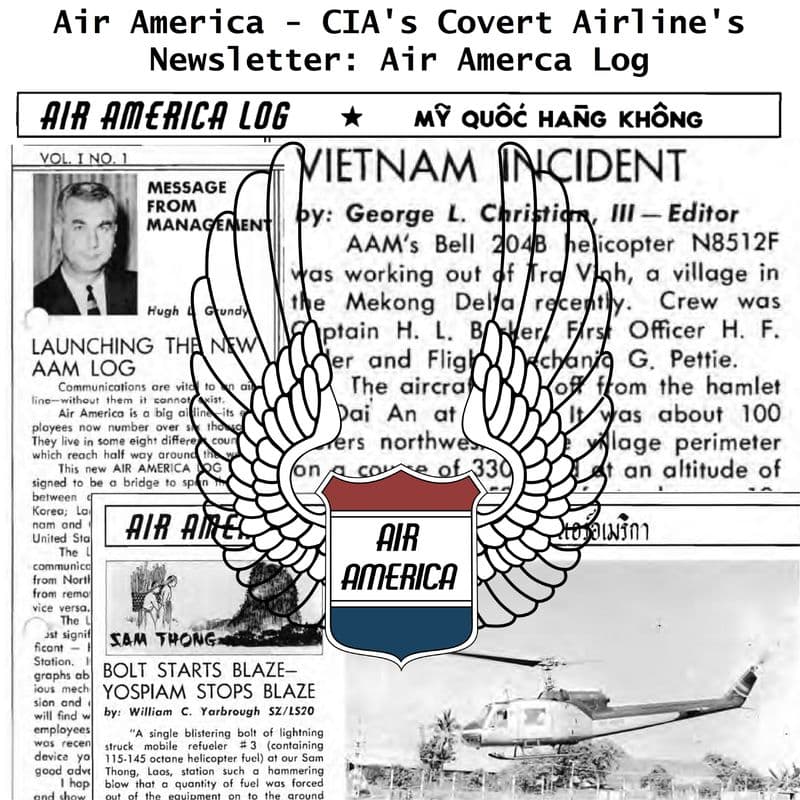
Air America, a CIA proprietary airline operating in Southeast Asia from 1950-1976, was used to transport opium and heroin produced by Hmong allies in Laos. The CIA facilitated drug trafficking by Hmong General Vang Pao to secure his cooperation in the secret war in Laos. Alfred McCoy's 1972 book 'The Politics of Heroin in Southeast Asia' documented the operation, which the CIA tried to suppress before publication.
“The CIA was directly involved in the opium trade, using its airline to transport drugs produced by its allies in the Golden Triangle.”
From “crazy” to confirmed
The Claim Is Made
This is the moment they called it crazy.
When Alfred McCoy began researching the origins of America's heroin crisis in the early 1970s, he stumbled onto a story the U.S. government had no interest in sharing. His 1972 book "The Politics of Heroin in Southeast Asia" presented detailed documentation that Air America—a commercial airline secretly owned and operated by the CIA—had been transporting opium throughout Southeast Asia during the Vietnam War. The CIA's response was swift and unmistakable: they attempted to suppress the book before publication.
Air America wasn't a shadowy operation hidden in basement files. It was a legitimate-looking airline that flew throughout Southeast Asia from 1950 to 1976, operating openly with routes, schedules, and thousands of employees. The CIA maintained ownership through proprietary shell companies, giving the agency an air transport network answerable to no civilian authority. The airline's real utility, however, extended far beyond moving passengers and standard cargo.
The claim that emerged from McCoy's research was straightforward: Air America planes were regularly used to transport opium and processed heroin produced by Hmong tribesmen in Laos. The Hmong, led by General Vang Pao, were crucial allies in the CIA's secret war against communist forces in Laos—a conflict never formally declared or acknowledged by the U.S. government. To maintain Vang Pao's loyalty and cooperation, the agency essentially looked the other way as opium became the region's primary cash crop and Air America became its delivery system.
The official denials came predictably. Government agencies claimed no such trafficking occurred, that McCoy's evidence was circumstantial, and that any drug movement through Air America routes was either unauthorized or coincidental. 's pre-publication pressure on McCoy's work suggested otherwise—institutions typically don't fight to suppress books they believe contain falsehoods.
Get the 5 biggest receipts every week, straight to your inbox — plus an exclusive PDF: The Top 10 Conspiracy Theories Proven True in 2025-2026. No spam. No agenda. Just the papers they couldn't hide.
You just read "The CIA's airline Air America was used to transport opium in…". We send ones like this every week.
No one's said anything yet. Be the first to drop your take.
Confirmed: They Were Right
The truth comes out. Officially documented.
Confirmed: They Were Right
The truth comes out. Officially documented.
What ultimately gave credibility to McCoy's claims was the convergence of multiple sources. Investigative journalists, former Air America employees, and later congressional inquiries documented the airline's involvement in opium transport. The connections between CIA operations, Vang Pao's forces, and drug trafficking became too extensive to dismiss as coincidence. By the time official investigations occurred, the pattern was unmistakable: a U.S. intelligence agency had facilitated large-scale drug trafficking to achieve geopolitical objectives.
The partial verification status matters. McCoy's core claim—that Air America transported opium—proved accurate. The exact scope and the CIA's level of intentionality remain somewhat disputed in official accounts, though the weight of evidence suggests knowledge and facilitation rather than passive tolerance.
This case reveals something crucial about institutional credibility. When government agencies spend resources suppressing a book rather than refuting it point-by-point, skepticism becomes reasonable. When those same agencies later admit to at least some of what the suppressed work claimed, trust erodes further. The Air America story demonstrates that major intelligence operations can function for years with minimal public knowledge, that geopolitical priorities can override domestic drug enforcement, and that official denials deserve scrutiny when they're backed by attempts at censorship rather than evidence. These aren't academic points—they shape how citizens evaluate government claims today.
Beat the odds
This had a 0.3% chance of leaking — someone talked anyway.
Conspirators
~200Network
Secret kept
3.4 years
Time to 95% exposure
500+ years