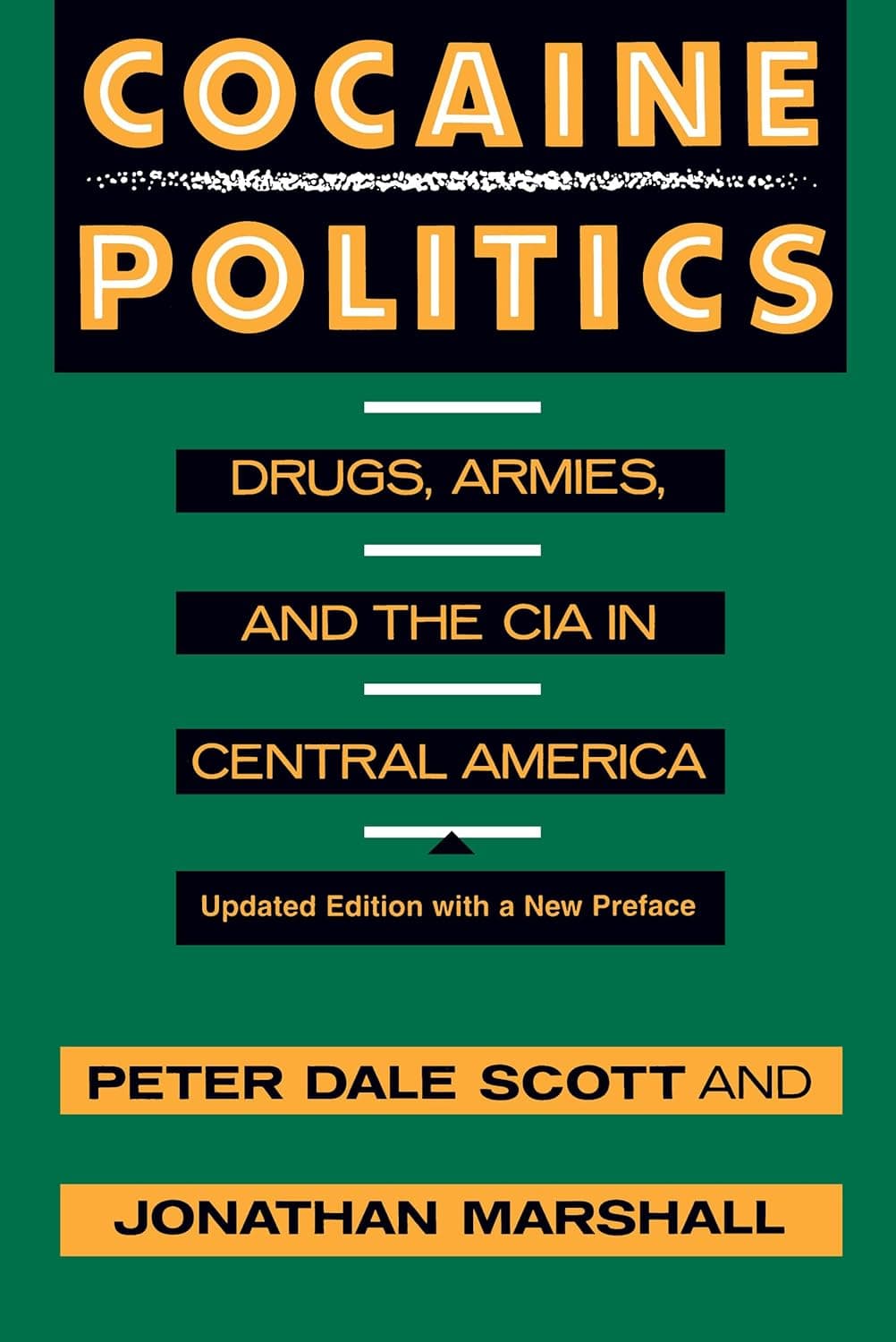
Gary Webb's 1996 'Dark Alliance' series in the San Jose Mercury News documented how CIA-backed Nicaraguan Contras smuggled cocaine into the US, with proceeds funding their war. Webb was attacked by major newspapers and his career destroyed. In 1998, CIA Inspector General Frederick Hitz confirmed the CIA had indeed worked with known drug traffickers and had an agreement with the DOJ to not report drug crimes by CIA assets.
“The CIA knowingly allowed Contra drug traffickers to flood American cities with cocaine to fund their covert war in Nicaragua.”
What they said vs. what the evidence shows
“Webb's series is a post-hoc rationalization of events, lacking solid evidence of a CIA-directed conspiracy to flood Black neighborhoods with crack.”
— Washington Post / New York Times / LA Times · Oct 1996
SourceFrom “crazy” to confirmed
The Claim Is Made
This is the moment they called it crazy.
When Gary Webb published his investigation in the San Jose Mercury News on August 18, 1996, he made an explosive claim: the CIA had knowingly worked with cocaine traffickers in Nicaragua, and those drugs ended up on American streets. The series, titled "Dark Alliance," connected the dots between CIA-backed Contra rebels, Colombian cocaine cartels, and the crack epidemic that devastated Black communities across the country during the 1980s. Webb's reporting was meticulous, drawing on court documents, DEA records, and interviews with traffickers themselves.
The response from establishment media was swift and brutal. Major newspapers including the Los Angeles Times, New York Times, and Washington Post attacked Webb's credibility rather than his evidence. They claimed he was chasing conspiracy theories, that his sources were unreliable, that he was drawing connections that didn't exist. The articles were coordinated enough that some observers wondered if there was unofficial pressure behind the scenes to discredit him. Webb's career never recovered. He struggled to find work, his reputation poisoned by papers far larger than his own.
But Webb had documented something real. In 1998, two years after his original reporting, CIA Inspector General Frederick Hitz released a comprehensive report that confirmed Webb's core allegation. Hitz's investigation found that the CIA had indeed worked with known drug traffickers in Central America during the Contra war. More damning still, the report revealed that the CIA had maintained an agreement with the Department of Justice to not report drug crimes committed by CIA assets and contractors. The arrangement essentially gave a license to traffickers who worked for American intelligence interests.
's own internal investigation confirmed that cocaine had moved through channels connected to Contra supply operations and that the agency was aware of this activity. Hitz's team documented that some CIA officials knew about the drug trafficking and did little to stop it. The Inspector General's report was thorough enough that it could not be dismissed as partisan or conspiratorial—it was the CIA examining itself.
Get the 5 biggest receipts every week, straight to your inbox — plus an exclusive PDF: The Top 10 Conspiracy Theories Proven True in 2025-2026. No spam. No agenda. Just the papers they couldn't hide.
You just read "The CIA facilitated cocaine trafficking by Contra rebels, fu…". We send ones like this every week.
No one's said anything yet. Be the first to drop your take.
Confirmed: They Were Right
The truth comes out. Officially documented.
Confirmed: They Were Right
The truth comes out. Officially documented.
What makes this case particularly relevant today is how it unfolded. Webb was right, but he paid a devastating personal price for saying so. He eventually took his own life in 2004, never fully vindicated during his lifetime. The newspapers that dismissed him eventually acknowledged their reporting had been inadequate, though this admission came years later and reached far fewer people than the initial attacks.
The Dark Alliance case reveals something troubling about institutional accountability. A reporter did his job, documented government malfeasance, and was systematically discredited. The vindication came only after his career was destroyed, filtered through official government channels rather than public understanding. Many Americans still don't know this happened or that it was verified.
This matters because it speaks to a fundamental problem: how do citizens assess claims about government actions when powerful institutions have incentives to suppress or deny inconvenient truths? Webb's experience suggests that being right about something serious isn't enough. The mechanisms that generate and spread credibility—major media outlets, official denials, coordinated dismissal—can work against the truth even when evidence exists to prove it. That's the real lesson of Dark Alliance.
Beat the odds
This had a 0.2% chance of leaking — someone talked anyway.
Conspirators
~200Network
Secret kept
2.1 years
Time to 95% exposure
500+ years