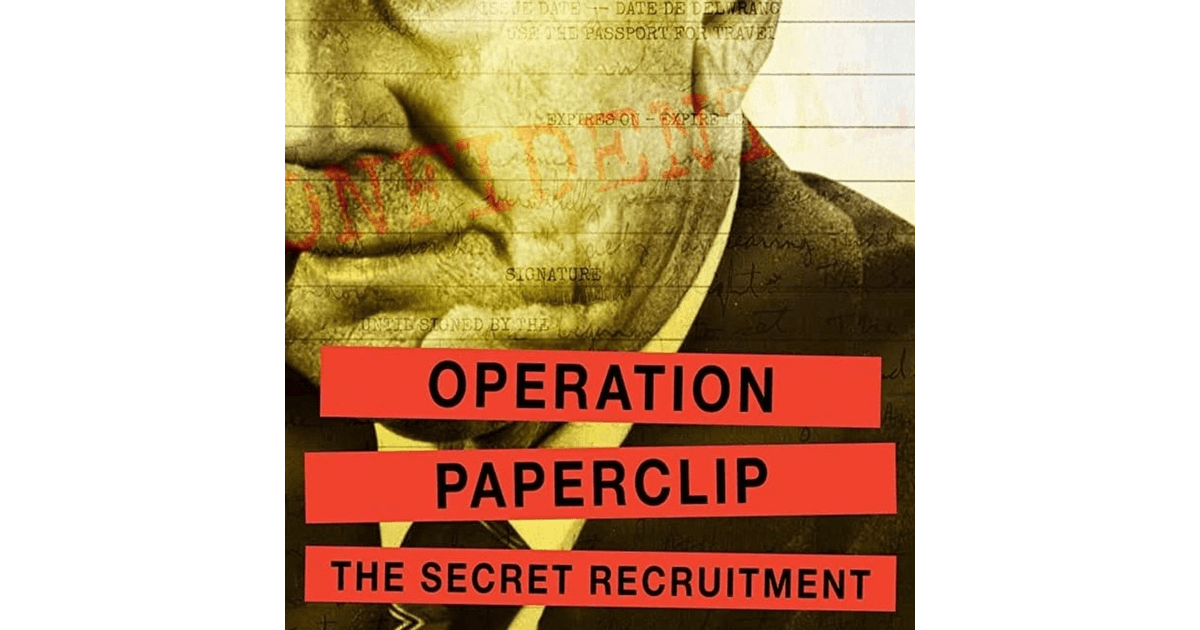
The CIA and military secretly brought over 1,600 Nazi scientists to America, falsifying records to hide their war crimes and SS membership.
“Only scientists with clean records who could contribute to national defense were recruited”
From “crazy” to confirmed
The Claim Is Made
This is the moment they called it crazy.
The end of World War II brought a peculiar moral reckoning for the United States. While Allied forces prosecuted Nazi leadership at Nuremberg, American intelligence agencies were simultaneously negotiating secret deals with some of the Third Reich's most valuable scientific talent. What began as a classified recruitment program would become one of the most consequential—and troubling—decisions in Cold War history.
In the years immediately following Germany's surrender in 1945, U.S. military and intelligence officials faced a strategic calculation. Soviet forces were advancing across Eastern Europe, and American planners feared Moscow would claim Nazi scientists and their research before Washington could. Rather than allow German expertise in rocketry, chemical weapons, and other advanced fields to fall under Soviet control, the U.S. decided to get there first.
Operation Paperclip, the classified program tasked with this recruitment, brought over 1,600 German scientists to America. The scale of the operation was staggering, but so was the moral compromise it required. Many of these scientists weren't merely Nazi party members—they were active participants in war crimes. Some had conducted experiments on concentration camp prisoners. Others had designed weapons intended for genocide. Yet American officials systematically falsified their records, removing evidence of SS membership, war crimes, and Nazi party affiliation from their files before bringing them stateside.
For decades, the official narrative downplayed what had actually happened. The government acknowledged bringing German scientists to America, but characterized them as apolitical technicians whose wartime activities were either exaggerated or irrelevant to their scientific value. When questions arose, officials insisted that thorough vetting procedures were in place and that the program posed no moral hazard.
Get the 5 biggest receipts every week, straight to your inbox — plus an exclusive PDF: The Top 10 Conspiracy Theories Proven True in 2025-2026. No spam. No agenda. Just the papers they couldn't hide.
You just read "CIA recruited Nazi war criminals through Operation Paperclip…". We send ones like this every week.
No one's said anything yet. Be the first to drop your take.
The historical record, however, tells a different story. Declassified documents and investigative research have confirmed that the U.S. military and intelligence community knew exactly who they were recruiting. They deliberately concealed the records of Nazi party membership and documented war crimes. Take the case of Wernher von Braun, the rocket scientist who became the public face of America's space program. Von Braun had been an SS officer and had overseen a slave labor operation at the Peenemünde rocket facility where thousands of prisoners died. His file was scrubbed before his arrival in America. Similar patterns repeated across the program.
The implications of Operation Paperclip extend far beyond historical accounting. The program demonstrated that American institutions would abandon stated moral principles when national security interests seemed to demand it. It established a precedent for classified operations conducted without public knowledge or oversight. And it showed that official denials and sanitized narratives could obscure uncomfortable truths for generations.
What makes this claim worth examining today isn't simply that it happened, but what it reveals about institutional accountability. The United States presented itself to the world as the moral victor of World War II, yet simultaneously sheltered Nazi war criminals from prosecution. Government agencies lied about the nature and scope of the program. These weren't mistakes or minor deviations—they were deliberate choices made at the highest levels.
Operation Paperclip ultimately succeeded in its strategic objective. The scientists brought valuable research that accelerated American advances in space exploration and military technology. But the cost was legitimacy. When the full scope of the program eventually became public, it raised uncomfortable questions about which principles American institutions actually believed in, and how willing they were to compromise them under pressure.
Unlikely leak
Only 6.3% chance this would come out. It did.
Conspirators
~200Network
Secret kept
80.7 years
Time to 95% exposure
500+ years