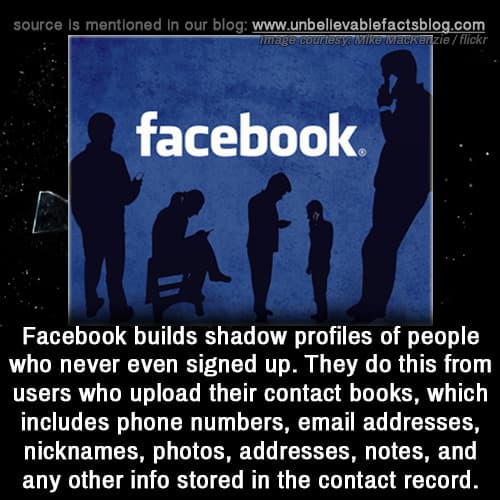
Research confirmed that Facebook creates detailed dossiers on people who have never created an account. Through contact uploads, tracking pixels, and Like buttons embedded across the web, Facebook tracks approximately 40% of all browsing activity for both users and non-users. A 2012 data breach first revealed shadow profile data. In 2018, Mark Zuckerberg admitted to Congress that Facebook collects information on non-users. There is no opt-out mechanism for people who never joined.
“Facebook is tracking you even if you don't have an account. They build shadow profiles on non-users using contact data uploaded by others.”
From “crazy” to confirmed
The Claim Is Made
This is the moment they called it crazy.
Facebook's reach extends far beyond its 3 billion active users. The company maintains detailed digital dossiers on hundreds of millions of people who have never created an account, never agreed to its terms of service, and have no way to opt out.
The concept of "shadow profiles" emerged gradually from security researchers and privacy advocates who noticed something peculiar: Facebook seemed to know far too much about people who claimed they'd never joined. These individuals would receive friend suggestions of people they knew, or encounter eerily targeted ads despite never installing the platform. The question became unavoidable: how was this possible?
For years, Facebook dismissed these concerns. Company representatives suggested that such profiles were merely artifacts of the signup process—incomplete records that were never activated or monetized. The implication was reassuring but vague: nothing to worry about, certainly nothing systematic. When pressed on the details, the company offered little transparency about what data it collected on non-users or how it was used.
The first crack in this narrative came in 2012 when a data breach exposed shadow profile data, demonstrating that these weren't hypothetical constructs but actual, functioning databases. Researchers began examining Facebook's technical infrastructure more closely and discovered the mechanisms: contact uploads from users' email and phone contacts, tracking pixels embedded on websites across the internet, and Like buttons that transmit browsing data back to Facebook servers.
The scope proved staggering. Academic research documented that Facebook tracks approximately 40 percent of all web browsing activity globally. This tracking happens regardless of whether someone is logged in, has an account, or has even heard of Facebook. The company's tentacles extend through pixels on news websites, retail sites, and countless other destinations. Every visit, every click, every purchase—it all feeds into shadow profiles.
Get the 5 biggest receipts every week, straight to your inbox — plus an exclusive PDF: The Top 10 Conspiracy Theories Proven True in 2025-2026. No spam. No agenda. Just the papers they couldn't hide.
You just read "Facebook builds 'shadow profiles' on people who never signed…". We send ones like this every week.
No one's said anything yet. Be the first to drop your take.
Confirmed: They Were Right
The truth comes out. Officially documented.
Confirmed: They Were Right
The truth comes out. Officially documented.
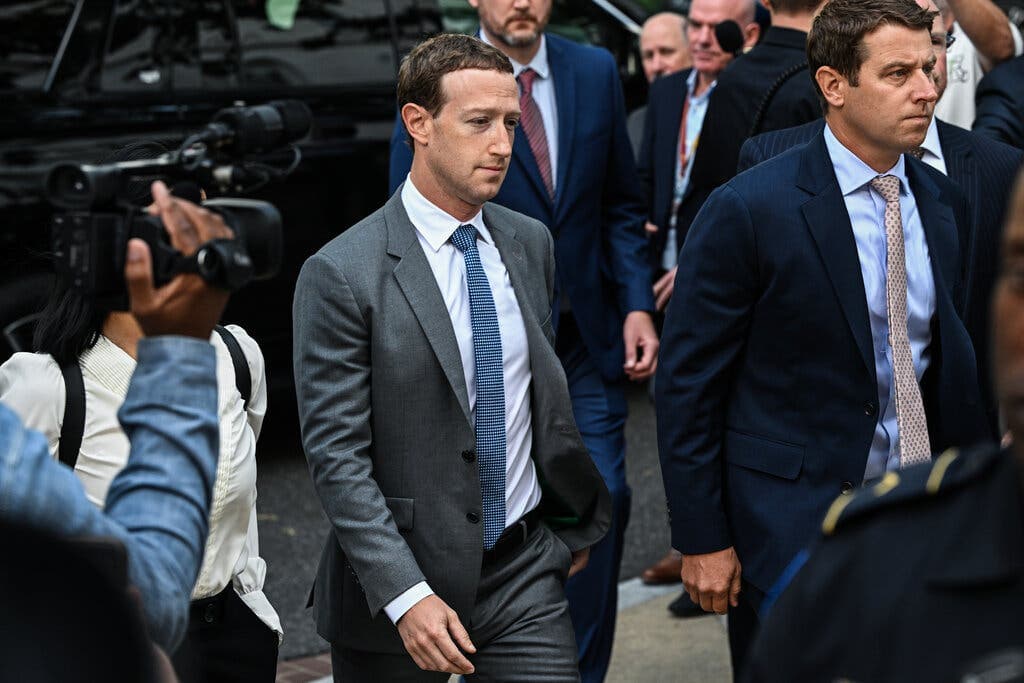
The issue reached a critical inflection point in 2018 when Mark Zuckerberg testified before Congress. When directly asked about collecting information on non-users, he admitted it flatly. There was no longer plausible deniability. The CEO of the world's largest social network acknowledged that Facebook systematically builds profiles on people who never consented to its surveillance.
What makes this particularly significant is the absence of remediation. Facebook offers users privacy controls, settings to limit tracking, and mechanisms to download their data. For the hundreds of millions of people tracked without their knowledge or consent, there is nothing. No opt-out button. No way to request data deletion. No mechanism for recourse.
This matters because it fundamentally challenges how we think about digital consent and corporate power. The original claim—that Facebook builds shadow profiles on non-users—seemed implausible to many because it suggested a kind of technological omniscience that felt dystopian. Yet the evidence accumulated methodically, from research papers to congressional testimony to breach disclosures. What once sounded like conspiracy theory became documented reality through institutional admission.
The verification of shadow profiles exposes a gap between the rhetoric of technology companies and their actual practices. When Facebook claimed to be transparent, it was withholding information about billions of people's digital lives. When privacy advocates raised alarms, they were dismissed. Only when the evidence became undeniable did accountability arrive—and even then, minimal changes followed. The lesson is that institutional transparency and user consent are not guaranteed, even from the companies most publicly committed to them.
Beat the odds
This had a 0.4% chance of leaking — someone talked anyway.
Conspirators
~150Network
Secret kept
7.3 years
Time to 95% exposure
500+ years