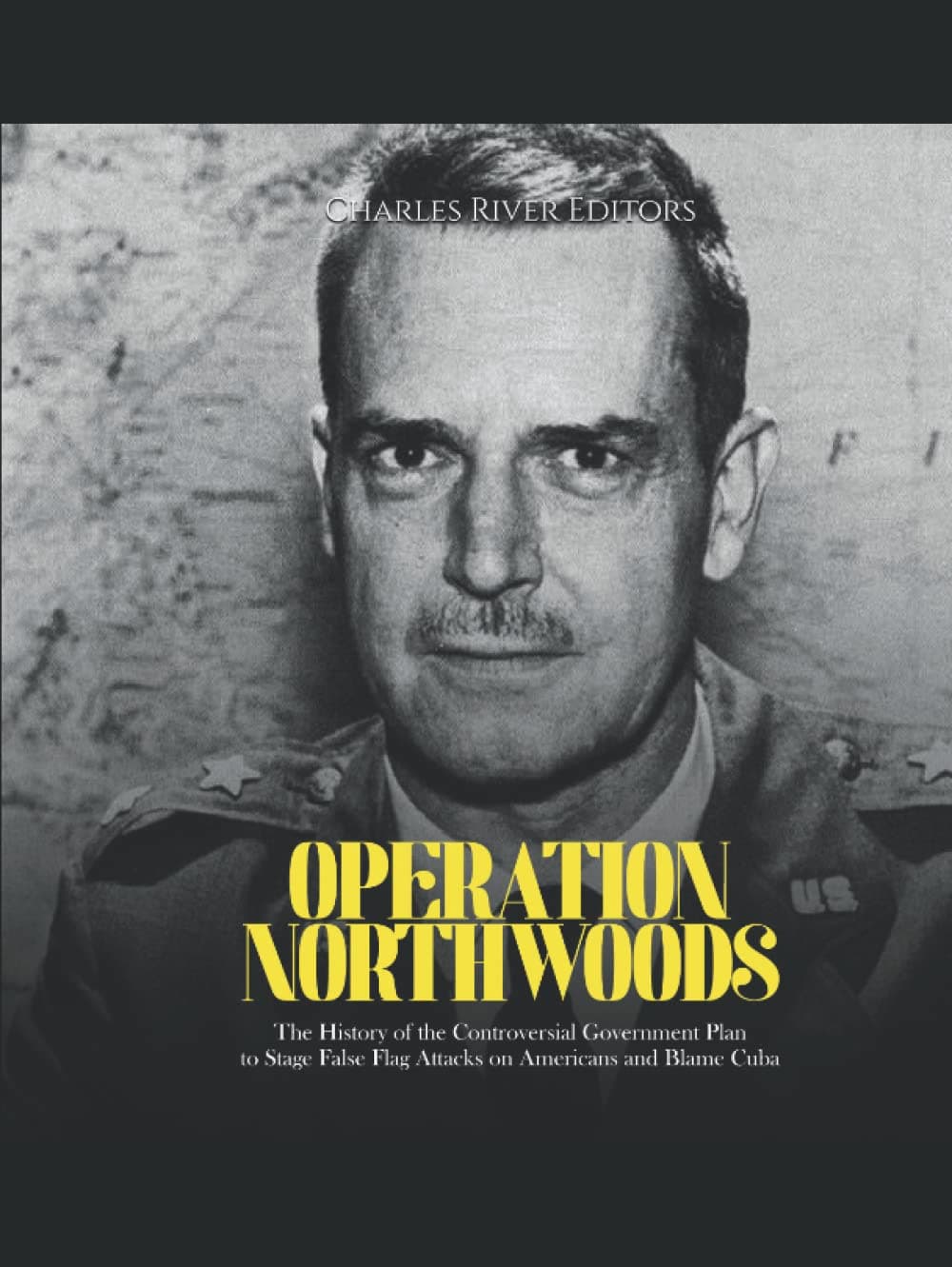
Declassified Joint Chiefs of Staff documents revealed plans for staging fake terrorist attacks on U.S. citizens to blame Cuba. The operation included hijacking planes and bombing U.S. cities to manufacture public support for war.
“The U.S. military does not plan operations against American citizens or stage false flag attacks”
From “crazy” to confirmed
The Claim Is Made
This is the moment they called it crazy.
In 1962, the Pentagon's highest-ranking military officials drafted a series of proposals that read like a spy thriller written by the U.S. government itself. These weren't theoretical exercises or worst-case scenarios filed away in a vault. The Joint Chiefs of Staff were actively planning false flag operations—staged terrorist attacks on American soil—specifically designed to trick the American public into supporting a military invasion of Cuba.
The operation had a bureaucratic name: Northwoods. Its purpose was straightforward, if audacious: create enough public outrage to justify military action against Fidel Castro's regime at a time when Cold War tensions had already reached a breaking point over the failed Bay of Pigs invasion.
The proposals themselves were comprehensive and chilling. Military planners suggested hijacking commercial airliners and blaming Cuba for their disappearance. They recommended staging bombings in U.S. cities and fabricating evidence linking them to Castro. One proposal involved detonating a U.S. Navy ship in the Guantanamo Bay harbor and pinning the blame on Cuban forces. Another suggested launching rockets at Florida from Cuba—except the rockets would actually originate from U.S. military installations. The documents even included contingencies for creating a false narrative around the assassination of a political figure.
For decades, this read like the kind of claim that belonged in the fever dreams of conspiracy theorists. The U.S. government simply wouldn't orchestrate attacks on its own citizens to manufacture a war. When historians and researchers brought up these allegations, official channels dismissed them as unfounded speculation. Without hard evidence, the claim remained in the shadows of Cold War mythology.
Then, in the 1990s, the Archive obtained and published the actual Pentagon documents through the . There they were—the original memoranda, signed and dated, bearing the official seals and signatures of the Joint Chiefs of Staff. The proposals weren't hypothetical. They were presented as actionable plans, complete with implementation details and cost estimates.
Get the 5 biggest receipts every week, straight to your inbox — plus an exclusive PDF: The Top 10 Conspiracy Theories Proven True in 2025-2026. No spam. No agenda. Just the papers they couldn't hide.
You just read "Operation Northwoods: Pentagon Planned False Flag Attacks to…". We send ones like this every week.
No one's said anything yet. Be the first to drop your take.
The documents revealed that these proposals were submitted to Secretary of Defense Robert McNamara in March 1962, just months after the Bay of Pigs debacle. They represented serious institutional thinking from the military's highest command. What stopped them from being executed remains somewhat unclear, though historians note that President Kennedy and McNamara rejected the proposals. The operation never happened.
But the fact that it was proposed at all fundamentally challenges how we understand government accountability and the limits of acceptable planning. This wasn't a rogue general acting alone. This was the Joint Chiefs of Staff—the institutional military leadership of the United States—seriously proposing to attack American civilians as a pretext for war.
The Operation Northwoods documents matter because they establish a documented precedent. They show that the U.S. government did, in fact, seriously consider false flag operations as a tool of foreign policy. They demonstrate that institutional distrust of official narratives isn't always paranoia—sometimes it's justified skepticism grounded in declassified evidence.
For public trust, the lesson is uncomfortable: the gap between what governments claim they would never do and what they actually plan to do can be vast. Operation Northwoods didn't remain theoretical because of moral restraint. It remained theoretical because one administration chose not to execute it. That distinction matters.
Beat the odds
This had a 2% chance of leaking — someone talked anyway.
Conspirators
~200Network
Secret kept
25 years
Time to 95% exposure
500+ years