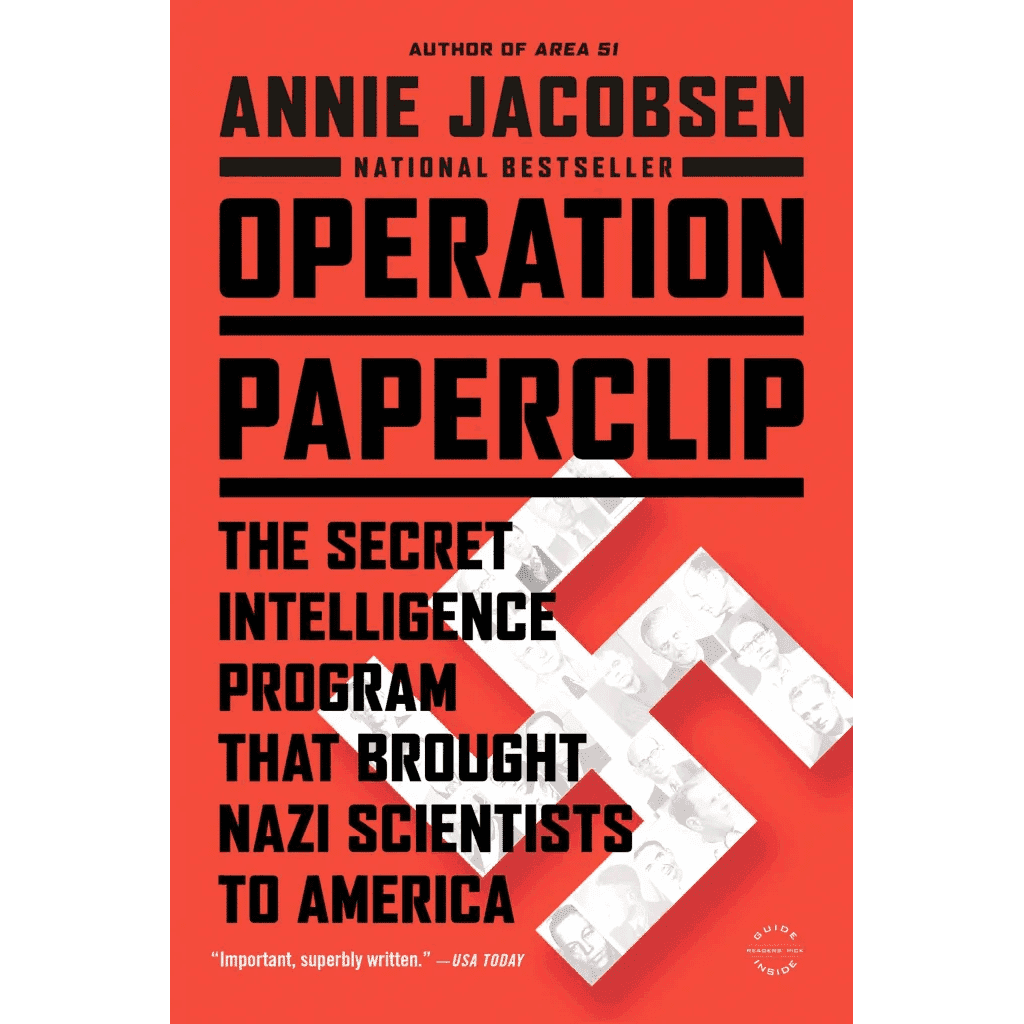
Operation Paperclip was a secret US government program that brought over 1,600 German scientists, engineers, and technicians to America after WWII, including former Nazis and war criminals. Wernher von Braun, who used concentration camp slave labor, became NASA's chief rocket engineer. The program was initially denied, then gradually declassified. Many recruits had their Nazi records sanitized to bypass President Truman's anti-Nazi order.
“The US government secretly imported Nazi scientists after the war, gave them new identities, and put them in charge of our space and weapons programs.”
What they said vs. what the evidence shows
“The German scientists brought to the United States are carefully screened and none are or have been Nazis or war criminals.”
— US State Department (1940s-1950s) · Jan 1947
SourceFrom “crazy” to confirmed
The Claim Is Made
This is the moment they called it crazy.
The United States government made a deliberate choice after World War II that would shape the space race, military technology, and Cold War strategy for decades. They systematically recruited over 1,600 German scientists, engineers, and technicians—many of them active members of the Nazi Party—and brought them to America under a classified program called Operation Paperclip. This wasn't a minor footnote in history. It was an organized effort to erase Nazi records and circumvent explicit presidential orders.
When rumors first circulated in the 1950s and 1960s that America had imported Nazi scientists, the official response was categorical denial. The U.S. government insisted that Paperclip involved only "de-Nazified" scientists with clean records, recruited purely for their technical expertise during the emerging Cold War. President Harry Truman had explicitly ordered that no known Nazis be brought into the country. The program, officials claimed, adhered to his directive completely. Military and intelligence officials went further, suggesting that those raising questions about Nazi recruitment were either misinformed or spreading dangerous conspiracy theories.
The reality emerged slowly through declassified documents and investigative research. The National Archives eventually released records showing that the vetting process was minimal and often deliberately falsified. Scientists had their Nazi Party memberships removed from official files. War crimes were overlooked or redacted. The most prominent example was Wernher von Braun, Nazi Germany's chief rocket scientist, who became the driving force behind the American space program and NASA's director of the Marshall Space Flight Center. Von Braun had held an SS rank and his V-2 rocket program depended on concentration camp slave labor—facts that were omitted from his recruitment file.
Get the 5 biggest receipts every week, straight to your inbox — plus an exclusive PDF: The Top 10 Conspiracy Theories Proven True in 2025-2026. No spam. No agenda. Just the papers they couldn't hide.
You just read "Operation Paperclip: The US secretly recruited over 1,600 Na…". We send ones like this every week.
No one's said anything yet. Be the first to drop your take.
Confirmed: They Were Right
The truth comes out. Officially documented.
Confirmed: They Were Right
The truth comes out. Officially documented.
The documentary evidence is unambiguous. Military personnel involved in Paperclip knew they were circumventing Truman's orders. Classified memos show officers discussing how to reclassify Nazi scientists' records. The National Archives documents directly contradict the government's public statements from that era. Over 1,600 individuals were processed through the program, many of whom had documented Nazi affiliations. Some were scientists of legitimate importance; others had dubious credentials but useful security clearances and technical knowledge.
What makes this significant isn't merely that deception occurred—governments have always kept secrets. What matters is the pattern it reveals. The government made a cold calculation that recruiting Nazi scientists outweighed the embarrassment of violating presidential orders or confronting uncomfortable truths about their recruits. They then systematically lied about it, dismissing all questions as unfounded suspicion. Only through persistence and the eventual release of classified documents did the real story emerge.
Operation Paperclip demonstrates why institutional transparency and accountability matter. When governments successfully hide major programs and rewrite official narratives, citizens lose their ability to make informed decisions about what their nation does in their name. The claims about Paperclip weren't believed not because they lacked merit but because they contradicted official denials from credible institutions. For decades, people asking legitimate questions were treated as conspiracy theorists. The truth was always there in declassified files—we just needed the institutional will to examine them honestly.
Beat the odds
This had a 4.1% chance of leaking — someone talked anyway.
Conspirators
~200Network
Secret kept
52.6 years
Time to 95% exposure
500+ years