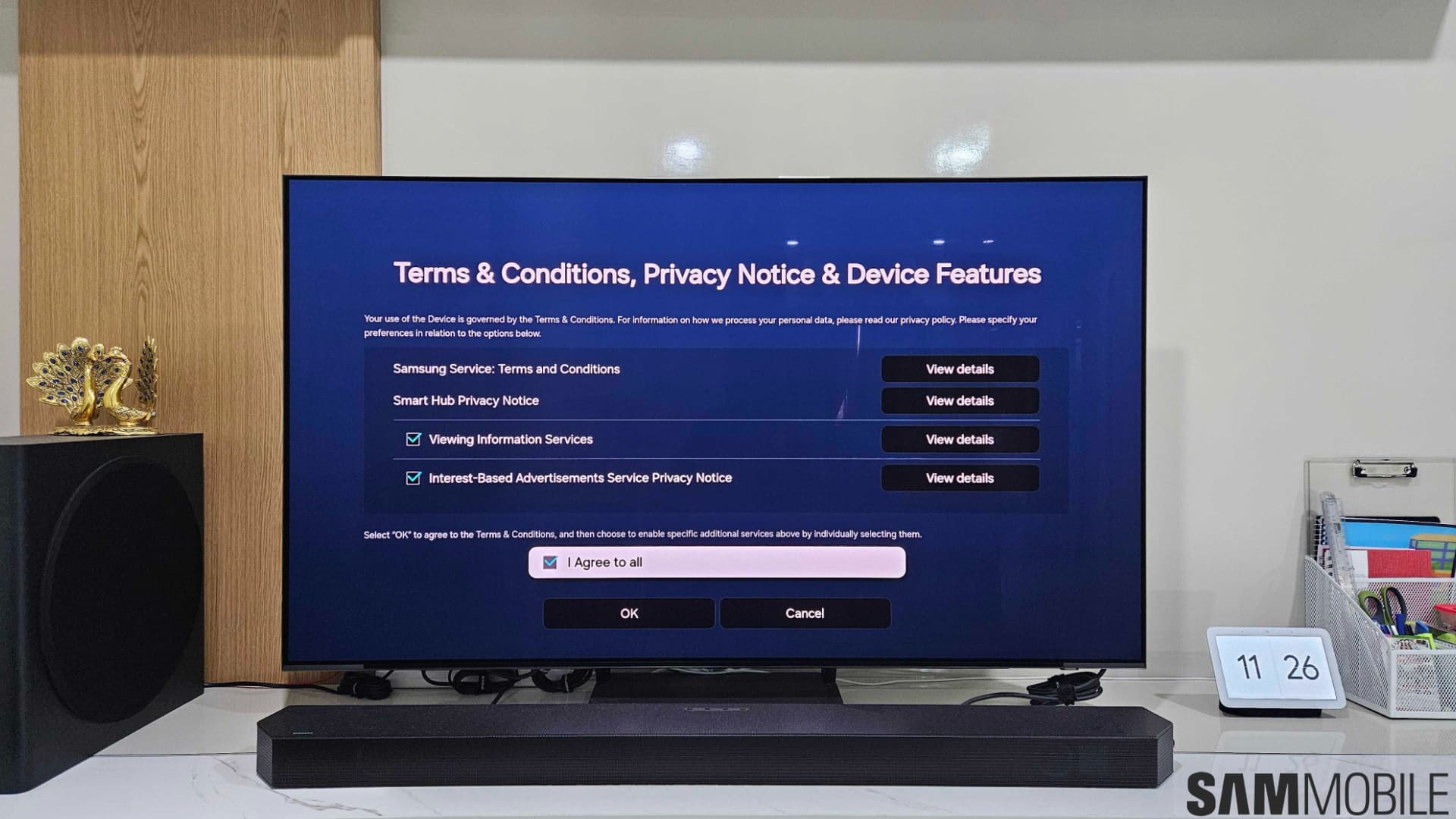
In February 2015, Samsung's SmartTV privacy policy revealed that 'if your spoken words include personal or other sensitive information, that information will be among the data captured and transmitted to a third party.' The company sent voice data to Nuance Communications for processing, and researchers found the data was transmitted unencrypted. Even opting out of voice recognition did not stop data collection — pre-programmed commands were still captured and analyzed. This confirmed years of 'paranoid' warnings about smart TVs spying.
“Your smart TV is always listening to your conversations and sending them to third parties. Even when you think it's off, it's recording you.”
From “crazy” to confirmed
The Claim Is Made
This is the moment they called it crazy.
For years, people who worried that their smart televisions were listening to their conversations were dismissed as paranoid. Tech enthusiasts and security experts raised the alarm about Samsung's voice-activated SmartTV feature, but their concerns were largely met with eye-rolls and reassurances from the company that the technology was secure and beneficial. Then, in February 2015, Samsung's own privacy policy made it impossible to dismiss these warnings any longer.
The privacy policy contained a remarkable admission buried in its terms and conditions. Samsung explicitly warned customers that "if your spoken words include personal or other sensitive information, that information will be among the data captured and transmitted to a third party." This wasn't vague corporate language—it was a direct acknowledgment that the company was recording private conversations and sending them elsewhere.
The company's public position had always been reassuring. Samsung marketed the voice recognition feature as a convenient way to control your television. They suggested the technology was secure, encrypted, and designed purely to improve the user experience. The implicit message was clear: trust us. When security researchers and privacy advocates raised concerns, they were often portrayed as alarmists who didn't understand how modern technology worked. The mainstream tech press largely echoed Samsung's talking points.
But the privacy policy revealed something crucial. Samsung wasn't processing voice data in-house. The company had contracted with Nuance Communications, a third-party voice recognition company, to handle the processing of all recorded speech. This meant that sensitive conversations—including financial information, health details, or anything else discussed in front of the television—were being routed to an external company. Researchers who examined the data transmission found another critical problem: the information was traveling across networks unencrypted, vulnerable to interception.
Get the 5 biggest receipts every week, straight to your inbox — plus an exclusive PDF: The Top 10 Conspiracy Theories Proven True in 2025-2026. No spam. No agenda. Just the papers they couldn't hide.
You just read "Samsung's own privacy policy confirmed Smart TVs record conv…". We send ones like this every week.
No one's said anything yet. Be the first to drop your take.
Confirmed: They Were Right
The truth comes out. Officially documented.
Confirmed: They Were Right
The truth comes out. Officially documented.
What made this worse was the limited control users actually had. Even if someone disabled the voice recognition feature, thinking they had opted out of surveillance, Samsung's system continued capturing and analyzing pre-programmed commands. The data collection wasn't something you could truly turn off—it was fundamental to how the device operated.
The verification of this claim represented more than just a privacy violation, though it certainly was that. It underscored a broader problem with how technology companies introduce surveillance capabilities into homes. Samsung hadn't hidden the practice—it was in their privacy policy, the document most people never read. The company assumed, reasonably, that most customers wouldn't discover the admission. When they did, the damage to public trust was substantial.
This case illustrates why transparency matters in technology, and why dismissing privacy concerns as paranoia can be dangerous. The people who worried about smart TV surveillance weren't wrong—they were just early. Today, as voice-activated devices proliferate throughout our homes, the lessons from Samsung's SmartTV should serve as a reminder. When skepticism about corporate surveillance is vindicated by the company's own documents, it becomes harder to dismiss future warnings. The question isn't whether companies are listening. Sometimes, they'll tell you themselves.