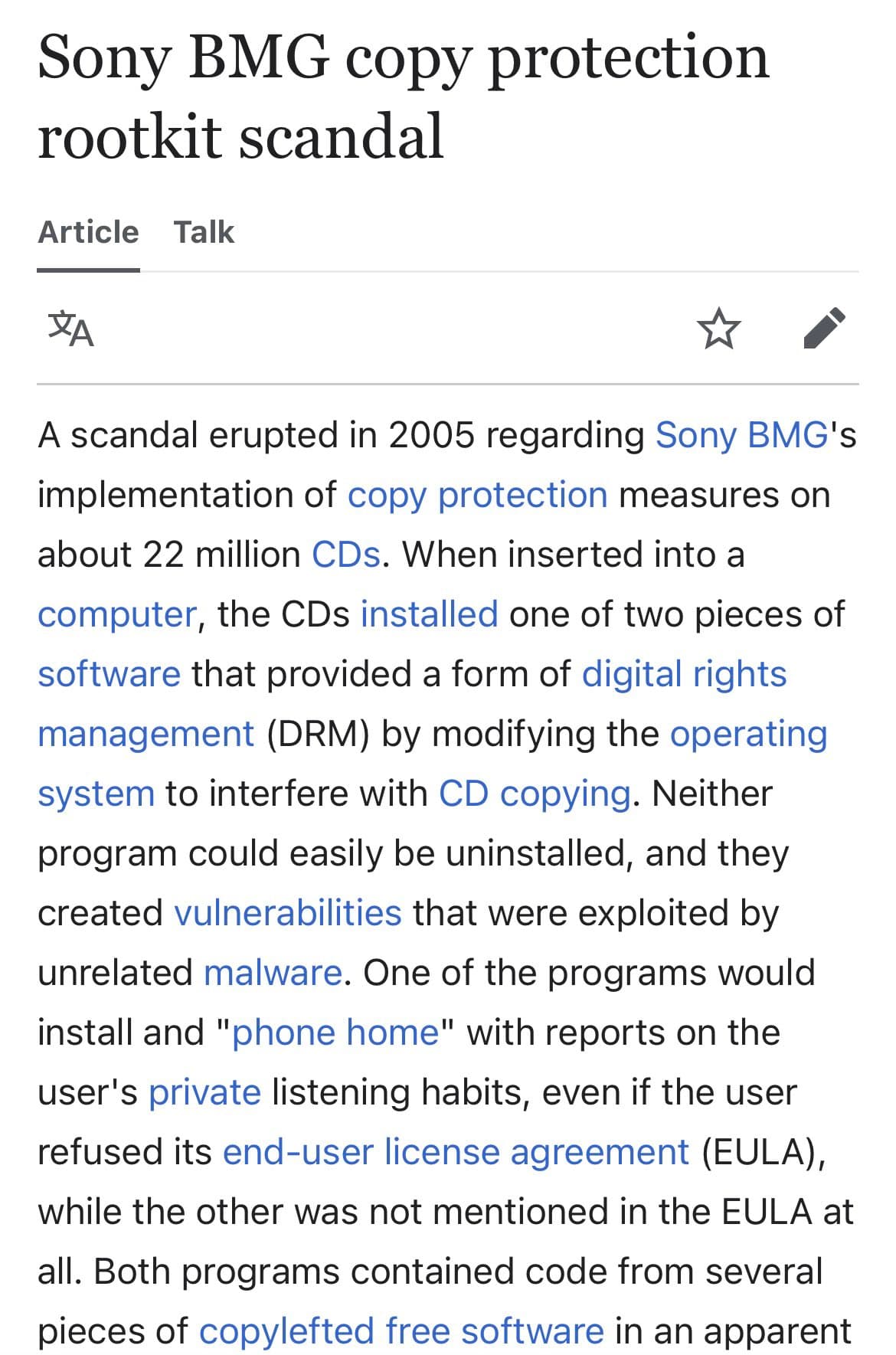
Sony BMG installed hidden rootkit software on customer computers through music CDs that opened security vulnerabilities. The company initially denied wrongdoing before facing multiple lawsuits.
“The software is necessary for copyright protection and poses no security risk to users”
From “crazy” to confirmed
The Claim Is Made
This is the moment they called it crazy.
When millions of people bought Sony BMG music CDs in 2005, they had no idea they were installing software designed to spy on their listening habits and lock down their computers. What Sony called "copy protection" was actually a rootkit—malicious code that hid itself from users and security systems while creating serious vulnerabilities in their personal computers.
The discovery came from security researcher Mark Russinovich, who noticed suspicious system files on his computer after playing a Sony music CD. In October 2005, he published his findings, revealing that Sony had secretly installed rootkit software on tens of millions of computers without informed consent. The rootkit masked its presence from the operating system itself, making it nearly impossible for users or antivirus software to detect or remove. Beyond the obvious privacy violation, the hidden code created security holes that malicious hackers could potentially exploit.
Sony BMG's initial response was dismissive and misleading. The company downplayed the severity of the software, calling it merely an anti-piracy measure. Executives suggested that users who were concerned about the rootkit simply "didn't understand" the technology. When pressed, Sony claimed that the software was harmless and that removing it would be difficult—a statement that proved technically untrue. The company's casual attitude toward installing hidden surveillance code on customer computers without permission bordered on contempt.
But the evidence was irrefutable. Independent security experts confirmed Russinovich's findings. Computer scientists documented exactly what the rootkit could do and how it compromised system security. Major antivirus companies began detecting and identifying the software, confirming it met the definition of malicious code. Most damaging of all, security researchers showed that the rootkit could easily be turned into a tool for corporate or criminal spying. Sony's own technical documentation, which the company had tried to keep confidential, revealed executives knew exactly what they were installing.
The fallout was swift and severe. Within weeks, Sony faced multiple lawsuits from customers and state attorneys general. The company eventually issued a recall and offered rootkit removal software—which itself contained security vulnerabilities. Sony paid out settlements totaling millions of dollars. The scandal damaged the company's reputation in the technology community and served as a watershed moment in discussions about digital rights and corporate accountability.
What made this case significant wasn't just that Sony had done something wrong—it was that they were caught doing something most people wouldn't have imagined a major corporation would attempt. The rootkit scandal proved that trusted companies would secretly install surveillance software on customer computers if they thought they could get away with it. It exposed the gap between what corporations claimed to do and what their actual code was doing.
Twenty years later, this case remains relevant. It demonstrated why users need transparency about what software is installed on their devices, why security matters more than corporate interests, and why skepticism toward corporate claims is justified. Sony knew what they were doing when they installed that rootkit. When they were caught, they tried to minimize the problem. Only external pressure and public exposure forced accountability. That pattern should concern anyone who uses technology today.
Get the 5 biggest receipts every week, straight to your inbox — plus an exclusive PDF: The Top 10 Conspiracy Theories Proven True in 2025-2026. No spam. No agenda. Just the papers they couldn't hide.
You just read "Sony Secretly Installed Rootkit Spyware on Music CDs in 2005". We send ones like this every week.
No one's said anything yet. Be the first to drop your take.