A former ByteDance employee alleged the CCP used a 'God credential' backdoor to access TikTok user data at will, including monitoring Hong Kong pro-democracy protesters in 2018. Leaked audio from 80 internal TikTok meetings (BuzzFeed, June 2022) revealed Chinese employees 'repeatedly accessed non-public data about US TikTok users,' with one engineer stating 'Everything is seen in China.' TikTok's CEO admitted Chinese employees could access US user data. Chinese law compels ByteDance to turn over data if requested.
“TikTok is a data collection tool for the Chinese government. Chinese engineers can access everything — your data, your location, your messages — and the CCP has a master key.”
From “crazy” to confirmed
The Claim Is Made
This is the moment they called it crazy.
Confirmed: They Were Right
The truth comes out. Officially documented.
Confirmed: They Were Right
The truth comes out. Officially documented.
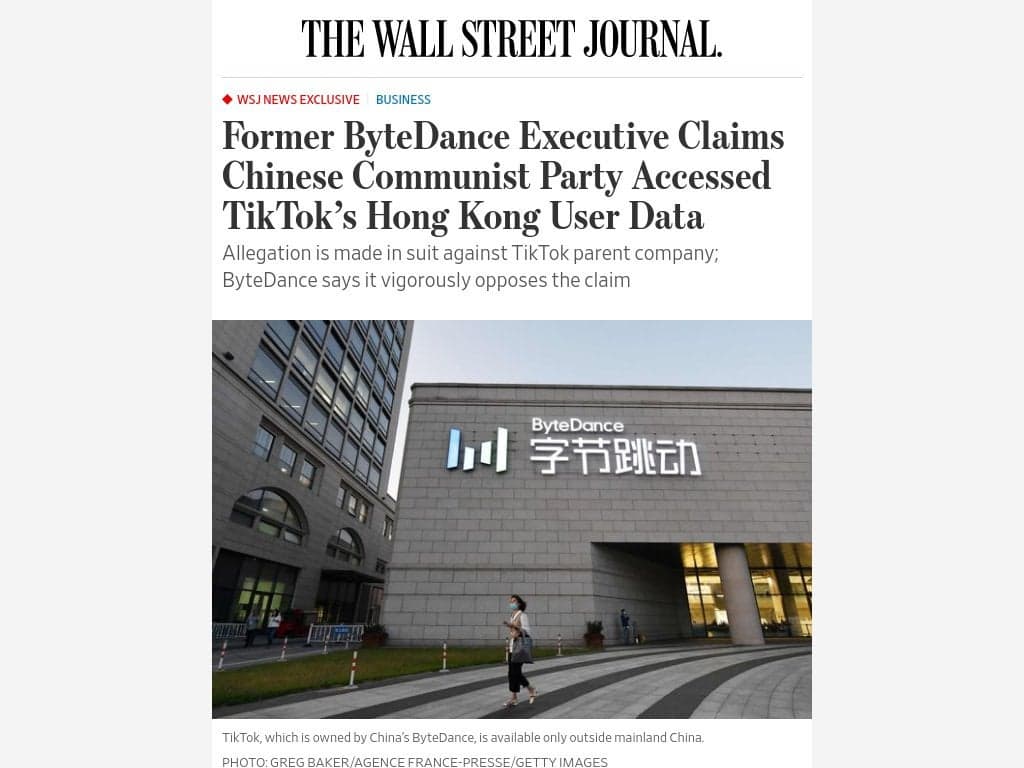
When a former ByteDance executive went public with allegations that China's Communist Party maintained unrestricted "God credential" access to TikTok user data, it sounded like the kind of claim that gets dismissed as paranoid speculation. The accusation was explosive: that CCP officials could surveil American citizens at will, and had reportedly used this capability to monitor Hong Kong pro-democracy protesters as far back as 2018.
TikTok's initial response was predictable denial. The company and its Chinese parent ByteDance maintained that such access didn't exist, that their systems were designed to protect user privacy, and that American data was segregated from Chinese oversight. For years, this became the official narrative—a company defending itself against what critics called fearmongering.
Then BuzzFeed published leaked audio from 80 internal TikTok meetings in June 2022. The recordings didn't reveal abstract theories or speculation. They captured Chinese ByteDance employees on multiple occasions explicitly discussing their access to American user data. One engineer stated plainly: "Everything is seen in China." Another employee described accessing "non-public data about US TikTok users" repeatedly. The audio documented something TikTok had denied: Chinese nationals employed by the parent company had direct visibility into sensitive information about American users.
What made this verification particularly damning was the source material itself. These weren't leaked documents that could be questioned or dismissed as forgeries. They were actual internal communications, captured in real time, where ByteDance employees discussed their data access as a routine operational matter. The specificity and casualness of these conversations suggested this wasn't a bug or anomaly—it was built into the system's architecture.
TikTok's CEO subsequently acknowledged the reality of what the audio revealed. Chinese employees could and did access US user data. The company couldn't maintain its previous categorical denials once confronted with direct evidence from its own meetings.
The legal framework made this even more significant. Chinese law doesn't give ByteDance a choice about data requests from the government. The country's national security law effectively compels any Chinese company to turn over information when requested by authorities. ByteDance's parent company structure and regulatory environment meant that any data vulnerable to Chinese employee access was also vulnerable to Chinese government seizure.
Why this claim mattered—and why verification of it matters—goes beyond corporate malfeasance. TikTok had nearly 150 million American users during this period, many of them teenagers and young adults. The app collected detailed information about user behavior, location, contacts, and preferences. The verified existence of CCP access to this information represented a potential counterintelligence vulnerability at scale.
The public trust dimension here is crucial. For years, both TikTok and some policymakers suggested concerns about Chinese data access were overblown or unfounded. Users relied on the company's assurances. The leaked audio proved that skepticism was justified, that there were legitimate reasons to question these assurances, and that officials had known about access pathways they weren't disclosing publicly.
This case illustrates why documentation matters. Claims about data surveillance are difficult to verify without concrete evidence. Once that evidence emerges—especially from the companies themselves—the entire conversation shifts. Doubt transforms into documented fact.
Get the 5 biggest receipts every week, straight to your inbox — plus an exclusive PDF: The Top 10 Conspiracy Theories Proven True in 2025-2026. No spam. No agenda. Just the papers they couldn't hide.
You just read "Former ByteDance exec reveals Chinese Communist Party had 'G…". We send ones like this every week.
No one's said anything yet. Be the first to drop your take.