

Origins: 1956 and the Internal Security Mandate
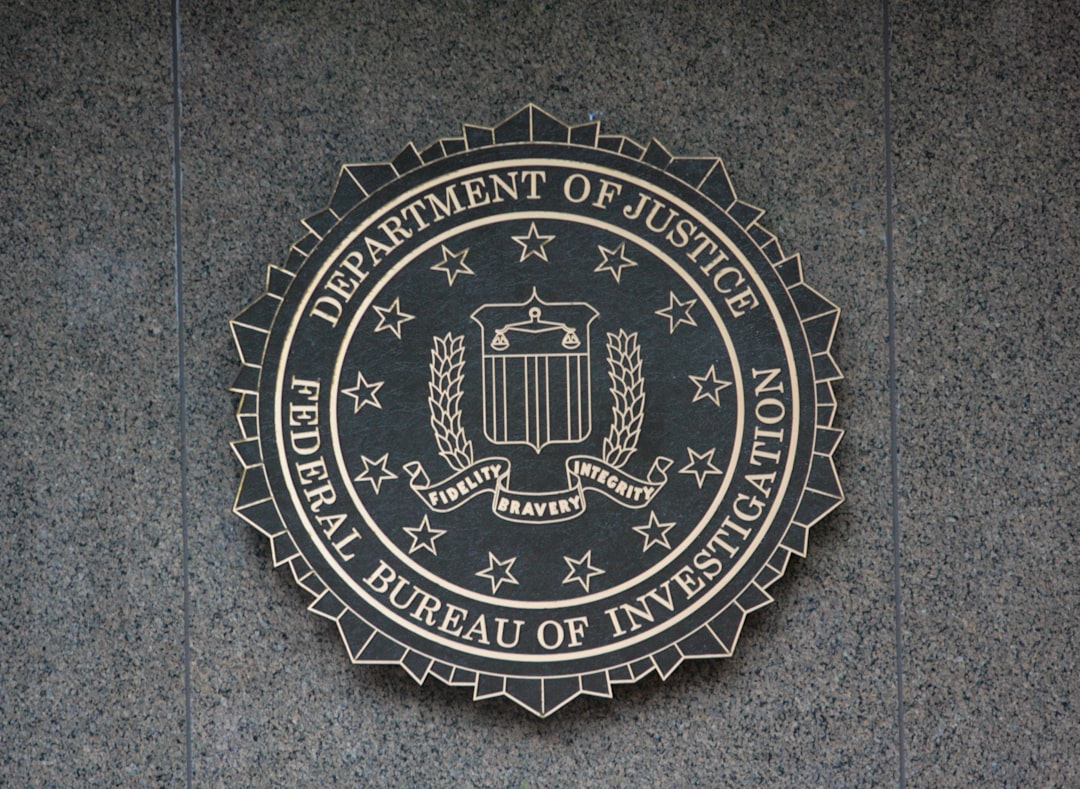
COINTELPRO — an acronym for Counter Intelligence Program — was formally initiated on August 28, 1956, under FBI Director J. Edgar Hoover. The program's first target was the Communist Party USA. In the context of the Cold War and McCarthyism's peak years, this focus carried political cover. The language of anti-communism made aggressive domestic surveillance appear, to many in government, both reasonable and necessary.
From the start, however, the program's tactics went far beyond surveillance. Internal FBI documents from 1956 onward describe a range of "dirty tricks" designed not merely to monitor targets but to destroy them. The Bureau sent anonymous letters to employers, family members, and associates of targets. It planted informants inside organizations. It created and distributed forged documents designed to discredit leaders. It manufactured conflicts between allied groups. It worked to get targets fired, divorced, imprisoned, or, in some cases, killed.
These were not improvised field decisions. They were authorized at the highest levels of the FBI and often required Hoover's personal sign-off. The paper trail — later exposed — shows systematic approval of individual operations against named individuals, with detailed written justifications and post-operation assessments.
As the 1950s gave way to the 1960s, COINTELPRO expanded its scope dramatically. The targets were no longer primarily Communist Party members. They were the leaders and organizations at the center of the most consequential domestic social movements in American history.
Martin Luther King Jr.: Target Number One
The FBI's campaign against Martin Luther King Jr. is one of the most thoroughly documented cases of government harassment of an individual in American history. It is not disputed. The relevant records are partially declassified and available at the National Archives.
Hoover's surveillance of King began in the late 1950s. By 1963, following King's "I Have a Dream" speech at the March on Washington, the FBI designated King the "most dangerous Negro in America." An internal memo from FBI Assistant Director William Sullivan in August 1963 described the civil rights movement as a potential vehicle for communist influence and argued for aggressive action to discredit its leadership.
The FBI obtained authorization from Attorney General Robert F. Kennedy to wiretap King's phones. The justification given was suspected communist influence within the Southern Christian Leadership Conference. The surveillance quickly extended beyond this rationale. The Bureau bugged hotel rooms King stayed in across the country, compiling recordings of his private conversations and extramarital affairs.
In November 1964 — shortly after King was awarded the Nobel Peace Prize — the FBI mailed him an anonymous letter. The letter, later confirmed to have been drafted by Sullivan and approved by Hoover, threatened to expose King's personal life unless he took a specific action. The letter stated: "There is only one thing left for you to do. You know what it is." King and his advisers interpreted it as an instruction to commit suicide. The letter was accompanied by recordings from Bureau surveillance.
The FBI also worked to prevent King from meeting with Pope Paul VI, attempted to have him replaced as the leader of the civil rights movement, and sought to block his receipt of honorary degrees and speaking invitations. These operations are documented in FBI memoranda reviewed by the Senate's Church Committee in 1975–1976.
The question of FBI involvement in King's 1968 assassination remains historically contested. What is not contested is that the FBI was actively engaged in a systematic effort to destroy his reputation, his organization, and his effectiveness as a civil rights leader in the years leading up to his death.
The Black Panthers and the Tactics of Destruction
In September 1968, Hoover declared the Black Panther Party "the greatest threat to the internal security of the country." A dedicated COINTELPRO sub-program targeting the BPP was activated. The Bureau's stated goal was to "prevent the rise of a 'messiah' who could unify and electrify the militant black nationalist movement."
FBI tactics against the Black Panthers were among the most aggressive documented in any COINTELPRO sub-program. Agents sent forged letters designed to provoke violent conflict between the BPP and other organizations, including the US Organization (United Slaves) in Southern California. At least four Black Panther members were killed in confrontations that the FBI's forged correspondence helped instigate between 1969 and 1970. Bureau documents confirm that agents were aware the letters were likely to produce violent results.
Informants were placed inside the Chicago chapter of the Black Panthers. One of them, William O'Neal, served as chief of security for BPP Illinois chapter leader Fred Hampton. O'Neal provided the FBI with a detailed floor plan of Hampton's apartment at 2337 West Monroe Street in Chicago.
At approximately 4:45 a.m. on December 4, 1969, fourteen Chicago police officers from the Cook County State's Attorney's office conducted a raid on that apartment. Fred Hampton was shot twice in the head at close range while he lay in bed. He was 21 years old. BPP member Mark Clark was also killed. Four other Panthers were wounded. Seven survivors were charged with attempted murder, charges later dropped when evidence emerged that the raid had been conducted under FBI direction and the floor plan had been provided by O'Neal.
A federal grand jury investigation later concluded that at least 98 of approximately 99 shots fired in the raid had been fired by police, not by the Panthers. The raid's coordination with the FBI's informant network was confirmed in subsequent civil litigation. Hampton's family reached a settlement with the City of Chicago, Cook County, and the federal government in 1982 for $1.85 million without any admission of liability.
The documentation linking the FBI's informant operation to Hampton's death is not complete. What is documented is: the informant's existence and his FBI handler relationship, the provision of the floor plan, the FBI's prior knowledge of the raid, and the post-raid congratulatory communications within the Bureau praising the operation.
Other COINTELPRO Targets
The Black Panthers and Martin Luther King Jr. received the most extensive COINTELPRO attention, but they were far from the only targets. The documented program included operations against:
The American Indian Movement (AIM)
AIM was subjected to intensive COINTELPRO-style operations beginning in the early 1970s, including infiltration, informant placement, and coordination with local law enforcement to harass and arrest movement leaders. The period following the 1973 Wounded Knee standoff saw a dramatic increase in violence on the Pine Ridge Reservation, with over 60 AIM members and supporters killed between 1973 and 1976. Internal FBI documents released through FOIA requests in subsequent decades confirmed the Bureau's active role in destabilizing the reservation and the movement during this period.
The Antiwar Movement
Organizations opposing the Vietnam War, including Students for a Democratic Society (SDS), Vietnam Veterans Against the War (VVAW), and numerous campus antiwar groups, were subjected to infiltration and disruption. The FBI placed informants in student organizations, manufactured internal conflicts, and shared intelligence with military counterintelligence units conducting their own domestic surveillance operations.
The Socialist Workers Party
The Socialist Workers Party was subjected to FBI infiltration for over 30 years. In a 1986 federal court ruling, the Bureau was found to have engaged in 204 illegal break-ins, 20,000 days of wiretapping, and the interception of 12,000 pieces of mail against the SWP. The court ordered the government to pay $264,000 in damages.
The Puerto Rican Independence Movement
Puerto Rican independence organizations were targeted by COINTELPRO operations that, according to documents reviewed by Congress, included the use of forged letters, informants, and coordination with island police to arrest and discredit independence advocates. The FBI maintained files on hundreds of thousands of Puerto Rican residents and citizens.
How COINTELPRO Was Exposed: The Media, Pennsylvania, 1971
COINTELPRO's existence became public not through a congressional investigation, a whistleblower with official access, or a leak to a major newspaper. It was exposed by a small group of activists who broke into an FBI field office.
On the night of March 8, 1971 — the night Muhammad Ali fought Joe Frazier in the "Fight of the Century" — a group calling itself the Citizens' Commission to Investigate the FBI broke into the FBI resident agency in Media, Pennsylvania. They took every document in the office: approximately 1,000 files.
They sent copies to journalists and members of Congress. Most recipients initially refused to publish. The Washington Post, under pressure from the FBI to return the documents, decided to publish after the Nixon administration declined to seek a court injunction. Betty Medsger, the reporter who broke the story, described the documents as revealing "a surveillance program of troubling breadth."
Among the files was a document that used the word "COINTELPRO" — a term previously unknown to the public. The Bureau immediately moved to destroy records and the full scope of the program remained unknown for years. But the word was out. Congressional interest was activated.
J. Edgar Hoover, recognizing the exposure risk, officially terminated COINTELPRO in April 1971. Internal Bureau documents suggest that many operations continued under different administrative designations after the formal termination. The FBI has never provided a definitive accounting of all operations conducted under COINTELPRO or successor programs.
The Church Committee: Congress Investigates
Following Watergate and a series of investigative journalism pieces revealing CIA and FBI domestic operations, the Senate created the Select Committee to Study Governmental Operations with Respect to Intelligence Activities in January 1975. Senator Frank Church of Idaho chaired it. The Church Committee, as it became known, conducted the most comprehensive investigation of U.S. intelligence abuses ever undertaken by Congress.
The Committee reviewed roughly 110,000 documents and conducted 800 interviews over 16 months. Its final reports, published in 1976, filled six volumes. Among the findings:
The FBI had conducted "a sophisticated vigilante operation aimed squarely at preventing the exercise of First Amendment rights of speech and association." The Committee found that COINTELPRO operations had been undertaken against 2,218 groups and individuals between 1956 and 1971, with 2,370 separate approved actions.
The Committee's report on the FBI stated bluntly: "Many of the techniques used would be intolerable in a democratic society even if all of the targets had been involved in violent activity, but COINTELPRO went far beyond that... the Bureau conducted a sophisticated vigilante operation."
The Committee documented the anonymous letter to Martin Luther King, the forged correspondence sent to Black Panther organizations, the use of informants to provoke violence, and the coordination between the FBI and local law enforcement in operations against civil rights organizations.
Congressional findings led to the adoption of the Attorney General's Guidelines for Domestic FBI Operations in 1976, which established new legal standards for domestic intelligence investigations and required Justice Department oversight of FBI counterintelligence programs. The Foreign Intelligence Surveillance Act (FISA) was passed in 1978, creating a dedicated court for intelligence surveillance warrants.
These reforms were real but incomplete. The institutional culture that had made COINTELPRO possible was not eliminated by procedural changes. The Church Committee itself acknowledged this in its final report.
Modern Parallels and Continuing Documentation
COINTELPRO is historical. The pattern it established is not. Documents released through the Freedom of Information Act in subsequent decades have revealed FBI operations against protest movements that bear structural similarity to COINTELPRO tactics — infiltration, surveillance, informant deployment, and coordination with local law enforcement against groups engaged in constitutionally protected activity.
Documented post-COINTELPRO examples include FBI investigation of the Committee in Solidarity with the People of El Salvador (CISPES) in the 1980s, which a congressional investigation found to have been predicated on First Amendment-protected activity. The investigation was terminated when evidence of infiltration became public, and the FBI acknowledged the program had been based on bad intelligence.
More recent FOIA releases have revealed FBI monitoring of Black Lives Matter activists, Occupy Wall Street participants, and environmental protest groups. The 2010 passage of the "Animal Enterprise Terrorism Act" and the FBI's designation of "Black Identity Extremism" as a threat category in a 2017 intelligence assessment attracted significant criticism from civil liberties organizations for echoing COINTELPRO-era targeting logic.
None of these post-COINTELPRO programs have been as comprehensively documented or as clearly authorized at the national level as the original program. But the COINTELPRO record creates a legitimate evidentiary basis for scrutinizing claims that federal law enforcement agencies have engaged in politically motivated surveillance or disruption of domestic political activity. It is not conspiratorial to apply that scrutiny. It is the lesson the Church Committee explicitly asked Congress and the public to draw.
COINTELPRO in the They Knew Database
COINTELPRO is one of the most extensively documented cases across the They Knew platform. Claims related to FBI surveillance, infiltration of civil rights organizations, the Fred Hampton operation, and the Martin Luther King wiretapping program are catalogued in our Intelligence category and Government category, with primary source citations drawn from the Church Committee reports, declassified FBI memoranda, federal court records, and the National Security Archive.
The full definition and historical context of the program is available in our COINTELPRO glossary entry. For a broader overview of government cover-ups that followed a similar trajectory — covert operation, internal dissent suppressed, external exposure, eventual official acknowledgment — see our article on government cover-ups that were exposed.
COINTELPRO also illustrates one of the central arguments behind the They Knew project: that "conspiracy theory" is a category applied selectively, and that some of the most significant conspiracies in modern American history were conducted in plain sight — documented in internal memoranda, authorized at the highest bureaucratic levels, and sustained for years before external exposure forced their acknowledgment.
Conclusion: The Record That Exists
COINTELPRO was a federal program that used the resources of the United States government to surveil, harass, discredit, and in some documented cases facilitate the deaths of American citizens who were exercising constitutionally protected rights. This is not a matter of interpretation. It is documented in federal records, confirmed by congressional investigation, and acknowledged — in carefully chosen language — by the FBI itself.
The people targeted by COINTELPRO — civil rights leaders, antiwar activists, Indigenous rights organizers — were often dismissed as paranoid or extremist when they described government surveillance and harassment. Many of them were right. The documentary record, revealed only after years of legal and investigative effort, confirmed what they said was happening.
Fred Hampton was 21 years old when he was shot in his bed. He had been under FBI surveillance for years. The informant who provided the floor plan of his apartment was paid $300 by his FBI handler for that information. The operation was reviewed internally. Agents congratulated each other afterward.
The Church Committee's final conclusion bears repeating: "Intelligence agencies have undermined the Constitutional rights of citizens... primarily because checks and balances designed by the Framers of the Constitution to assure accountability have not been applied." That sentence was written in 1976. The documents that supported it are public. The question they raise — whether those checks and balances have since been made adequate — is not answered by the fact that COINTELPRO formally ended.
The record is the starting point. What you do with it is the next question.
Primary Sources and Further Reading
- U.S. Senate Select Committee on Intelligence (Church Committee), Final Report, Books I–VI (1976), available at the National Security Archive and Senate.gov
- Ward Churchill and Jim Vander Wall, Agents of Repression: The FBI's Secret Wars Against the Black Panther Party and the American Indian Movement (South End Press, 1988)
- Betty Medsger, The Burglary: The Discovery of J. Edgar Hoover's Secret FBI (Alfred A. Knopf, 2014)
- Kenneth O'Reilly, Racial Matters: The FBI's Secret File on Black America, 1960–1972 (Free Press, 1989)
- Clayborne Carson, The FBI File (Carroll and Graf, 1991) — compilation of FBI files on Martin Luther King Jr.
- Declassified FBI COINTELPRO memoranda, available through the National Security Archive, George Washington University
- Attorney General Edward Levi's guidelines for domestic FBI operations (1976), Department of Justice
- Socialist Workers Party v. Attorney General, 642 F. Supp. 1357 (S.D.N.Y. 1986)
- Settlement records, Hampton v. Hanrahan, N.D. Ill. (1982)
- FBI FOIA Reading Room, available at vault.fbi.gov — includes partially declassified COINTELPRO files