

Government Cover-Ups Exposed — From MKUltra to Mass Surveillance
The history of government secrecy is not a collection of isolated incidents. It is a pattern — a recurring cycle of denial, suppression, and eventual confirmation that has played out across every major intelligence agency and military institution in the Western world.
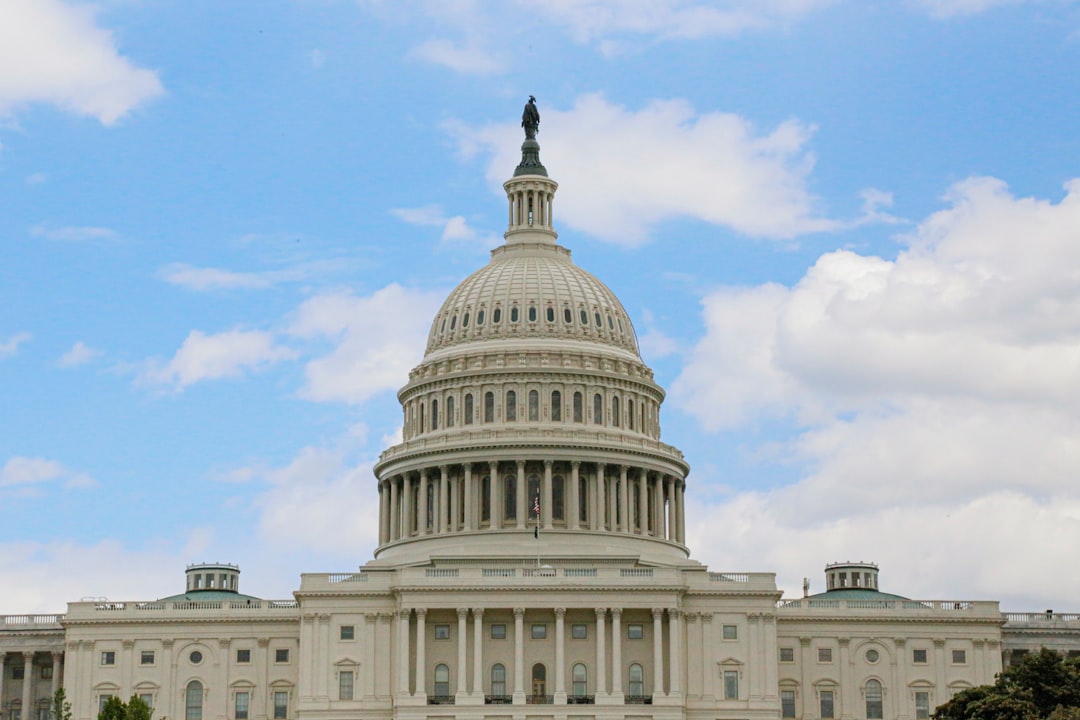
In 1975, Senator Frank Church stood before the cameras and described what his committee had found after eighteen months of investigation into U.S. intelligence agencies. The findings were staggering: the CIA had conducted mind control experiments on unwitting American citizens. The FBI had systematically infiltrated and destroyed domestic political organizations. The NSA had capabilities that, if turned inward, could create a surveillance state from which there would be “no way to fight back.”
Church's warning came fifty years ago. Every element he described not only continued but expanded. The cover-ups documented by his committee were not aberrations — they were prototypes. The techniques of denial, evidence destruction, and institutional resistance to accountability established during the Cold War became the template for every government cover-up that followed.
This article traces the arc of government secrecy from the intelligence abuses of the mid-20th century through the surveillance state of the 21st. It is not a catalog — for that, see our complete list of 50 confirmed conspiracy theories. This is an analysis of the machinery of cover-ups: how they work, why they persist, and what finally breaks them open.
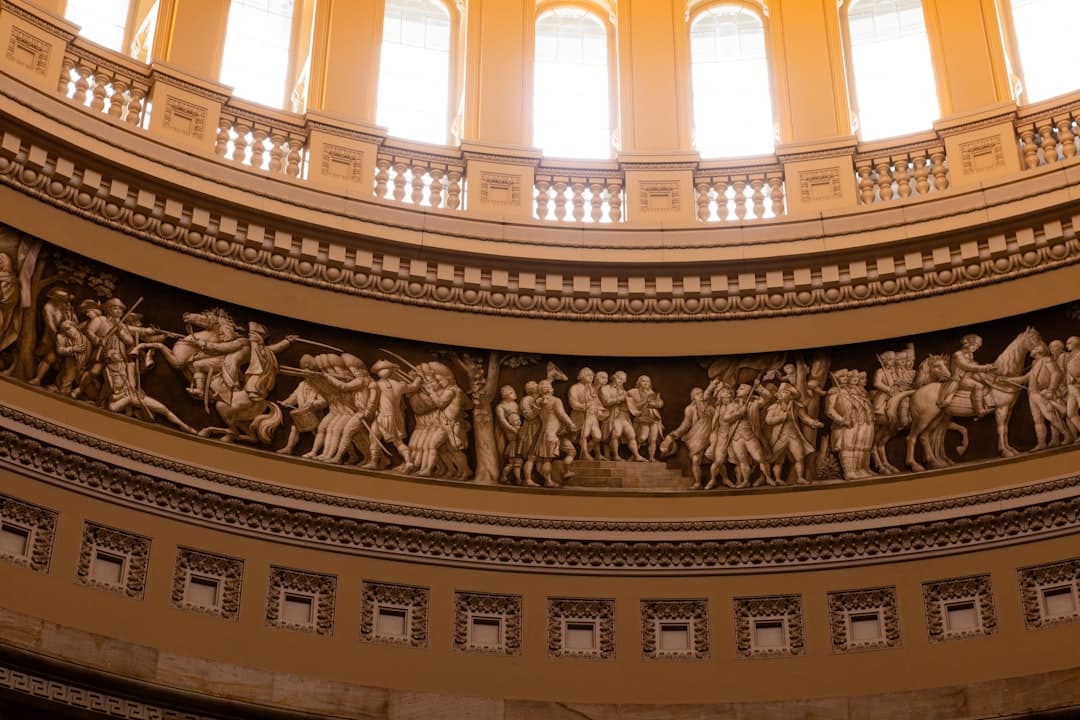
The Cold War Laboratory: When the Rules Were Written
The modern architecture of government secrecy was built between 1947 and 1975 — a period when the National Security Act created the CIA, the classification system expanded exponentially, and compartmentalization became the organizing principle of the intelligence community. During these three decades, the U.S. government conducted programs that violated every principle it claimed to defend — and established the cover-up infrastructure that would protect those programs for generations.
MKUltra is the paradigm case. Authorized in 1953 by CIA Director Allen Dulles, the program encompassed 149 sub-projects involving LSD dosing of unwitting subjects, electroshock therapy, sensory deprivation, and psychological torture. Test subjects included CIA employees, military personnel, prisoners, mental patients, and members of the public who had no idea they were being experimented on.
The cover-up architecture was multi-layered. The program was classified Top Secret with access restricted to a handful of officials. Funding was laundered through shell organizations. University researchers conducted experiments under cover of legitimate academic work. And when exposure became a risk, CIA Director Richard Helms ordered the destruction of all MKUltra files in 1973 — two years before the Church Committee would start looking.
The destruction almost succeeded. A complete erasure of the record would have made the program unprovable — a conspiracy theory with no documents to confirm it. But 20,000 pages survived in a misfiled financial records box, discovered through a FOIA request in 1977. Those documents were enough to force Senate hearings and public confirmation.
The MKUltra pattern — classification, compartmentalization, outsourcing, evidence destruction, accidental survival of proof, forced disclosure — would repeat across every major government cover-up that followed. The only variable is what triggers the disclosure: a FOIA request, a whistleblower, a congressional investigation, or a journalist who refuses to accept official denials.
COINTELPRO and the Domestic Front
While the CIA was running covert operations abroad and experimenting on citizens at home, the FBI was waging a parallel war against domestic political movements. COINTELPRO — the Counter Intelligence Program — ran from 1956 to 1971, targeting civil rights leaders, antiwar organizers, Black nationalist groups, socialist organizations, and essentially anyone J. Edgar Hoover deemed a threat to the established order.
The program's methods were not subtle. FBI agents infiltrated organizations and created internal conflicts through forged letters and planted rumors. They coordinated with local police on raids, arrests, and surveillance. They maintained files on millions of Americans engaged in constitutionally protected political activity. In the most notorious case, the FBI sent an anonymous letter to Martin Luther King Jr. — accompanied by recordings from illegal wiretaps — suggesting he commit suicide.
COINTELPRO was not exposed through official channels. No inspector general flagged it. No congressional committee discovered it. A group of activists — later identified as the Citizens' Commission to Investigate the FBI — broke into an FBI field office in Media, Pennsylvania, on March 8, 1971, and stole over 1,000 documents. Those documents, leaked to journalists, revealed the program's existence. The perpetrators were never caught, and their identities remained unknown until they voluntarily came forward in 2014.
The Church Committee confirmed the scope of COINTELPRO four years later. But notice the timeline: the program ran for 15 years before exposure. After exposure, it took four more years for official confirmation. During the entire period, anyone who alleged that the FBI was systematically targeting domestic political organizations was dismissed as paranoid.
Operation Mockingbird: Controlling the Narrative
Cover-ups require more than secrecy. They require narrative control — the ability to shape what the public believes, what journalists investigate, and what questions are considered legitimate. Operation Mockingbird was the CIA's answer to this requirement.
Beginning in the early 1950s, the CIA recruited journalists, editors, and executives at the country's most influential media organizations. The Church Committee confirmed relationships with approximately 50 journalists; Carl Bernstein's subsequent investigation estimated 400. The agency didn't need to control every newsroom — it needed to control enough of them to set the narrative on any given issue. A well-placed story in the Washington Post or a segment on CBS could define how the entire media ecosystem covered an event.
The implications extend beyond any individual operation. If the agency responsible for conducting covert operations also has the ability to influence how those operations are covered in the press, then media scrutiny — the primary democratic check on government secrecy — is compromised at its foundation. Operation Mockingbird didn't just protect individual secrets. It protected the entire system of secrecy by ensuring that inconvenient questions were never asked in the first place, or were dismissed if raised by sources outside the mainstream.
The War on Terror: Old Playbook, New Scale
September 11, 2001, did not create new patterns of government cover-up. It accelerated existing ones. The infrastructure of secrecy built during the Cold War — classification, compartmentalization, plausible deniability, media management — was repurposed and massively expanded for the War on Terror.
The CIA's extraordinary rendition program kidnapped suspects from countries around the world, transported them on CIA-chartered aircraft, and detained them at secret prisons where they were subjected to what the government euphemistically called “enhanced interrogation techniques.” The program was denied at every level until President Bush confirmed it in September 2006 — after years of documentation by human rights organizations and journalists who were dismissed as alarmist.
The Senate Intelligence Committee spent five years investigating the CIA's torture program. Their 6,700-page report, completed in 2014, found that the CIA had misled Congress about the program's scope and effectiveness, that the interrogation techniques were far more brutal than acknowledged, and that the program produced no unique intelligence. Only a 525-page executive summary was declassified. The full report remains classified — the most detailed account of a confirmed government cover-up is itself being covered up.
The NSA's mass surveillance programs followed the same trajectory. For over a decade, privacy advocates warned that the government was conducting warrantless surveillance of domestic communications on a massive scale. Officials denied it. In March 2013, Director of National Intelligence James Clapper told Congress under oath that the NSA did “not wittingly” collect data on millions of Americans. Three months later, Edward Snowden's disclosures proved this was a lie — PRISM, Upstream collection, and dozens of other programs were collecting virtually everything.
Clapper was never charged with perjury. No senior official faced consequences for the systematic deception of Congress and the public. The programs were quietly reauthorized. The surveillance state absorbed its exposure and continued operating.
The Anatomy of a Cover-Up
Across decades and agencies, government cover-ups follow a consistent structure. Understanding this structure is essential for evaluating current claims and anticipating future disclosures.
Phase 1: Operation. A program is conducted in secret, funded through the black budget, and compartmentalized so that most participants understand only their specific role. Legal authority is derived from classified interpretations of law that would not survive public scrutiny.
Phase 2: Denial. When allegations surface — from journalists, whistleblowers, or foreign governments — officials issue categorical denials. The allegations are characterized as conspiracy theories, anti-American propaganda, or the fantasies of unstable individuals. Media allies amplify the denials and marginalize the accusers.
Phase 3: Controlled disclosure. When evidence accumulates to the point that total denial is no longer sustainable, officials pivot to a limited hangout — admitting the minimum necessary to satisfy public curiosity while protecting the full scope of the program and the decision-makers behind it. “A few bad apples.” “Mistakes were made.” “It was a different time.”
Phase 4: Historical absorption. The confirmed cover-up is absorbed into the historical record. Textbooks mention it briefly. Officials express regret. Reform legislation may pass — usually with loopholes. And the institutional structures that produced the cover-up remain largely intact, ready to generate the next one.
What Breaks Cover-Ups Open
The record shows that government cover-ups are not broken by the systems designed to prevent them. Congressional oversight, inspectors general, and internal review processes rarely expose major abuses. When they do, it is typically years or decades after the fact, and only after external pressure forces action.
The mechanisms that actually expose cover-ups are overwhelmingly external: whistleblowers who risk everything to leak documents (Ellsberg, Snowden, Manning). Journalists who pursue leads for years despite official denials (Seymour Hersh on My Lai, Dana Priest on black sites, Gary Webb on CIA drug trafficking). Activists who take extraordinary action (the Citizens' Commission that burglarized the FBI). FOIA litigators who force agencies to comply with disclosure laws they routinely resist.
Every one of these mechanisms has been targeted by the government. Whistleblower prosecutions under the Espionage Act increased dramatically under the Obama and Trump administrations. Journalists have been subpoenaed, surveilled, and threatened with prosecution for publishing classified information. FOIA requests face years-long delays and aggressive use of exemptions.
The message is clear: the government does not want cover-ups exposed, even retroactively, and it will use every available tool to prevent disclosure. The people who ultimately force accountability pay a personal price for doing so. Daniel Ellsberg was charged under the Espionage Act. Chelsea Manning spent seven years in military prison. Edward Snowden lives in exile. Gary Webb lost his career and his life.
The Current Landscape
The classification system continues to expand. The government classifies approximately 50 million documents per year, far outpacing declassification. The Pentagon has failed every audit since mandatory auditing began in 2018, with trillions of dollars in transactions that cannot be accounted for. Special Access Programs operate outside meaningful congressional oversight. The FISA Court, which nominally oversees intelligence surveillance, approved 99.97% of government requests in its first 33 years.
At the same time, the tools available for exposing cover-ups have grown more powerful. Open-source intelligence (OSINT) allows researchers to verify or debunk government claims using satellite imagery, flight tracking data, corporate registries, and public records databases. Encrypted communications make it possible for whistleblowers to contact journalists with reduced risk. Platforms like They Knew create permanent, searchable archives of claims and their supporting evidence.
The fundamental dynamic, however, remains unchanged. Governments conduct operations they know the public would not accept. They lie about those operations. The lies are maintained until evidence makes them unsustainable. And then the cycle starts again.
Understanding this pattern is not cynicism. It is literacy. The historical record is not ambiguous. The question is never whether governments are hiding things — they always are. The question is what they are hiding now, and how long it will take for the evidence to surface.
Explore government claims on They Knew →
Independent research and fact-checking team documenting conspiracy theories proven true by primary sources, declassified documents, and official records.