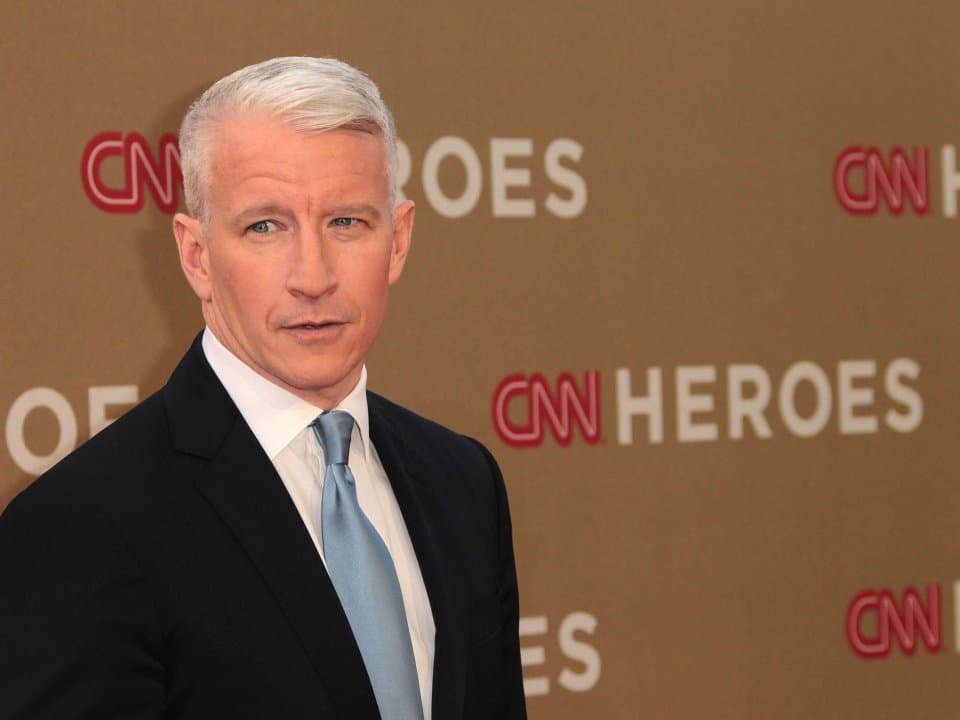
Anderson Cooper, CNN's most prominent anchor, spent two summers interning at CIA headquarters in Langley, Virginia, recruited through a Yale University career office flyer. Cooper himself confirmed this in a 2006 CNN article. While he says the work was 'bureaucratic and mundane' and he didn't pursue an intelligence career, the fact that a top American news anchor has CIA training raises questions about the revolving door between intelligence agencies and mainstream media — a pattern documented since Operation Mockingbird.
“Anderson Cooper, the face of CNN, is a former CIA intern from a Vanderbilt dynasty family. The intelligence-to-media pipeline is real and ongoing.”
What they said vs. what the evidence shows
“Anderson's involvement with the agency ended with his college summer internship. He chose not to pursue a job with the agency and went into journalism instead.”
— CNN Spokeswoman · Sep 2006
SourceFrom “crazy” to confirmed
The Claim Is Made
This is the moment they called it crazy.
When Anderson Cooper became CNN's face of American journalism, few viewers knew that the network's most prominent anchor had once worked inside CIA headquarters. Cooper himself revealed this connection in a 2006 CNN article, acknowledging that he'd spent two summers interning at the agency's Langley, Virginia facility while a student at Yale University. The internship came through a straightforward channel—a career office flyer—and Cooper has consistently downplayed its significance, describing the work as "bureaucratic and mundane."
For years, this fact existed in plain sight without generating serious scrutiny. Cooper moved on to build one of the most influential careers in American broadcast journalism. Yet the documented connection between one of America's most trusted news anchors and the intelligence community raises uncomfortable questions that deserve examination beyond Cooper's own minimization of the experience.
The official narrative has always been simple: Cooper was a college student exploring career options, the CIA work proved uninteresting, and he pursued journalism instead. Nothing to see here. A youthful detour into government service before finding his true calling. Millions of Americans accepted this explanation without question, and Cooper himself has offered no reason to believe he was being dishonest about his experience or motivations.
But context matters. The revelation of Cooper's CIA background doesn't exist in a vacuum. It fits into a documented historical pattern of intelligence agency connections to major media figures—a pattern with a name: . have shown that throughout the Cold War, cultivated relationships with journalists and news organizations, sometimes placing assets directly within major publications. While Mockingbird officially ended decades ago, the question of how thoroughly those institutional relationships were severed remains largely unanswered.
Get the 5 biggest receipts every week, straight to your inbox — plus an exclusive PDF: The Top 10 Conspiracy Theories Proven True in 2025-2026. No spam. No agenda. Just the papers they couldn't hide.
You just read "CNN's Anderson Cooper interned at the CIA while at Yale — th…". We send ones like this every week.
No one's said anything yet. Be the first to drop your take.
Confirmed: They Were Right
The truth comes out. Officially documented.
Confirmed: They Were Right
The truth comes out. Officially documented.
Cooper's internship occurred in the 1980s, well after Mockingbird's supposed closure. Yet it demonstrates that the CIA continued recruiting from elite universities and that prestigious journalists remained within the agency's orbit. The Washington Post's coverage of Cooper's internship treated it as an interesting biographical detail rather than a structural concern. The Grayzone's reporting highlighted the broader pattern of intelligence-media connections, situating Cooper within a larger ecosystem rather than treating him as an isolated case.
What makes this documented fact significant isn't necessarily what Cooper did during his internship—by all accounts, genuinely mundane work. Rather, it's what his career trajectory suggests about pathways between intelligence agencies and newsrooms. Whether or not Cooper's journalism has been influenced by his CIA background, the institutional relationship exists. Viewers watching him report on national security issues, government accountability, or intelligence operations cannot know whether his perspective has been shaped by that early exposure and connection.
This isn't an accusation of deliberate conspiracy. It's an observation about institutional culture and influence. When America's most visible news anchor has walked both inside and outside the intelligence establishment, it raises legitimate questions about the impermeability of the boundary between those worlds. Trust in journalism requires knowing where journalists come from and what institutional relationships shaped them.
The claim was never denied. Cooper confirmed it himself. What's worth examining now is why this documented fact received so little sustained attention, and what it suggests about how thoroughly we scrutinize the backgrounds and potential conflicts of those who shape our understanding of national security.
Beat the odds
This had a 0% chance of leaking — someone talked anyway.
Conspirators
~100Network
Secret kept
0.5 years
Time to 95% exposure
500+ years