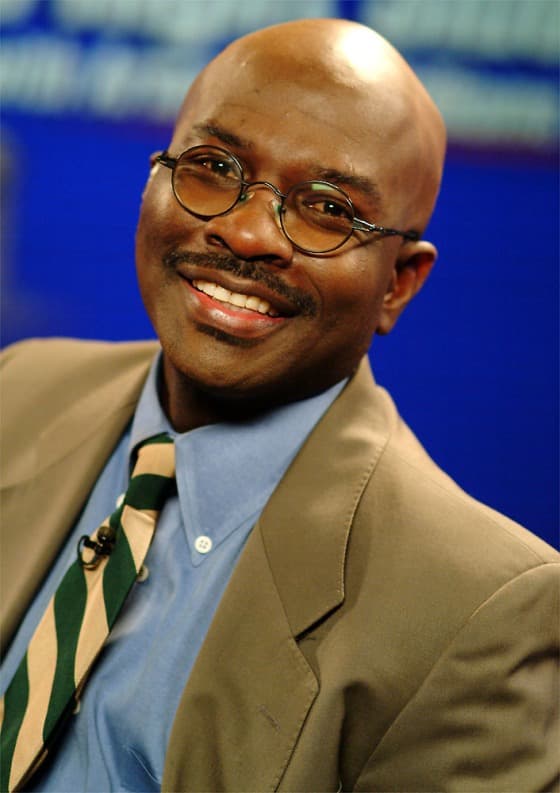
Conservative commentator received undisclosed payments from the Bush administration to promote education policy. GAO investigation found the payments violated federal law prohibiting covert propaganda.
“Mr. Williams' commentary represents his independent editorial judgment”
From “crazy” to confirmed
The Claim Is Made
This is the moment they called it crazy.
A prominent conservative media personality received a quarter-million dollars from the federal government to promote a major education policy, without disclosing the financial arrangement to his audience. What started as an allegation became an inconvenient fact that exposed how easily public opinion could be shaped by undisclosed government money.
Armstrong Williams was a recognizable name in conservative media during the early 2000s. The syndicated columnist and television commentator had built credibility through years of commentary and appeared regularly on major news outlets. In 2004, his reputation became entangled with one of the Bush administration's signature policies: No Child Left Behind.
The Department of Education contracted Williams through a public relations firm to produce and promote segments supporting the education reform law. Between 2000 and 2004, Williams received $240,000 for his work. The critical detail: he never told his audience about the payments when he discussed or praised the policy on his radio show and in his syndicated columns. To listeners and readers, his advocacy appeared to be independent commentary from a trusted voice, not a paid promotional campaign.
When the arrangement came to light in 2005, the initial response followed a predictable pattern. The Department of Education defended the expenditure as a legitimate use of public relations funds. The administration argued that promoting its education policy to the public was an appropriate function of government communication. Williams himself acknowledged the contract but initially characterized it as routine media work.
This position became harder to maintain once federal investigators looked closer. The Government Accountability Office, Congress's watchdog agency, launched an investigation into the arrangement. Their findings were unambiguous: the undisclosed payments violated federal law prohibiting covert propaganda. Specifically, the GAO determined that the government had engaged in what the law explicitly forbade—using taxpayer money to secretly influence public opinion without disclosure.
Get the 5 biggest receipts every week, straight to your inbox — plus an exclusive PDF: The Top 10 Conspiracy Theories Proven True in 2025-2026. No spam. No agenda. Just the papers they couldn't hide.
You just read "Armstrong Williams secretly paid $240,000 by Department of E…". We send ones like this every week.
No one's said anything yet. Be the first to drop your take.
The GAO report identified a straightforward violation. Federal regulations require that when the government pays for content intended to influence public opinion, those payments must be transparently disclosed to the audience. Williams's audience never knew they were hearing paid advocacy disguised as independent analysis. The law existed precisely to prevent this kind of situation, yet it had occurred anyway.
Williams eventually acknowledged the problematic nature of the arrangement and apologized. The Department of Education's public relations approach became a cautionary tale about the mechanics of hidden influence in media. The contract and the investigation together demonstrated that government agencies could, and sometimes would, pay for seemingly independent voices to promote their policies.
What makes this case significant extends beyond one commentator or one policy. It revealed a method by which public trust could be systematically undermined. Citizens rely on media figures to offer authentic perspectives and analysis. When that trust is secretly purchased by the institutions being covered, the entire information ecosystem becomes compromised. Audiences cannot make informed decisions if they don't know who is being paid to influence their thinking.
The Armstrong Williams case documented what had been suspected but rarely proven: that the line between journalism and government propaganda could be deliberately blurred with sufficient funding. It showed that disclosure matters, that laws against covert propaganda exist for a reason, and that citizens deserve to know when their trusted voices have financial arrangements with the powerful institutions they cover. Without that transparency, public discourse becomes a marketplace where truth and disclosure are optional commodities.
Beat the odds
This had a 0.9% chance of leaking — someone talked anyway.
Conspirators
~100Network
Secret kept
21.3 years
Time to 95% exposure
500+ years