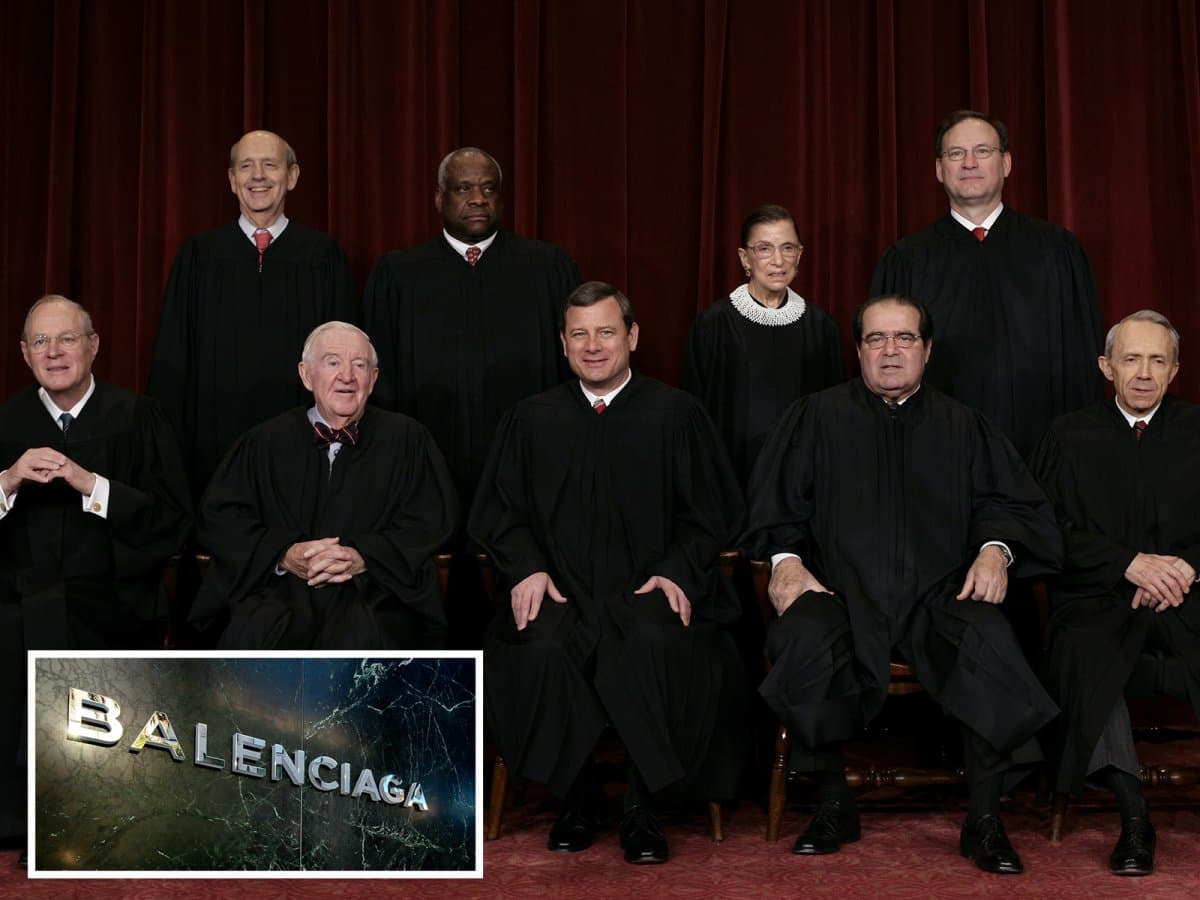
In November 2022, Balenciaga released ad campaigns that showed children holding teddy bears dressed in bondage harnesses. A separate campaign photographed bags on a desk with partially visible Supreme Court documents from United States v. Williams, a case about child pornography laws. The company initially sued the production company North Six, then dropped the lawsuit. Creative director Demna Gvasalia apologized. The controversies raised questions about the fashion industry's normalization of disturbing imagery involving children, and whether internal review processes failed or approved the content deliberately.
“Children holding bondage bears. Supreme Court child porn documents hidden in the photo. They sued the photographer then dropped the lawsuit. This wasn't an accident.”
From “crazy” to confirmed
The Claim Is Made
This is the moment they called it crazy.
When Balenciaga's November 2022 advertising campaign surfaced online, it triggered a firestorm of concern that extended far beyond typical fashion industry criticism. The luxury brand had released promotional images featuring children holding teddy bears dressed in BDSM-style harnesses—imagery that immediately struck observers as inappropriate and deliberately provocative.
The initial response from Balenciaga followed a familiar corporate playbook. The company blamed the production company, North Six, framing the controversial images as a mistake that occurred without proper oversight. Creative director Demna Gvasalia issued an apology, but the statement contained enough ambiguity to raise questions: Was this genuinely an oversight, or something that had somehow cleared multiple approval stages?
What made this claim particularly significant was the second element: a separate Balenciaga campaign photographed bags positioned on a desk with partially visible Supreme Court documents in the background. The documents were excerpts from United States v. Williams, a landmark case specifically addressing child pornography laws. The proximity of these two campaigns—within the same promotional push—made coincidence an increasingly difficult explanation to accept.
The evidence supporting the claim was undisputed. The images existed. They had been published by a major fashion house. Multiple news outlets, including the New York Times, confirmed their authenticity and Balenciaga's initial responses. The question shifted from "did this happen?" to "how did this happen?" and, more troublingly, "was this intentional?"
Balenciaga's decision to drop its lawsuit against North Six months later raised additional questions. If the production company had genuinely acted without authorization or proper oversight, why not pursue legal action to hold them accountable? The lawsuit's abandonment suggested either a settlement requiring confidentiality or a reluctance to have the matter litigated in court where discovery processes might reveal uncomfortable truths about internal approvals.
Get the 5 biggest receipts every week, straight to your inbox — plus an exclusive PDF: The Top 10 Conspiracy Theories Proven True in 2025-2026. No spam. No agenda. Just the papers they couldn't hide.
You just read "Balenciaga's ad campaign featured children holding teddy bea…". We send ones like this every week.
No one's said anything yet. Be the first to drop your take.
Confirmed: They Were Right
The truth comes out. Officially documented.
Confirmed: They Were Right
The truth comes out. Officially documented.
What makes this case important for understanding corporate accountability is what it reveals about institutional processes. Large fashion houses employ teams of designers, photographers, stylists, marketing directors, and executives. The imagery didn't materialize in isolation—someone selected these props, someone styled these children, someone approved these images for international distribution. Whether this represented catastrophic failure across multiple approval layers or deliberate decision-making, the result demonstrated a breakdown in institutional judgment.
The incident crystallized growing concerns about how major brands normalize disturbing imagery involving children. The fashion industry has long engaged with provocative content, but there exists a clear ethical line between artistic provocation and content that sexualizes minors or references child exploitation. That Balenciaga approached or crossed that line—and that the company's initial response involved deflection rather than accountability—revealed something about how power operates in corporate spaces.
For public trust, this case matters because it demonstrates why verification and documentation matter. When claims circulate online, skepticism is warranted. But when the claims are verified—when major publications confirm the images existed, when the company itself acknowledged the campaign—the dismissal of concerned voices as conspiracy theorists becomes intellectually dishonest. This was real. It happened. And it revealed institutional indifference to protecting children from exploitation in commercial contexts.
Beat the odds
This had a 0% chance of leaking — someone talked anyway.
Conspirators
~100Network
Secret kept
0.5 years
Time to 95% exposure
500+ years