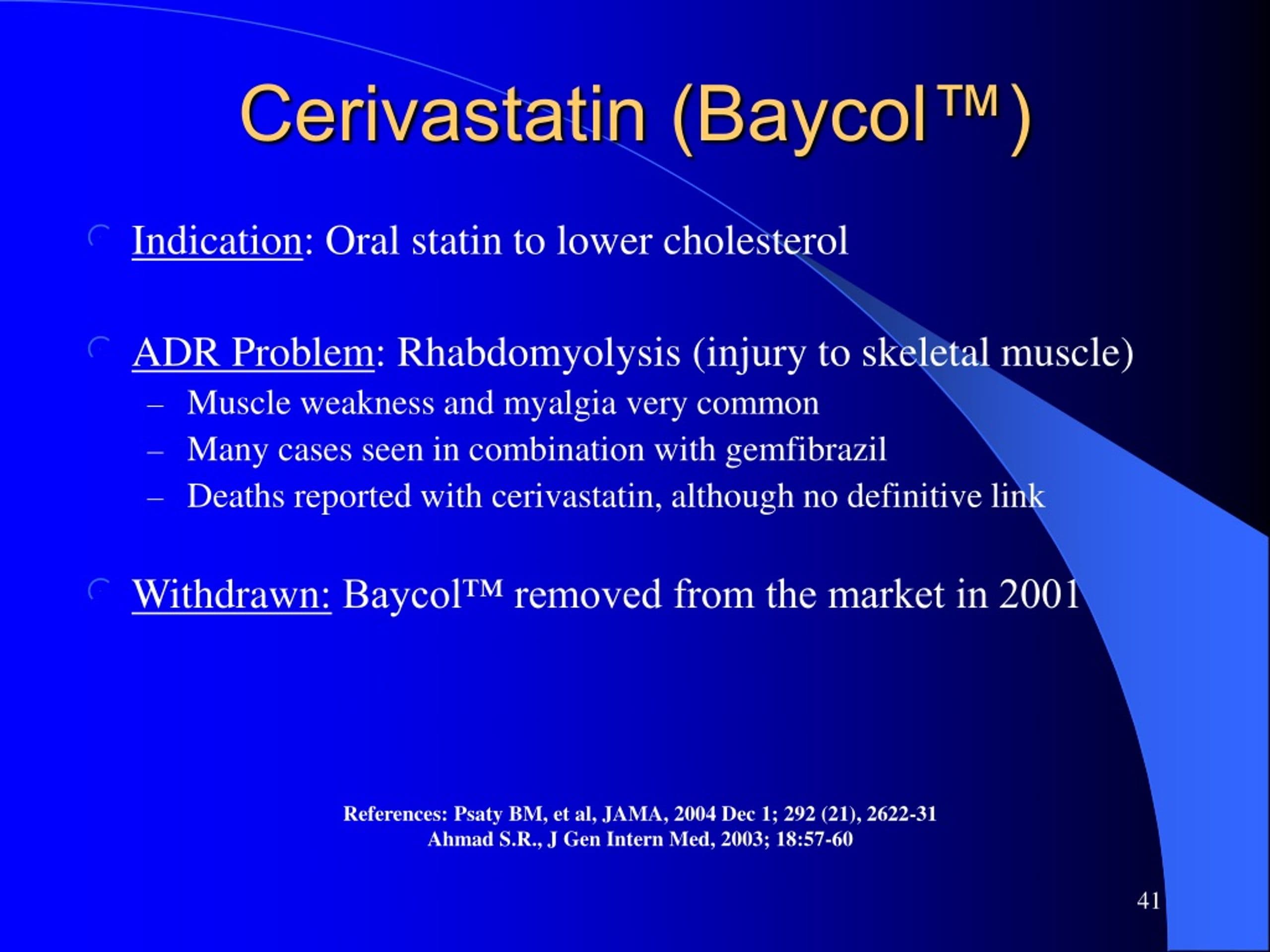
Bayer received over 100 reports of fatal rhabdomyolysis from Baycol by 2000 but continued marketing the statin until forced withdrawal in 2001.
“Baycol has a safety profile comparable to other statin medications”
From “crazy” to confirmed
The Claim Is Made
This is the moment they called it crazy.
When Bayer's cholesterol medication Baycol hit the American market in 1997, it promised millions of patients a convenient new way to manage their heart health. Seven years later, the drug would be yanked from shelves entirely. What happened in between reveals a pattern worth understanding: a pharmaceutical company received clear warning signals about deaths, but the drug remained available to consumers for years.
Baycol was a statin, one of a class of drugs designed to lower cholesterol and reduce heart disease risk. It was cerivastatin, and it worked. But it also had a severe problem that showed up in real-world use almost immediately after approval. Patients were dying from rhabdomyolysis—a catastrophic breakdown of muscle tissue that can lead to kidney failure and death.
By the year 2000, just three years into Baycol's commercial life, Bayer had received more than 100 reports of fatal rhabdomyolysis linked to the drug. These weren't anecdotes or unconfirmed rumors. They were documented cases flowing into the company's medical safety department, the system designed specifically to catch exactly this kind of signal.
The official response from regulators and the company was remarkably steady. The FDA did not pull the drug. Bayer did not voluntarily withdraw it. Instead, both entities treated the mounting deaths as a manageable problem. The approach was familiar to anyone who has tracked pharmaceutical regulation: add warnings, adjust dosing recommendations, monitor the situation. Keep the drug on the market while gathering more data.
For another full year, Baycol remained available. Patients continued filling prescriptions. Doctors continued writing them, often unaware of the specific danger or assuming the warnings had adequately addressed the risk. Then in August 2001, just weeks after another high-profile report surfaced in the medical literature, Bayer withdrew Baycol from the market entirely.
Get the 5 biggest receipts every week, straight to your inbox — plus an exclusive PDF: The Top 10 Conspiracy Theories Proven True in 2025-2026. No spam. No agenda. Just the papers they couldn't hide.
You just read "Baycol cholesterol drug stayed on market despite known fatal…". We send ones like this every week.
No one's said anything yet. Be the first to drop your take.
The timing is the crucial detail. By August 2001, the evidence of danger was identical to what Bayer had known in 2000. No new scientific discovery forced the hand. No regulatory edict made it mandatory. What changed was public awareness. Once the risk became harder to manage quietly, the drug was gone.
The New England Journal of Medicine later published analysis of the Baycol case and its death toll. The peer-reviewed examination showed that the warning signs had been real, documented, and actionable years before the drug actually left shelves. This wasn't a case where the danger was invisible to medical science. The company and the FDA were seeing the same reports. They simply did not act.
Why does this matter now? Because Baycol illustrates something crucial about how pharmaceutical safety actually works in practice, separate from how it works in theory. The system assumes that companies and regulators will treat documented deaths with urgency. Baycol showed what happens when that assumption fails—which is exactly what we need to understand if we want the system to work better.
The question worth sitting with is not whether Baycol's withdrawal was eventually correct. It was. The question is why it took a year of additional deaths to reach that obvious conclusion.
Beat the odds
This had a 2.9% chance of leaking — someone talked anyway.
Conspirators
~300Network
Secret kept
24.8 years
Time to 95% exposure
500+ years