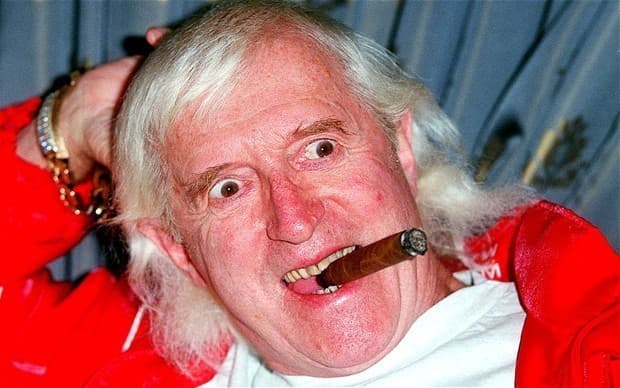
Internal investigations revealed BBC executives knew about sexual abuse allegations against presenter Jimmy Savile but suppressed stories to protect the corporation's reputation and key programming.
“There were no credible allegations against Jimmy Savile during his time with the BBC”
From “crazy” to confirmed
The Claim Is Made
This is the moment they called it crazy.
For nearly five decades, Jimmy Savile was one of Britain's most celebrated television personalities. The BBC's golden boy hosted "Top of the Pops" and "Jim'll Fix It," becoming a national treasure and prolific fundraiser for children's hospitals. What the public didn't know was that behind closed doors, Savile was systematically abusing vulnerable people—and the BBC knew it.
The claims about Savile's abuse didn't emerge suddenly after his death in 1990. Allegations had circulated for years among BBC staff, production crews, and industry insiders. Women and children came forward with stories of sexual assault. Some spoke to BBC executives directly. The institution was aware, yet nothing happened. No investigations were launched. No authorities were alerted. The machine simply moved forward, protecting its asset and its brand.
When Savile died at age 84, he was celebrated as a national icon. The BBC participated fully in his canonization, glossing over the whispers that had followed him throughout his career. It wasn't until 2012—22 years later—that journalist Mark Williams-Thomas exposed the truth in a documentary. Suddenly, hundreds of victims came forward. The scale of the abuse was staggering: over 200 confirmed victims, attacks spanning from the 1950s through the 1980s.
The BBC's response was predictable corporate damage control. The corporation commissioned internal investigations, including the Pollard Report, which examined institutional failures. What that investigation revealed was damning: BBC managers and executives had received complaints about Savile's behavior but chose silence. The motivation was clear and calculated—protecting the brand, maintaining ratings, avoiding scandal.
Internal documents showed that some BBC staff had documented concerns about Savile's access to young people on set. Others recalled rumors and inappropriate behavior. Yet the information was compartmentalized, filed away, and never acted upon. Protecting a profitable and popular presenter took precedence over protecting children.
The BBC eventually issued formal apologies and compensated victims, but the damage to public trust was irreversible. The corporation had actively chosen to shield a serial predator rather than risk its reputation. This wasn't negligence or incompetence—it was institutional complicity.
What makes this case particularly significant is that it wasn't a single individual's abuse being overlooked. Multiple people at the BBC knew. The knowledge was documented in some cases. The decision to remain silent was made at institutional levels. This wasn't about one bad actor; it was about an organization prioritizing itself over the safety of vulnerable people.
The Savile case demolished the illusion that major institutions will self-correct or protect the public interest when it conflicts with their own survival. It revealed that reputation management can become more important than preventing harm. For the BBC specifically, it exposed how a publicly-funded broadcaster could betray the trust placed in it by the British people.
Today, the case serves as a benchmark for institutional accountability. When we ask "what did they know and when did they know it?" about any organization, we're asking the Savile question. The answer matters. Because when institutions choose silence over justice, the cost is paid by the people they were meant to serve.
Get the 5 biggest receipts every week, straight to your inbox — plus an exclusive PDF: The Top 10 Conspiracy Theories Proven True in 2025-2026. No spam. No agenda. Just the papers they couldn't hide.
You just read "BBC Covered Up Jimmy Savile Abuse Allegations for Decades to…". We send ones like this every week.
No one's said anything yet. Be the first to drop your take.