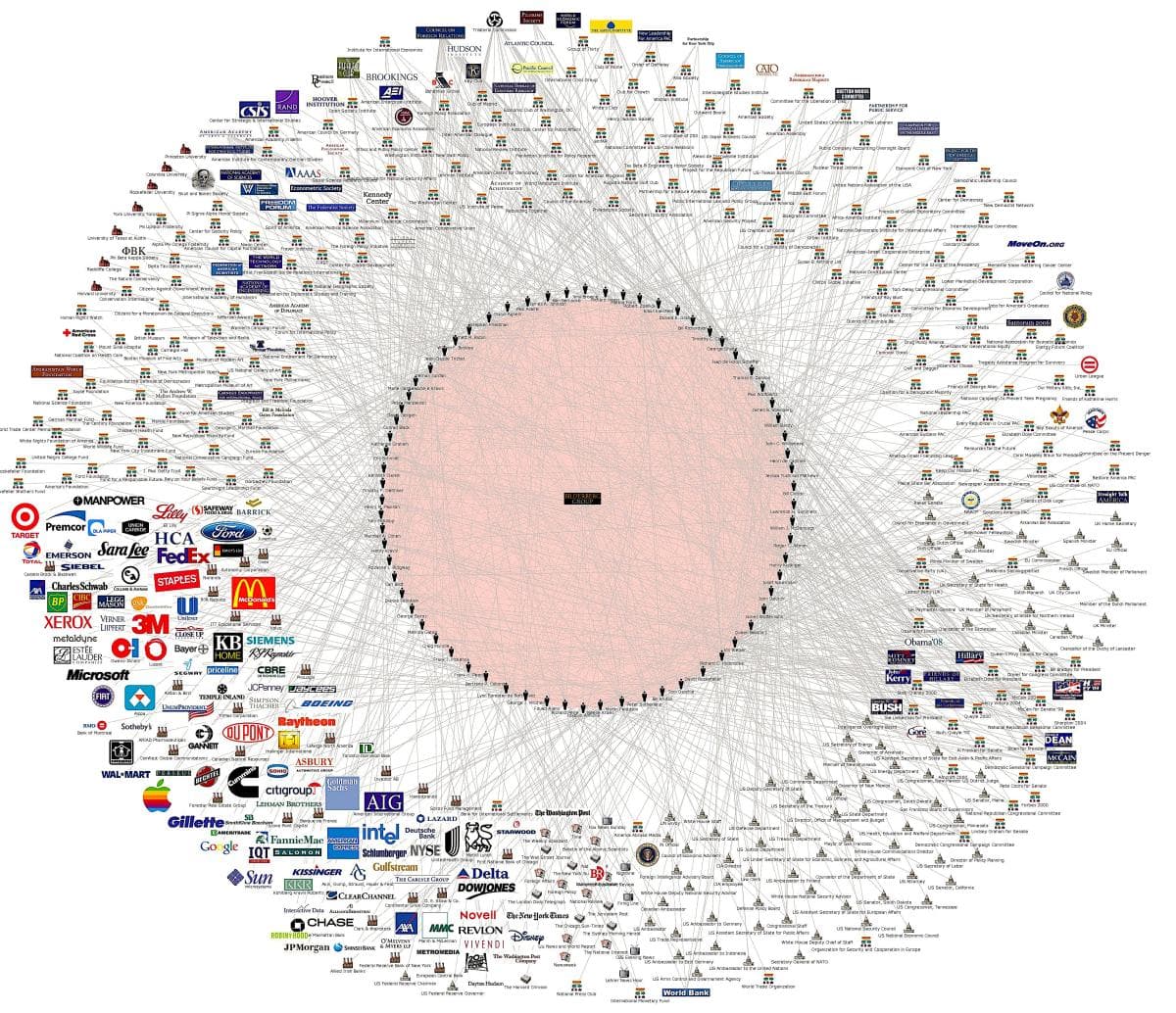
For decades, mentioning the Bilderberg Group was dismissed as conspiracy thinking. The group has held annual meetings since 1954 with 120-150 political leaders, corporate executives, and media figures under the Chatham House Rule. While the group claims 'no resolutions are proposed, no votes taken,' former chairmen have acknowledged the meetings facilitated the creation of the euro. The group now publishes participant lists and topics on bilderbergmeetings.org, confirming its existence and influence.
“A secret group of the world's most powerful people meets every year behind closed doors to decide global policy without any democratic accountability.”
What they said vs. what the evidence shows
“The Bilderberg Group is a conspiracy theory. There is no secret cabal of world leaders meeting to set global policy.”
— Mainstream media (pre-2010) · Jan 2005
SourceFrom “crazy” to confirmed
The Claim Is Made
This is the moment they called it crazy.
Confirmed: They Were Right
The truth comes out. Officially documented.
Confirmed: They Were Right
The truth comes out. Officially documented.
For nearly three decades, people who raised questions about the Bilderberg Group were reliably dismissed as conspiracy theorists. Mention the annual gathering of roughly 150 of the world's most powerful political leaders, business executives, and media figures meeting behind closed doors, and you'd be laughed out of serious conversation. Yet today, the group maintains an official website listing participants, meeting locations, and discussion topics. The claim that wasn't supposed to exist has become boringly, undeniably real.
The story begins in 1954, when the Hotel de Bilderberg in the Dutch town of Oosterbeek hosted the first meeting. The group was founded by Prince Bernhard of the Netherlands and others who believed that influential figures from North America and Western Europe needed a private space to discuss major geopolitical issues. The stated purpose was straightforward enough: foster dialogue among transatlantic elites. But the secrecy surrounding the meetings—no press allowed, discussions held under the Chatham House Rule, minimal public disclosure—made the group catnip for those suspicious of how global power actually operates.
For decades, the mainstream response was dismissal. Major media outlets treated serious questions about Bilderberg as fringe thinking, the sort of claim you'd find on poorly designed websites in the pre-social media era. Academics and journalists largely ignored it. Government officials offered no comment. This silence itself became part of the narrative for skeptics: why keep something so innocent so secretive?
The turning point came through admission, not investigation. Former Bilderberg chairmen eventually acknowledged that the meetings had facilitated real policy outcomes. Most notably, they confirmed that discussions at Bilderberg meetings played a role in the creation of the euro—one of the most consequential economic decisions of the modern era. This wasn't a conspiracy theory anymore; it was stated fact from the people who'd been in the room.
The group itself resolved the question through transparency. Bilderbergmeetings.org now publishes annual participant lists and discussion agendas. You can see which ministers, CEOs, and media proprietors attended, and what topics were on the table. The 2025 list is available. No longer hidden, the evidence confirms what critics had said all along: the meetings are real, the participants are genuinely influential, and outcomes do affect major policy decisions.
What's particularly instructive here is not that the Bilderberg Group exists—that's merely fact. What matters is the pattern it represents. A documented gathering of powerful people making consequential decisions with minimal public scrutiny was treated as illegitimate speculation for decades, only becoming acceptable once the group itself acknowledged it. This tells us something uncomfortable about information gatekeeping: not every unpopular claim is false, and sometimes skepticism of powerful institutions is empirically justified.
The Bilderberg case doesn't validate every conspiracy theory. But it does vindicate the basic impulse behind the question: when elite institutions meet in secret, it's reasonable to ask what they're doing there. The answer matters to anyone interested in how global decisions actually get made, rather than how they're officially explained. That's not conspiracy thinking. That's just paying attention.
Get the 5 biggest receipts every week, straight to your inbox — plus an exclusive PDF: The Top 10 Conspiracy Theories Proven True in 2025-2026. No spam. No agenda. Just the papers they couldn't hide.
You just read "The Bilderberg Group exists, holds annual secret meetings of…". We send ones like this every week.
No one's said anything yet. Be the first to drop your take.





Bilderberg Meetings Official Site — Participants 2025

