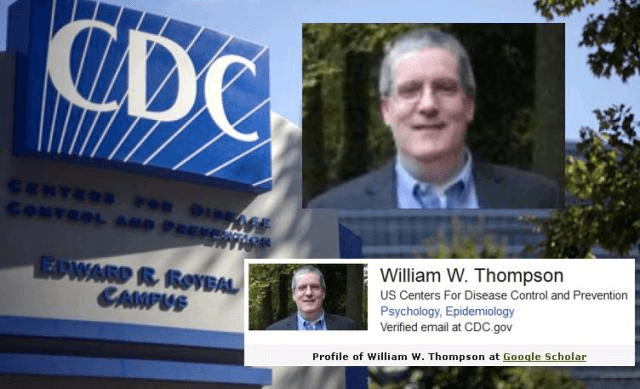
CDC scientist Thompson disclosed in 2014 that the agency omitted data showing increased autism risk in African-American boys from MMR vaccine studies, contradicting official safety claims.
“Extensive CDC studies show no link between MMR vaccines and autism in any population”
From “crazy” to confirmed
The Claim Is Made
This is the moment they called it crazy.
In August 2014, a senior CDC researcher named William Thompson issued a statement that would complicate the official narrative around vaccine safety for years to come. Thompson, a co-author on a major 2004 study examining the relationship between the MMR vaccine and autism, claimed that he and his colleagues had deliberately omitted statistically significant findings from their published research.
The original study, published in Pediatrics in 2004, was designed to investigate whether the MMR vaccine increased autism risk in children. The research examined over 2,000 children and became a cornerstone document in the scientific consensus that no link existed between the vaccine and autism spectrum disorder. For a decade, this study was cited by health authorities worldwide as definitive proof of vaccine safety.
Thompson alleged that the research team had found a higher rate of autism diagnosis in African-American boys who received the MMR vaccine before age 36 months compared to those vaccinated later. According to Thompson, this data subset was excluded from the final published version without scientific justification. He suggested the omission was deliberate, stating that researchers had engaged in "destruction of documents related to the study" and participated in a conference call where they decided which data to include.
The CDC responded by standing behind the 2004 study and its conclusions. The agency issued a statement reaffirming that the paper found no causal relationship between the MMR vaccine and autism. Health officials emphasized that the study had been peer-reviewed and published in a reputable journal, and that numerous subsequent studies had corroborated its findings. The CDC characterized Thompson's claims as unsubstantiated and noted that he remained an employee in good standing.
Get the 5 biggest receipts every week, straight to your inbox — plus an exclusive PDF: The Top 10 Conspiracy Theories Proven True in 2025-2026. No spam. No agenda. Just the papers they couldn't hide.
You just read "CDC researcher William Thompson revealed agency covered up M…". We send ones like this every week.
No one's said anything yet. Be the first to drop your take.
What distinguishes this case from many vaccine skeptic claims is that Thompson's allegations came with specificity and institutional credibility. He didn't claim vaccines caused widespread autism—he claimed a particular dataset involving a particular demographic had been excluded from analysis. He named names and described specific meetings. Most significantly, he had direct knowledge as a study co-author, not as an outsider reviewing published work.
The broader scientific community largely dismissed Thompson's concerns, arguing that the exclusion of that particular data subset didn't change the study's fundamental conclusion about vaccine safety. Subsequent analyses and reviews found no evidence of systematic fraud. However, the incident revealed a gap between how the CDC and many scientists understood the data handling versus how critics interpreted it.
What matters about this case isn't whether one believes Thompson proved malfeasance or whether one accepts the CDC's rebuttal. What matters is that a credible researcher with direct involvement in landmark vaccine research went public with specific concerns about data handling—and that this created legitimate questions about transparency in health research that deserved fuller public scrutiny than they received.
Public trust in health institutions depends not just on correct conclusions, but on demonstrable integrity in how those conclusions are reached. Whether Thompson's allegations were accurate or incomplete, the episode exposed how quickly institutional dismissal can substitute for transparent investigation, leaving citizens to wonder what they're not being told.
Beat the odds
This had a 1.4% chance of leaking — someone talked anyway.
Conspirators
~300Network
Secret kept
11.7 years
Time to 95% exposure
500+ years