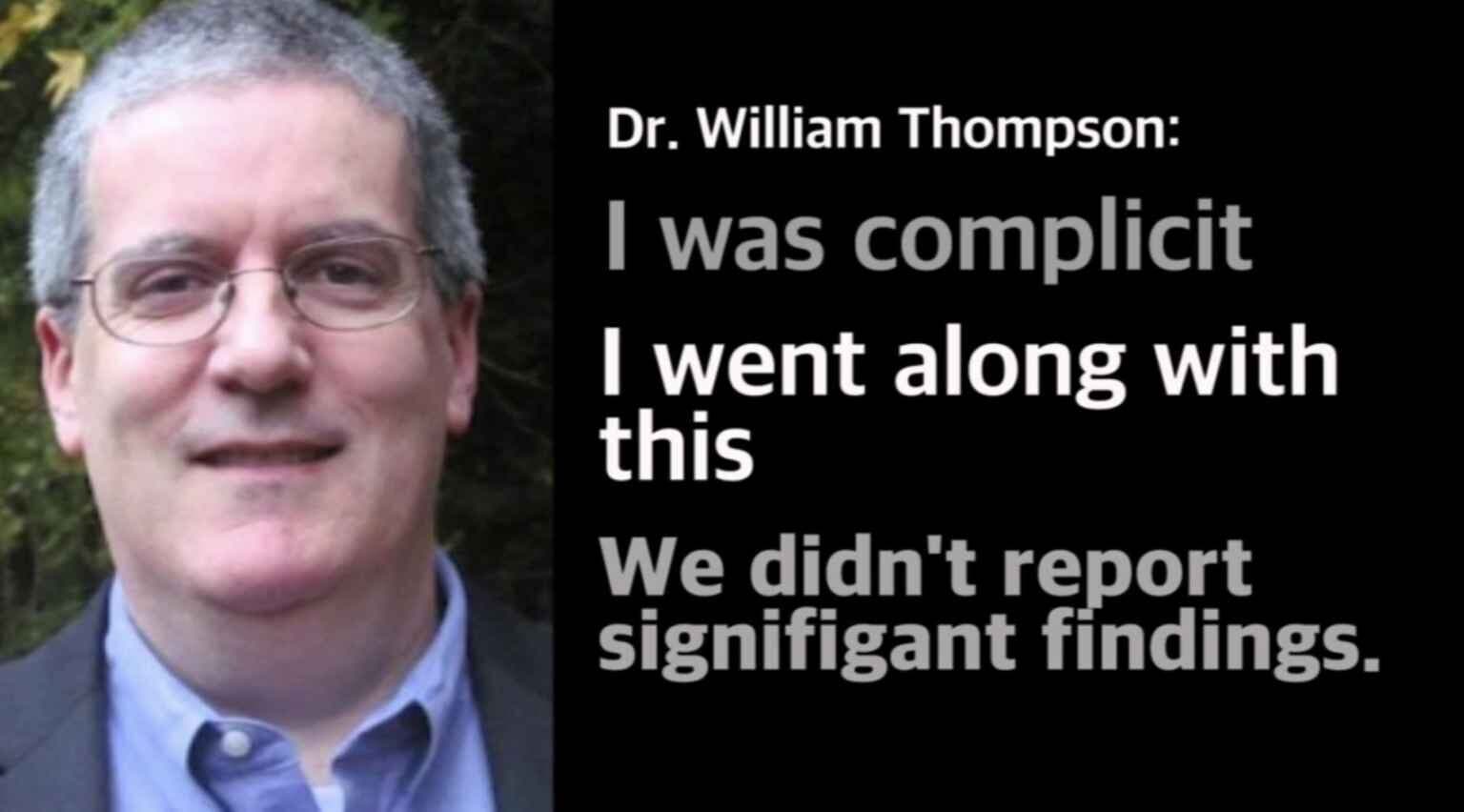
CDC Senior Scientist William Thompson stated his coauthors omitted statistically significant data from their 2004 Pediatrics study showing African American males who received MMR before 36 months had increased autism risk. Thompson claimed the four coauthors 'brought a big garbage can into the meeting room and reviewed and discarded hard copy documents.' Thompson retained his copies. The CDC has never allowed Thompson to testify before Congress despite multiple requests.
“The coauthors scheduled a meeting to destroy documents related to the study. I kept hard copies because I assumed it was illegal.”
From “crazy” to confirmed
The Claim Is Made
This is the moment they called it crazy.
In 2014, a senior scientist at the Centers for Disease Control and Prevention made a serious allegation: his colleagues had destroyed documents that contradicted the agency's position on vaccine safety. The claim raised uncomfortable questions about scientific integrity at one of America's most trusted health institutions.
William Thompson had been a CDC researcher for over two decades when he came forward with his account. He was a coauthor on a 2004 study published in Pediatrics that examined the relationship between the MMR vaccine and autism across different racial groups. According to Thompson, the study's findings included a statistically significant link between early MMR vaccination and autism in African American boys—a finding that never made it into the published paper.
Thompson's specific allegation was stark. He claimed that during a meeting with his four coauthors, the team brought "a big garbage can into the meeting room" and reviewed documents before discarding them. The purpose, he suggested, was to remove evidence that contradicted the CDC's public stance that no link existed between the MMR vaccine and autism in any population.
The CDC's response was dismissive. The agency maintained that Thompson was mischaracterizing standard research practices. According to the official account, researchers routinely discard preliminary analyses and raw materials once final conclusions are reached. The agency also noted that Thompson remained employed and his concerns had been addressed through internal review processes. As for congressional testimony—which Thompson supporters have repeatedly requested—the CDC has consistently declined to make Thompson available.
But Thompson's account carried specific details and documentation. He retained copies of the data in question and provided them to journalists and congressional offices. The actual 2004 study, while not explicitly discussing the subset analysis Thompson referenced, showed evidence of statistical work that didn't appear in conclusions. Thompson's contemporaneous communications and his willingness to name dates, colleagues, and specific meetings lent credibility to his account in ways vague denials could not.
Get the 5 biggest receipts every week, straight to your inbox — plus an exclusive PDF: The Top 10 Conspiracy Theories Proven True in 2025-2026. No spam. No agenda. Just the papers they couldn't hide.
You just read "CDC scientist William Thompson claimed coauthors scheduled a…". We send ones like this every week.
No one's said anything yet. Be the first to drop your take.
Independent analysis of the 2004 study and related CDC data has since revealed anomalies. Some researchers examining the paper's methodology found evidence that the subset analysis Thompson described actually existed in earlier drafts. Whether this constitutes proof of intentional destruction or standard editorial revision remains contested among scientists—but Thompson's core claim that relevant data was excluded has not been definitively refuted with documentary evidence.
What makes this claim matter extends beyond one vaccine study. Public health authority depends on the assumption that agencies like the CDC are transparent about their findings, even inconvenient ones. If major health organizations systematically suppress data that complicates their narratives—whether about vaccines, treatments, or disease—the entire foundation of informed consent erodes.
Thompson's inability to testify before Congress remains noteworthy. Congressional testimony is a mechanism for accountability that exists specifically for situations like this. The CDC's consistent refusal to allow Thompson to give his account under oath, regardless of whether his allegations prove accurate, sends a message about the limits of institutional transparency.
The question isn't whether Thompson is right or wrong—that requires honest, open examination of evidence. The question is whether institutions responsible for public health can afford to avoid it.
Beat the odds
This had a 1.4% chance of leaking — someone talked anyway.
Conspirators
~300Network
Secret kept
11.7 years
Time to 95% exposure
500+ years