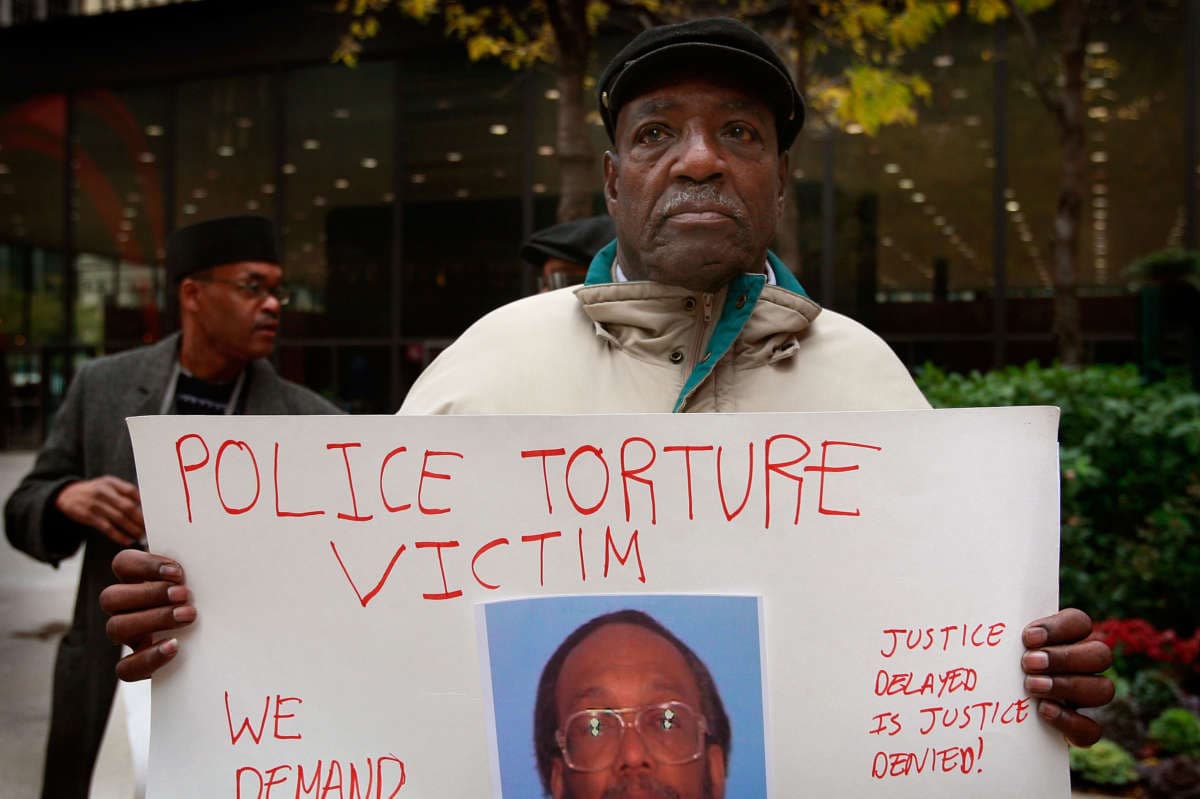
Commander Jon Burge and detectives systematically tortured suspects from 1972-1991, leading to wrongful convictions. The city covered up evidence for decades.
“These are isolated incidents and allegations of systematic torture are unfounded”
From “crazy” to confirmed
The Claim Is Made
This is the moment they called it crazy.
When detectives working under Chicago Police Commander Jon Burge began extracting confessions from murder suspects in the 1970s, something was wrong with nearly every case they closed. The suspects confessed to crimes with remarkable consistency, yet evidence didn't match their stories. Nobody in power seemed interested in asking why.
From 1972 to 1991, Burge and his team operated with near-total impunity on the South Side of Chicago. They used electrical shock, suffocation, and physical beatings to coerce confessions from suspects—the vast majority of them Black men accused of violent crimes. The detectives maintained an almost supernatural confession rate, and the courts accepted these statements as reliable evidence. Dozens of convictions followed.
For years, this was exactly what it appeared to be: efficient police work. Burge was considered a skilled investigator. When prisoners claimed they'd been tortured, their allegations were dismissed as the desperate lies of criminals trying to escape justice. Defense attorneys raised concerns. Activists documented patterns. The official response from city leadership was consistent: there was no evidence of systematic abuse. The allegations were isolated complaints from convicted felons with every reason to fabricate stories. The system worked as intended.
But the system didn't work. It was designed to hide what was happening.
In 1989, a group of lawyers and activists began investigating systematically. They didn't rely on individual prisoner testimonies alone—instead, they looked for patterns across dozens of cases. They found suspects who had been arrested at the same location, questioned by the same detectives, who gave confessions with identical details that contradicted physical evidence. They documented locations where torture had allegedly occurred. They interviewed witnesses and former police officers. The pattern was unmistakable and undeniable.
By the late 1990s and early 2000s, the evidence became impossible to ignore. Exonerations began. In 2001, Governor George Ryan commuted the sentences of 167 death row inmates in Illinois—many were victims of the Burge apparatus. In 2003, the city of Chicago officially acknowledged the torture ring and paid settlements to survivors. By 2015, at least 125 people had been identified as torture victims under Burge's command. Some had spent decades in prison for crimes they didn't commit.
Burge himself wasn't prosecuted for torture—a fact that speaks volumes about how institutions protect their own. He was eventually convicted of perjury and conspiracy in 2010, sentenced to four and a half years in prison. By then, the damage was immeasurable.
What made this possible wasn't a few bad actors. It required a system that trusted police testimony reflexively, that dismissed prisoner complaints categorically, that prioritized closed cases over justice. It required supervisors who didn't investigate. It required prosecutors who didn't question confessions that seemed too perfect.
This wasn't a secret hidden from everyone. Complaints existed. Rumors circulated. But institutional inertia and institutional loyalty kept the torture system operational for nearly two decades. When the truth finally emerged, it revealed something more disturbing than the crimes themselves: a system that actively protected torturers because the system itself depended on believing them.
That's what matters. Trust in institutions isn't just damaged by individual misconduct. It's destroyed when institutions systematically cover up misconduct.
Get the 5 biggest receipts every week, straight to your inbox — plus an exclusive PDF: The Top 10 Conspiracy Theories Proven True in 2025-2026. No spam. No agenda. Just the papers they couldn't hide.
You just read "Chicago Police Tortured Over 100 Suspects to Extract False C…". We send ones like this every week.
No one's said anything yet. Be the first to drop your take.