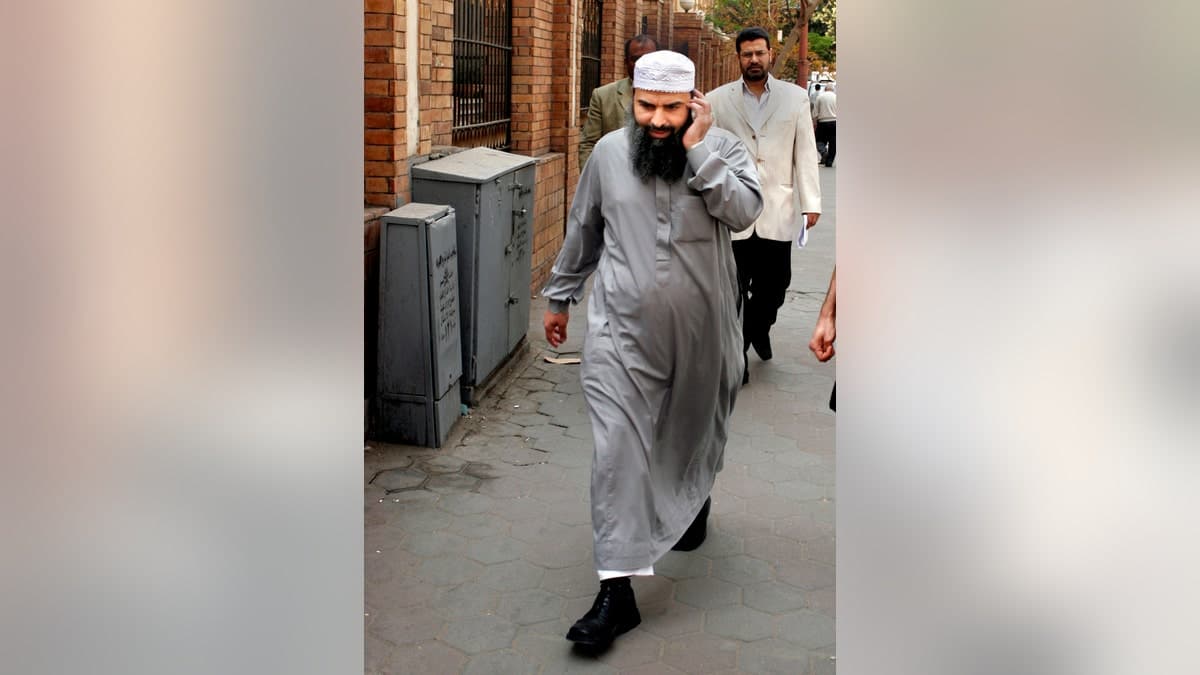
In 2002, Canadian citizen Maher Arar was detained at JFK Airport during a layover, rendered to Syria by the CIA, and tortured for nearly a year in a coffin-sized cell. A Canadian commission later confirmed he was completely innocent -- the RCMP had shared faulty intelligence with the US. Canada paid Arar $10.5 million in compensation. The US government never apologized and kept him on the no-fly list until 2009.
“We removed a citizen to have him tortured based on wrong information.”
From “crazy” to confirmed
The Claim Is Made
This is the moment they called it crazy.
On September 26, 2002, Maher Arar, a 32-year-old Canadian software engineer, was detained at JFK Airport in New York while on a layover during a flight to Canada. What followed was a chain of events that exposed one of the most troubling intersections between Canadian and American intelligence operations: an innocent man would be kidnapped by the CIA and transported to Syria, where he would be tortured for nearly a year in a coffin-sized cell.
At the time of his detention, Arar was simply returning home. He had no criminal record and no connection to terrorism. Yet U.S. authorities pulled him from the airport and held him in custody, eventually placing him on a CIA plane bound for Syria—a country notorious for its use of torture. The stated reason: faulty intelligence suggesting he had links to al-Qaeda, information that had originated from the Canadian RCMP.
The U.S. government's position, when pressed, was characteristically opaque. Officials argued they were following standard procedures in a post-9/11 security environment. They claimed the decision to send Arar to Syria had been made by relevant agencies based on available intelligence. No apology was offered. No acknowledgment of wrongdoing was made. Instead, Arar remained on the U.S. no-fly list, effectively imprisoned by bureaucratic indifference.
What made this claim verifiable was the Canadian government's independent investigation. In 2006, the Arar Commission, led by Justice Dennis O'Connor, released its findings after a comprehensive review of classified documents and testimony. The commission's conclusion was unambiguous: Maher Arar was completely innocent. The intelligence the RCMP had shared with American authorities was not simply flawed—it was fundamentally wrong. No credible evidence connected Arar to terrorism. He had been rendered to Syria and tortured based on a mistake.
Get the 5 biggest receipts every week, straight to your inbox — plus an exclusive PDF: The Top 10 Conspiracy Theories Proven True in 2025-2026. No spam. No agenda. Just the papers they couldn't hide.
You just read "CIA Kidnapped an Innocent Canadian Engineer at JFK Airport a…". We send ones like this every week.
No one's said anything yet. Be the first to drop your take.
Confirmed: They Were Right
The truth comes out. Officially documented.
Confirmed: They Were Right
The truth comes out. Officially documented.
The torture itself was documented. Arar spent nearly a year in a cell measuring just two meters by two meters, where he was beaten and subjected to psychological torture. He signed a false confession just to make it stop. Syrian officials eventually determined he was not a threat and released him in October 2003.
Canada's response contrasted sharply with American silence. In 2007, the Canadian government officially apologized to Arar and paid him $10.5 million in compensation—one of the largest settlements ever made in a rendition case. The United States, by contrast, offered nothing. Arar remained on the no-fly list until 2009, six years after his detention, still treated as a suspect in the country that had kidnapped and tortured him.
This case matters because it reveals how surveillance states operate in practice. Intelligence failures don't simply result in embarrassment; they destroy lives. Innocent people can be disappeared from American airports and subjected to torture with virtually no accountability. The mechanisms designed to protect citizens—verification, oversight, due process—failed completely.
Perhaps most troubling is what the Arar case shows about institutional responsibility. When an ally nation like Canada found truth through investigation and offered restitution, the American government simply moved on. This wasn't a conspiracy theory vindicated by circumstantial evidence. It was a documented, officially confirmed case of kidnapping and torture. Yet it remains largely forgotten, a reminder that some of the most serious violations of justice happen not in shadows, but in plain sight—and often go unaddressed.
Beat the odds
This had a 0% chance of leaking — someone talked anyway.
Conspirators
~200Network
Secret kept
0.5 years
Time to 95% exposure
500+ years