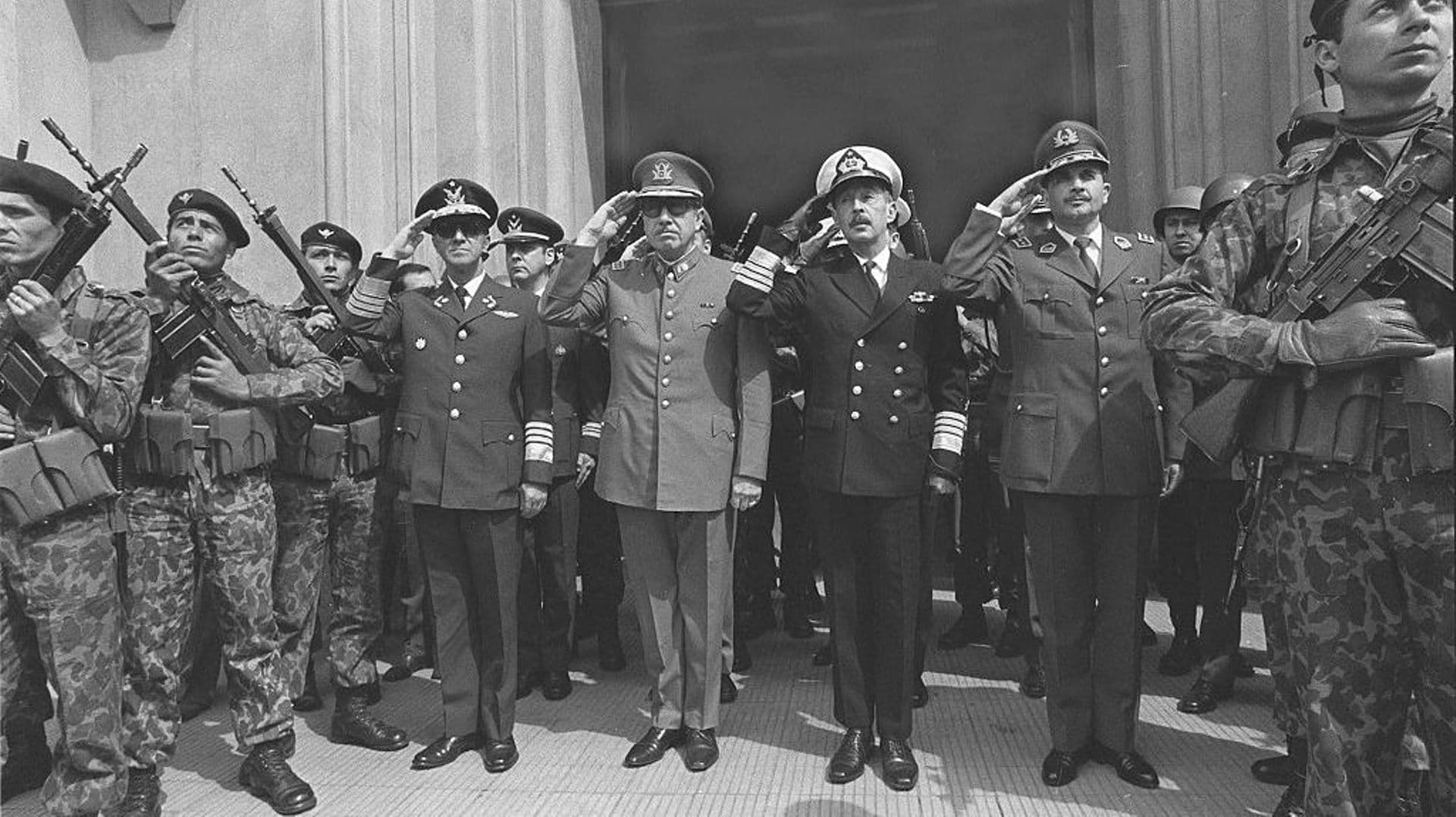
Declassified documents confirmed the CIA spent over $8 million between 1970-1973 to destabilize the democratically elected government of Salvador Allende in Chile. The CIA funded opposition media, strikes, and political parties. Nixon told CIA Director Helms to 'make the economy scream.' The resulting September 11, 1973 coup installed General Augusto Pinochet, whose regime killed over 3,000 people and tortured tens of thousands.
“Not a nut or bolt shall reach Chile under Allende. Once Allende comes to power we shall do all within our power to condemn Chile and all Chileans to utmost deprivation and poverty.”
From “crazy” to confirmed
The Claim Is Made
This is the moment they called it crazy.
When Salvador Allende won Chile's 1970 presidential election as a socialist, it set off alarm bells in Washington. Within days, the CIA began plotting to prevent his inauguration, and when that failed, to remove him from power. What started as whispered allegations in the 1970s and 1980s—dismissed by U.S. officials as conspiracy theories—became documented historical fact decades later through declassified government records.
The claim was straightforward but explosive: the United States intelligence apparatus had spent millions to destabilize a democratically elected government and engineer a military coup. Critics called it paranoid. Supporters pointed to circumstantial evidence. But there was a fundamental problem with dismissing it—too many pieces fit together too perfectly.
For years, U.S. officials flatly denied systematic involvement in Chilean politics beyond routine diplomatic relations. When journalists and historians suggested CIA fingerprints on the 1973 coup that brought General Augusto Pinochet to power, the response was predictable denial. The official line held that American officials may have disliked Allende's politics, but that America did not orchestrate his overthrow. These were the claims of people who simply couldn't accept election results, the narrative went.
Then came the declassification process. The National Security Archive, a research institute at George Washington University, obtained documents that told a different story entirely. The evidence showed the CIA had spent over $8 million between 1970 and 1973—equivalent to roughly $65 million in today's dollars—specifically to undermine Allende's government. The money funded opposition media outlets, financed strikes designed to cripple the economy, and supported right-wing political parties hostile to the elected president.
Get the 5 biggest receipts every week, straight to your inbox — plus an exclusive PDF: The Top 10 Conspiracy Theories Proven True in 2025-2026. No spam. No agenda. Just the papers they couldn't hide.
You just read "The CIA spent $8 million to destabilize Chile's democracy an…". We send ones like this every week.
No one's said anything yet. Be the first to drop your take.
Confirmed: They Were Right
The truth comes out. Officially documented.
Confirmed: They Were Right
The truth comes out. Officially documented.
Perhaps most damning was a recorded conversation between President Richard Nixon and CIA Director Richard Helms. Nixon's instruction was direct: "make the economy scream." This wasn't speculation or inference. This was the sitting president explicitly ordering economic warfare against a sovereign nation's elected government.
The coup came on September 11, 1973. Pinochet's military seized control in a violent takeover. What followed was one of Latin America's bloodiest dictatorships. Over 3,000 people were killed. Tens of thousands were tortured. An entire nation's democratic experiment was snuffed out, and the United States had actively participated in that extinguishing.
The evidence didn't emerge because journalists finally cracked the case or because whistleblowers came forward. It emerged because documents that had been classified as state secrets were eventually made public through the declassification process. The facts had existed all along in filing cabinets and government archives. What changed was access.
This matters because it reveals something uncomfortable about institutional credibility. When powerful agencies deny involvement in controversial actions, the public has limited ways to verify the truth in real time. The dismissal of "conspiracy theories" about Chile was treated as obvious common sense by mainstream institutions, yet the theories turned out to be documented reality.
The lesson isn't that every controversial claim deserves equal credence. It's that historical patterns matter. When claims align with declassified evidence, when they're supported by documentary proof, when they're corroborated across multiple independent sources, calling them conspiracy theories becomes a way of avoiding inconvenient truths. Chile's experience showed what happens when democratic oversight fails.
Beat the odds
This had a 2.4% chance of leaking — someone talked anyway.
Conspirators
~200Network
Secret kept
30.2 years
Time to 95% exposure
500+ years