Declassified documents revealed the CIA's Robertson Panel recommended a public debunking campaign to reduce UFO reports, contradicting claims they weren't actively suppressing information.
“The CIA has no special interest in UFOs and does not investigate them”
From “crazy” to confirmed
The Claim Is Made
This is the moment they called it crazy.
For decades, the U.S. government maintained it had no official policy regarding UFO sightings. Public officials insisted the military and intelligence agencies simply investigated reports as they came in, with no agenda beyond scientific curiosity. This reassurance was meant to calm a nation gripped by Cold War anxiety and growing public fascination with the possibility of extraterrestrial visitors.
But in 1953, something happened behind closed doors that contradicted this narrative entirely.
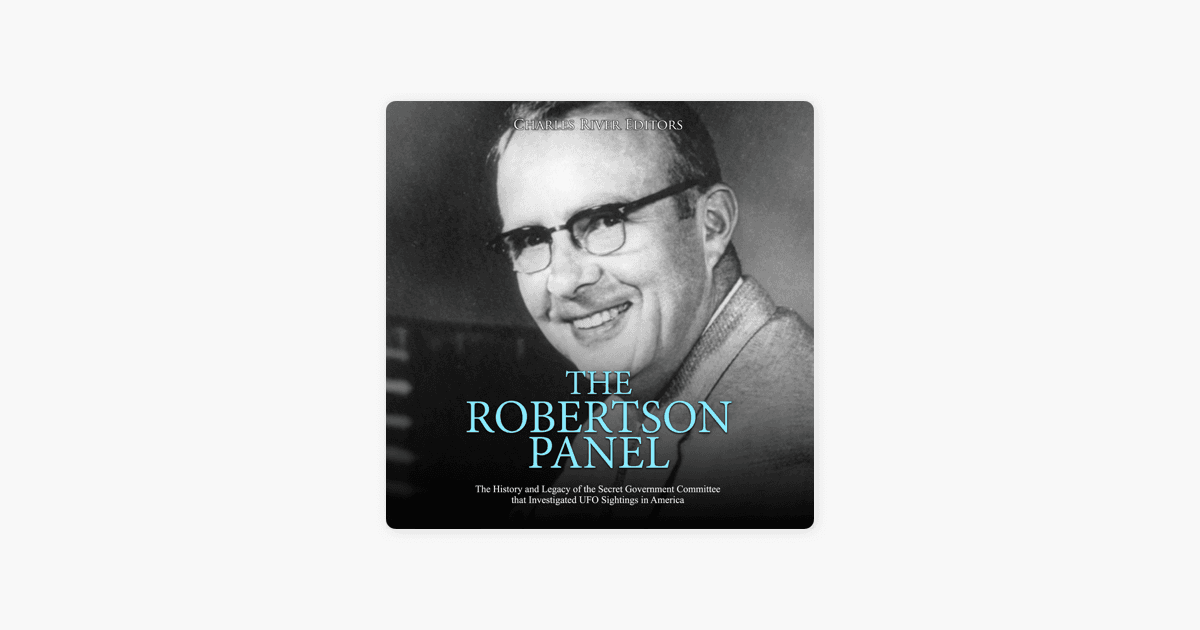
The Robertson Panel, a classified committee convened by the CIA and chaired by physicist H.P. Robertson, met to discuss what many saw as a mounting crisis: Americans were reporting UFOs at an unprecedented rate. Military radar operators, commercial pilots, and civilians across the country were filing sightings. The panel's task was ostensibly to evaluate these reports and determine if they posed any national security threat.
What they actually recommended was far more deliberate.
According to the declassified Robertson Panel Report, the committee didn't merely suggest that UFO reports be studied more carefully. Instead, they explicitly recommended a coordinated public relations campaign designed to reduce public interest in UFOs and discourage future reporting. The panel worried that the volume of civilian UFO sightings was clogging military communication channels and potentially masking any actual security threats. Their solution wasn't transparency—it was organized skepticism.
Get the 5 biggest receipts every week, straight to your inbox — plus an exclusive PDF: The Top 10 Conspiracy Theories Proven True in 2025-2026. No spam. No agenda. Just the papers they couldn't hide.
You just read "CIA's Robertson Panel Secretly Recommended UFO Debunking Cam…". We send ones like this every week.
No one's said anything yet. Be the first to drop your take.
For years, skeptics and government officials dismissed claims of any such campaign as paranoid conjecture. They argued that debunkers of UFO theories were simply applying scientific standards to anecdotal evidence. When asked directly, intelligence officials neither confirmed nor denied any systematic effort to discourage UFO reporting. The very suggestion was often ridiculed in mainstream media as conspiratorial thinking.
Then the documents surfaced.
When the CIA released the Robertson Panel Report through declassification, the committee's intentions became impossible to deny. The panel had explicitly stated that reducing public belief in UFOs would prevent public confusion and maintain efficient military operations. They recommended "the debunking of unreliable reports" and suggested working with private UFO research organizations and media outlets to shape public perception. This wasn't coincidental skepticism—it was policy.
The implications were significant. If the government had actively worked to discourage UFO reporting and suppress public interest, what else might they have been keeping quiet about? How many sightings went unreported because witnesses feared ridicule? How many credible accounts were dismissed not on their merits, but because they didn't fit the official narrative that UFOs weren't worth taking seriously?
This revelation mattered because it exposed a fundamental breach in the implicit contract between government and public. Citizens deserve to know when their government is actively shaping information rather than simply presenting facts. The Robertson Panel didn't just recommend studying UFO reports—they recommended manufacturing doubt about them.
More than seventy years later, this case remains instructive. It shows that institutional secrecy and coordinated public relations can suppress genuine information, and that what authorities dismiss as conspiracy theory may simply be documented reality catching up with declassified files. Trust in institutions depends on transparency. When that transparency is withheld, people stop believing what they're told—and they start believing other things instead.
Unlikely leak
Only 13.6% chance this would come out. It did.
Conspirators
~500Large op
Secret kept
73.3 years
Time to 95% exposure
500+ years