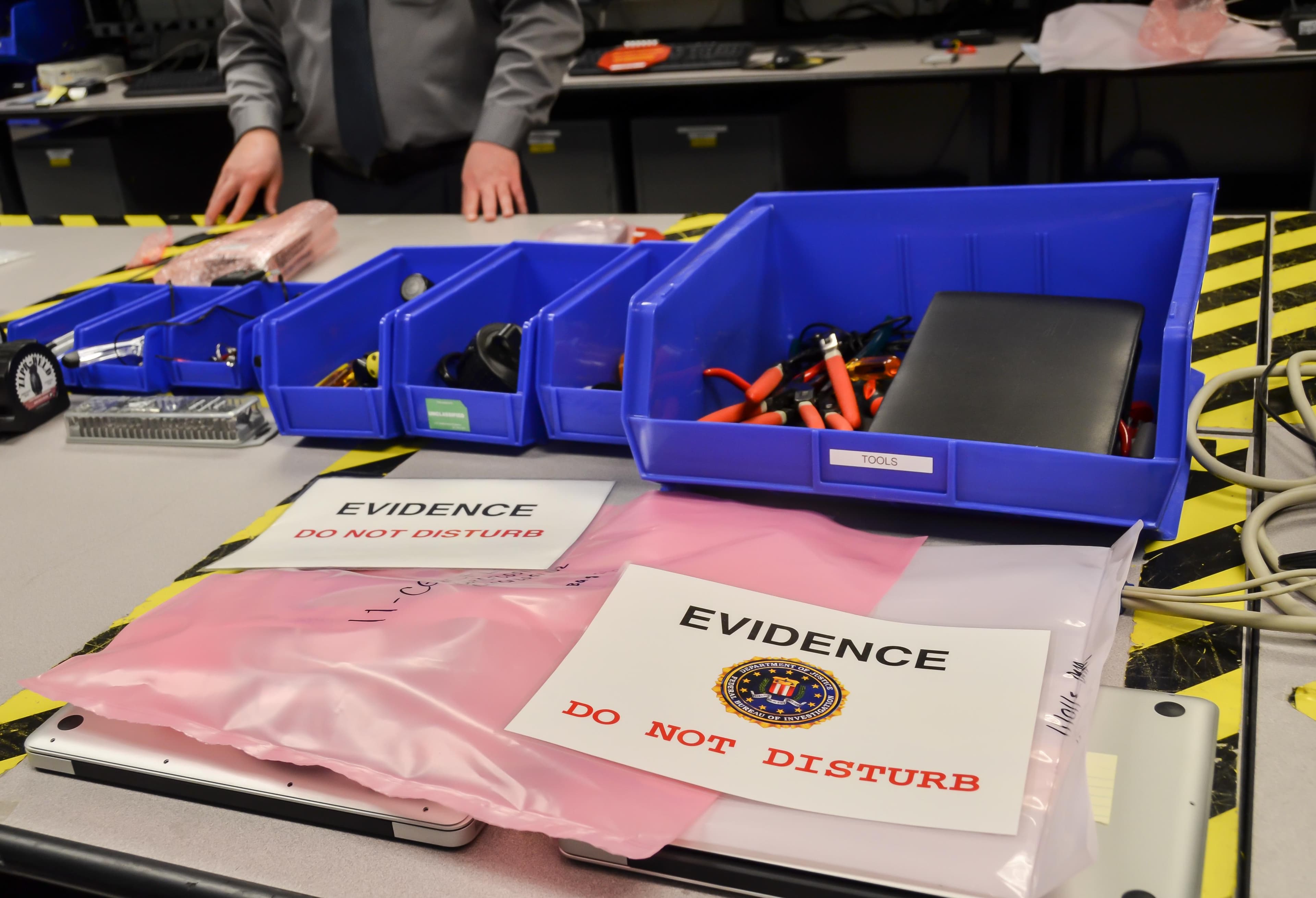
FBI forensic analysts provided scientifically invalid testimony about hair and fiber evidence in over 2000 cases from 1980-2000. An internal review found 96% of testimonies contained errors, affecting death penalty cases.
“FBI laboratory procedures meet the highest scientific standards and provide accurate evidence”
From “crazy” to confirmed
The Claim Is Made
This is the moment they called it crazy.
For decades, the FBI's crime laboratory stood as a pillar of scientific authority in American criminal justice. Thousands of defendants sat in courtrooms while federal forensic analysts testified with apparent certainty about hair and fiber evidence. What nobody knew was that this testimony was fundamentally unreliable, and the FBI knew it—or should have.
Between 1980 and 2000, FBI hair and fiber examiners provided testimony in over 2,000 criminal cases. The stated position was clear: these analysts could match hair samples to specific individuals with scientific precision. Prosecutors relied on this testimony to secure convictions. Juries heard it and believed it. Defense attorneys had little reason to challenge claims backed by the nation's premier law enforcement agency.
When questions began surfacing about the validity of hair comparison evidence, the FBI's response was consistent: their examiners followed proper protocols and their conclusions were sound. The Bureau defended its forensic methods as scientifically rigorous. To suggest otherwise was to undermine the credibility of federal law enforcement itself. This dismissal lasted for years, even as doubts grew in the broader scientific community.
The reckoning came through an internal FBI review that revealed a uncomfortable truth. The agency examined cases where its own hair examiners had testified and compared their conclusions to what modern DNA testing could verify. The results were damning: 96% of the hair comparison testimonies examined contained errors or overstatements. Some analysts had claimed to match hair samples to individuals when the science simply didn't support such specificity. Others had testified beyond the limits of what hair evidence could actually prove.
What made this particularly grave was the scope. These weren't isolated mistakes by a handful of careless examiners. This was systematic. This was institutional. And crucially, it affected some of the highest-stakes cases—capital cases where flawed testimony may have contributed to death sentences.
Get the 5 biggest receipts every week, straight to your inbox — plus an exclusive PDF: The Top 10 Conspiracy Theories Proven True in 2025-2026. No spam. No agenda. Just the papers they couldn't hide.
You just read "FBI Crime Lab Provided False Testimony in Thousands of Cases…". We send ones like this every week.
No one's said anything yet. Be the first to drop your take.
The FBI's own documentation showed the problem was identifiable decades earlier. Hair comparison as a matching technique has inherent limitations that experts understood. Yet testimonies continued unchecked, phrased with unwarranted certainty. In some instances, examiners testified about statistical probabilities that had no scientific basis whatsoever. A defendant's life hung in the balance, and the evidence against them was presented as more conclusive than science could honestly claim.
This wasn't a conspiracy in the traditional sense. No one orchestrated a cover-up. But the gap between what FBI examiners actually knew about the limitations of hair evidence and what they communicated in courtrooms created a functional deception. The institution's reputation substituted for scientific validity. Juries trusted the FBI badge more than they questioned the science.
Today, hair comparison evidence is understood as a preliminary investigative tool, not definitive proof. DNA analysis has exposed how frequently hair examiners reached incorrect conclusions. Convictions obtained partly on false hair testimony have been overturned. Innocent people have walked free. Others remain incarcerated.
The FBI's experience serves as a critical lesson about institutional authority in the justice system. When prestigious agencies provide expert testimony, scrutiny can't stop at credentials. The methods themselves require constant validation. The consequences of unchecked forensic overreach aren't abstract—they're measured in years of wrongful imprisonment and lives irreparably damaged.
Beat the odds
This had a 0.2% chance of leaking — someone talked anyway.
Conspirators
~50Network
Secret kept
11.1 years
Time to 95% exposure
500+ years