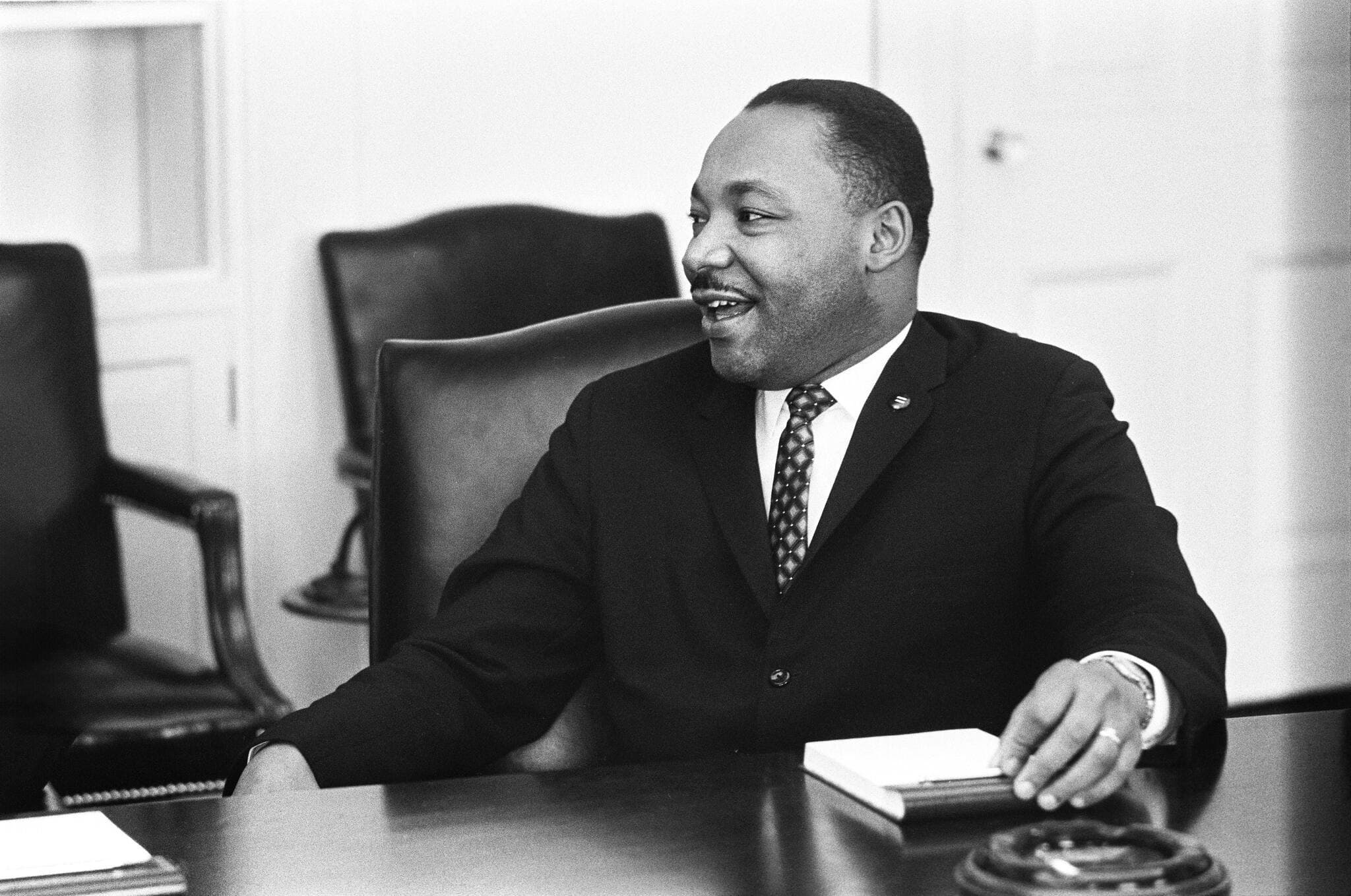
The FBI wiretapped King's phones, bugged his hotel rooms, and sent him threatening letters attempting to drive him to suicide.
“The FBI's investigation of Dr. King was limited to legitimate national security concerns”
From “crazy” to confirmed
The Claim Is Made
This is the moment they called it crazy.
For decades, the U.S. government denied surveilling Martin Luther King Jr. What we now know is that the FBI ran one of the most aggressive surveillance operations ever conducted against an American citizen—and actively worked to destroy him.
Between 1963 and 1968, FBI Director J. Edgar Hoover authorized the wiretapping of King's home and office phones, the bugging of his hotel rooms, and the monitoring of his movements. The stated justification was national security concerns and alleged Communist associations. King's team had suspected surveillance for years, but the government consistently denied these operations existed.
The public first learned the full scope of these activities through the FBI–King suicide letter, a document that emerged during congressional inquiries in the 1970s. This letter was perhaps the most damning piece of evidence: the FBI didn't just passively monitor King. Agents actively attempted to psychologically destroy him.
In November 1964, the FBI mailed King an anonymous package containing recordings of his extramarital affairs obtained through their surveillance, along with a threatening letter. The letter was designed to blackmail him, suggesting he take his own life before his reputation was destroyed by the recordings' public release. "King, there is only one thing left for you to do," the letter stated. "You know what it is."
When King and his associates received this package, they understood immediately what it was: a clear attempt at coercion by their own government. Remarkably, King refused to be intimidated and continued his civil rights work.
Get the 5 biggest receipts every week, straight to your inbox — plus an exclusive PDF: The Top 10 Conspiracy Theories Proven True in 2025-2026. No spam. No agenda. Just the papers they couldn't hide.
You just read "FBI illegally surveilled Martin Luther King Jr. and tried to…". We send ones like this every week.
No one's said anything yet. Be the first to drop your take.
The official response from the FBI and government was consistent denial. For years, authorities claimed the surveillance was routine counterintelligence work. When confronted with evidence, officials maintained that any operations were justified and legal. The very existence of the suicide letter was kept classified for nearly a decade after King's assassination in 1968.
Congressional investigations, particularly the Church Committee hearings of the mid-1970s, forced the government's hand. Released documents confirmed what activists had long claimed: the FBI's surveillance was extensive, illegal by any reasonable standard, and motivated by Hoover's personal animosity toward King. Hoover had called King "the most dangerous man in this country" and explicitly aimed to neutralize his influence.
The evidence proved the claims were not just true, but perhaps even understated. The suicide letter alone represents an extraordinary abuse of federal power—the use of classified intelligence apparatus to attempt blackmail and psychological manipulation against a domestic political figure. This wasn't foreign espionage work. This was the FBI turning its tools against the nation's preeminent civil rights leader.
What makes this case essential today is what it reveals about institutional accountability. The government operated these programs in secret for years, denied them when questioned, and only acknowledged them when forced by law. King's prediction proved prophetic: he understood that power structures would resist transparency about their own abuses.
The FBI's campaign against King demonstrates how surveillance powers, once granted, tend toward mission creep and political weaponization. It raises uncomfortable questions about what similar operations might have continued undetected, and what safeguards actually prevent such abuse. Nearly 60 years later, the lesson remains urgent: when governments operate in darkness, the most vulnerable populations face the greatest risk.
Beat the odds
This had a 4.9% chance of leaking — someone talked anyway.
Conspirators
~200Network
Secret kept
62.6 years
Time to 95% exposure
500+ years