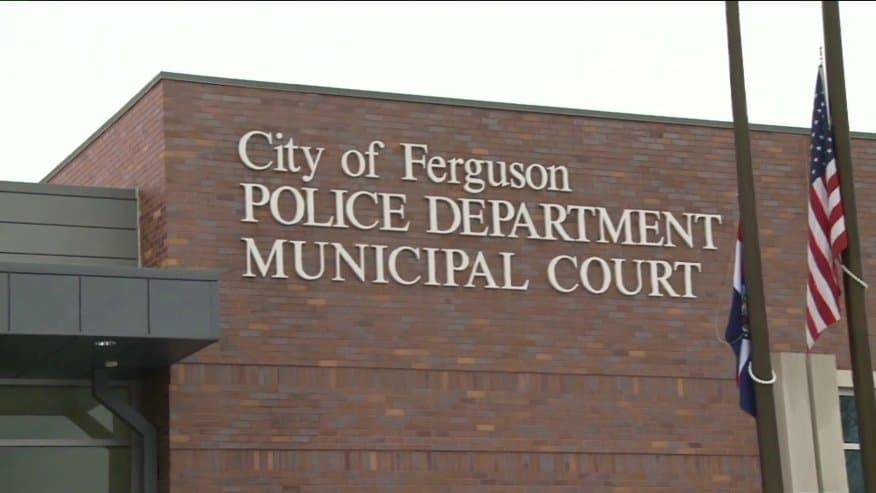
DOJ investigation revealed Ferguson police systematically targeted Black residents with excessive fines and arrests to generate city revenue. Courts operated as collection agencies rather than justice systems.
“Ferguson police department provides fair and equal law enforcement for all residents”
From “crazy” to confirmed
The Claim Is Made
This is the moment they called it crazy.
When Michael Brown was shot and killed by Ferguson police officer Darren Wilson in August 2014, it sparked national outrage over police brutality. What emerged from the investigation that followed, however, revealed something equally damning: a systemic scheme that had been operating in plain sight for years.
The claim was straightforward but extraordinary. According to documents and complaints that had circulated for some time, the Ferguson Police Department wasn't just enforcing the law—it was operating as a revenue collection agency, deliberately targeting Black residents with excessive fines and arrests to fill municipal coffers. The city, struggling financially, had allegedly turned its courts into collection mechanisms rather than institutions of justice.
Initially, city officials and some law enforcement defenders dismissed these allegations as exaggerations born from the heated moment. They argued that Ferguson's citation patterns simply reflected normal policing practices and that any revenue generated was incidental. The narrative pushed back suggested that complaints about bias were overstated reactions to a community in crisis.
Then came the Department of Justice investigation.
The DOJ's report on the Ferguson Police Department, released in March 2015, didn't just confirm the claims—it documented them in meticulous detail. Federal investigators found that the city had explicitly set revenue targets for the police department. Court records showed that citizens faced arrest warrants for failing to pay minor fines, with bail amounts often exceeding the original citation cost. A woman cited for a broken taillight ended up with over $300 in fines and fees. Another resident faced arrest for jaywalking.
The investigation revealed that between 2010 and 2014, Black residents comprised roughly 85 percent of Ferguson's population but accounted for over 90 percent of traffic stops. They represented 92 percent of cases where police used force. The data wasn't ambiguous—it showed a clear pattern of enforcement directed at one demographic.
Get the 5 biggest receipts every week, straight to your inbox — plus an exclusive PDF: The Top 10 Conspiracy Theories Proven True in 2025-2026. No spam. No agenda. Just the papers they couldn't hide.
You just read "Ferguson Police Department Operated as Municipal Revenue Gen…". We send ones like this every week.
No one's said anything yet. Be the first to drop your take.
What made the scheme particularly insidious was how it weaponized the courts. Ferguson's municipal court was designed to maximize fine collection rather than adjudicate fairly. Poor residents, disproportionately Black, faced a debt trap: unable to pay fines, they were charged additional fees; unable to pay those fees, they faced arrest; arrest led to more fees. Each step generated revenue.
The DOJ documented how police supervisors praised officers for writing citations and criticized those who didn't meet informal quotas. One email from a supervisor criticized an officer for "only" writing 20 citations in a month. This wasn't law enforcement—it was a numbers game with racial consequences.
The significance extends beyond Ferguson. This investigation provided federal documentation of what many communities had experienced but couldn't prove at scale. It showed how financial desperation in municipal government could transform police departments into debt collectors and turn courts into punishment systems for poverty. It revealed how systemic racism doesn't always require overt hatred; sometimes it requires only incentive structures that reward targeting a particular group.
For public trust, the findings were devastating. If Ferguson's police and courts operated this way, the question became unavoidable: how many other departments did as well? The investigation didn't restore confidence in the system—it fractured it further, forcing a reckoning with how American law enforcement had been weaponized against communities least able to defend themselves.
Beat the odds
This had a 0.2% chance of leaking — someone talked anyway.
Conspirators
~50Network
Secret kept
11.2 years
Time to 95% exposure
500+ years