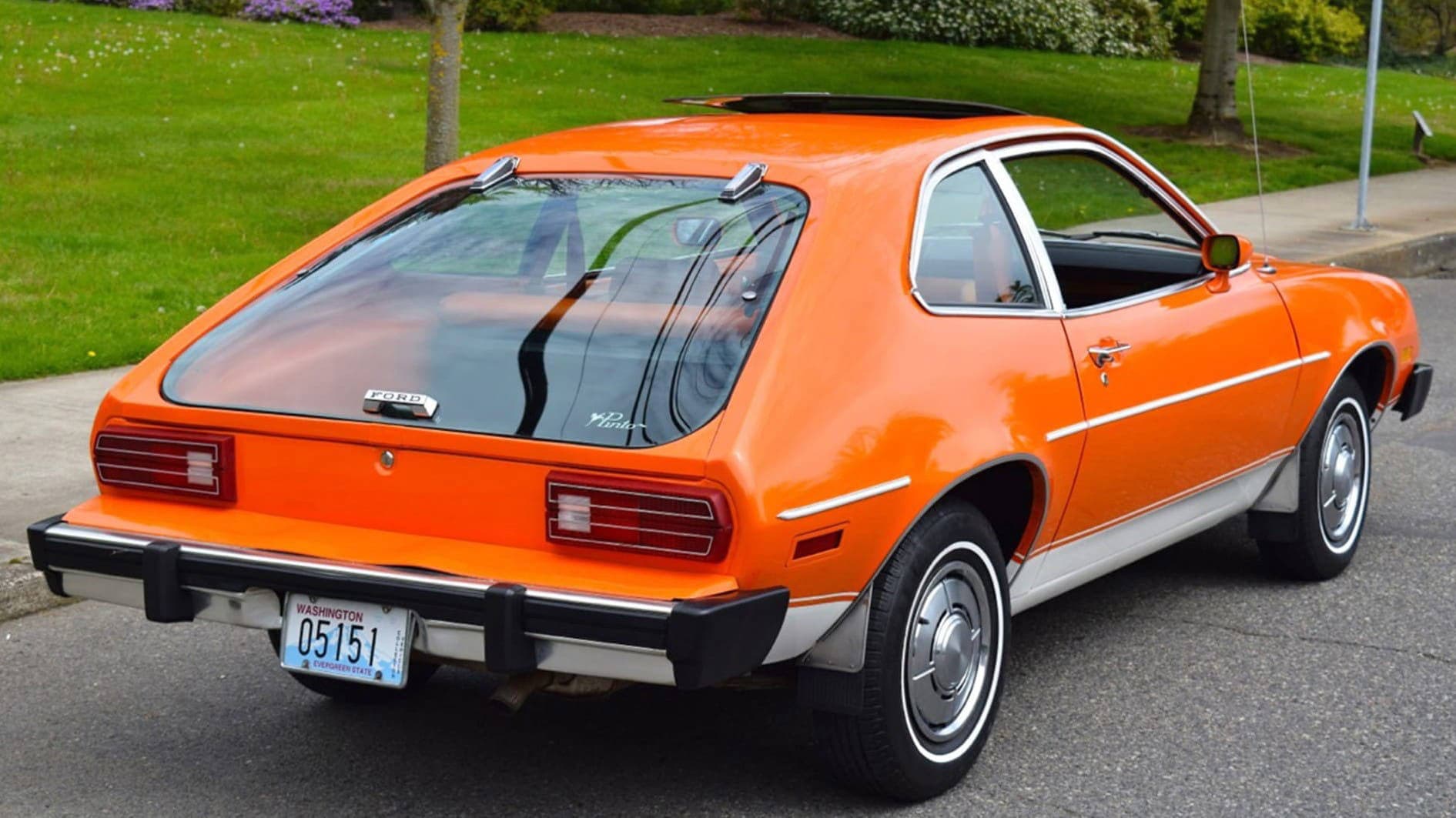
In the 1970s, Ford knew the Pinto's fuel tank could explode in rear-end collisions. Internal documents revealed a cost-benefit analysis valuing human life at $200,000, concluding it was cheaper to pay lawsuits than fix the $11-per-vehicle problem. An estimated 27-180 people died in Pinto fires. A 1977 Mother Jones expose led to a recall of 1.5 million vehicles. Ford was charged with criminal homicide in a landmark case.
“Ford knew the Pinto gas tank was a death trap. They did the math and decided it was cheaper to let people burn to death than spend $11 per car to fix it.”
From “crazy” to confirmed
The Claim Is Made
This is the moment they called it crazy.
The Ford Pinto was a best-selling compact car that should have never made it to dealerships. Between 1971 and 1980, approximately 27 to 180 people died in fires caused by a defective fuel tank that Ford's own engineers knew would rupture in rear-end collisions. What made these deaths particularly damning wasn't the design flaw itself—it was the evidence that Ford made a calculated business decision to let people burn rather than spend eleven dollars per vehicle to fix it.
The claim that Ford knowingly sold a dangerous vehicle for profit emerged gradually. Victims' families and consumer advocates began raising alarms throughout the 1970s about unexplained Pinto fires. But the company dismissed these concerns, insisting the Pinto met all federal safety standards of the time and that the incidents were isolated cases. Ford maintained public confidence in the vehicle, even as internal engineers documented the fuel tank problem in crash test reports.
The definitive proof came from internal Ford documents obtained during litigation. A now-infamous cost-benefit analysis revealed that Ford's safety department had calculated the economics of the problem versus the solution. The document valued a human life at $200,000—a figure that appears shockingly arbitrary in retrospect. Against this figure, Ford weighed the cost of a recall: roughly $137 million to repair all Pintos on the road. The alternative, fixing the problem in future models, would cost only $11 per vehicle. The mathematics were brutally clear: letting people die was cheaper than prevention.
Mother Jones magazine broke the story wide open in 1977, publishing details of Ford's calculations and the mounting body count. The investigation sparked public outrage that forced Ford's hand. The company initiated a recall of 1.5 million vehicles in 1978, finally installing bladders in the fuel tanks to contain ruptures. Tragically, this should have happened years earlier.
Get the 5 biggest receipts every week, straight to your inbox — plus an exclusive PDF: The Top 10 Conspiracy Theories Proven True in 2025-2026. No spam. No agenda. Just the papers they couldn't hide.
You just read "Ford knew the Pinto would explode in crashes but calculated …". We send ones like this every week.
No one's said anything yet. Be the first to drop your take.
Confirmed: They Were Right
The truth comes out. Officially documented.
Confirmed: They Were Right
The truth comes out. Officially documented.
The fallout extended beyond recalls. In 1980, Ford faced criminal homicide charges in Indiana—a landmark case that represented the first time a corporation was prosecuted for murder. Though the company was ultimately acquitted, the trial exposed Ford's negligence before the American public in unprecedented detail. The case became a watershed moment in business ethics and corporate accountability.
The Pinto scandal mattered for reasons extending far beyond Ford. It revealed that major corporations were willing to perform calculus on human lives, weighing profit margins against death tolls. It showed that internal warnings from engineers could be overridden by business considerations. And it demonstrated that without aggressive journalism and litigation, these decisions would remain hidden behind corporate walls.
Today, the Pinto case stands as a cautionary tale about profit incentives and moral responsibility. It proved that "they knew"—not through speculation or hearsay, but through documentary evidence the company itself created. The scandal forced the automotive industry to take safety more seriously and contributed to stronger regulatory oversight. But perhaps most importantly, it reminded consumers that trust in corporations must always be tempered by skepticism. When human lives hang in the balance, the math should never favor the bottom line.
Beat the odds
This had a 0% chance of leaking — someone talked anyway.
Conspirators
~100Network
Secret kept
0.8 years
Time to 95% exposure
500+ years