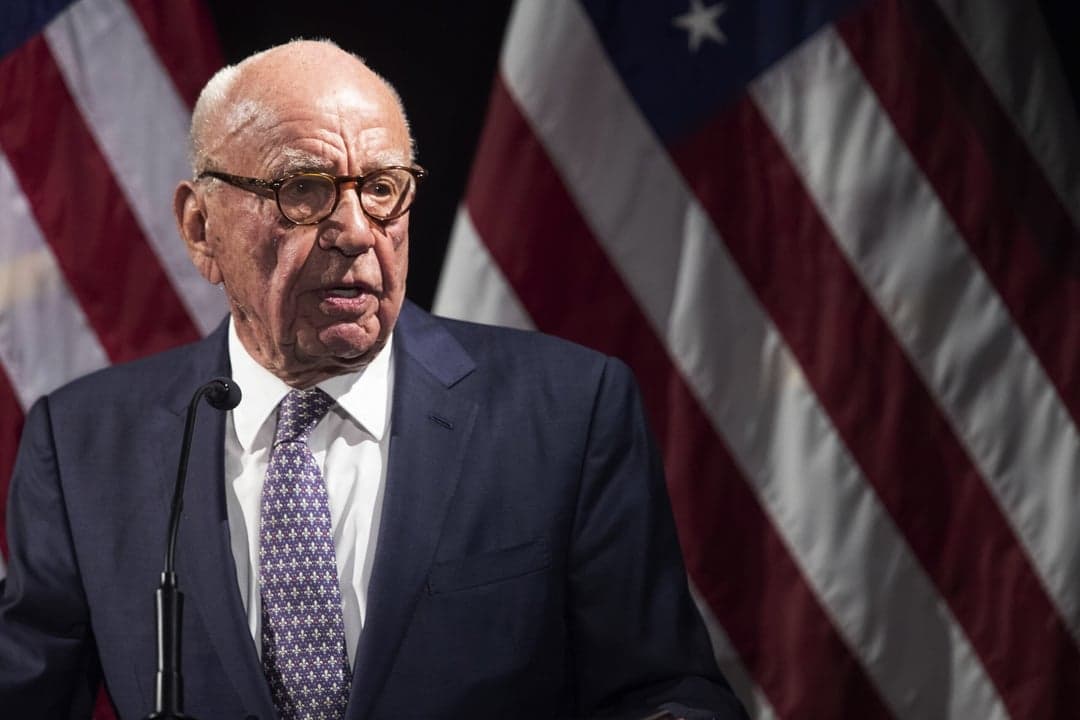
In the Dominion Voting Systems defamation lawsuit, sworn deposition testimony revealed that Rupert Murdoch knew Fox News hosts were endorsing lies about the 2020 election being stolen — and did nothing to stop it. Internal communications showed Fox hosts privately mocked the claims they promoted on air. Fox settled for $787.5 million — one of the largest defamation settlements in history. Murdoch acknowledged under oath that some Fox commentators 'endorsed' false claims about Dominion's voting machines. The case exposed how the Murdoch empire prioritized ratings and audience loyalty over truth.
“Fox News knowingly aired false claims about election fraud for ratings, and Rupert Murdoch himself knew the claims were lies. They deliberately deceived their own audience.”
What they said vs. what the evidence shows
“FOX News Media is proud of our 2020 election coverage, which stands in the highest tradition of American journalism. We will vigorously defend against this baseless lawsuit.”
— Fox News (prior to settlement) · Mar 2021
SourceFrom “crazy” to confirmed
The Claim Is Made
This is the moment they called it crazy.
Confirmed: They Were Right
The truth comes out. Officially documented.
Confirmed: They Were Right
The truth comes out. Officially documented.
When Rupert Murdoch took the stand in a Delaware courtroom in April 2023, he faced a question that would define the credibility of his entire media empire: did he know his television hosts were lying to millions of viewers about the 2020 election? His answer, given under oath, was yes.
For months after the 2020 presidential election, Fox News hosts and commentators had promoted claims that Dominion Voting Systems had rigged the election in Joe Biden's favor. These weren't fringe voices—they were prime-time personalities with millions of viewers. Names like Sean Hannity, Laura Ingraham, and Tucker Carlson repeatedly amplified the fraud narrative, often without disclaimer or skepticism. The claims spread rapidly through conservative media ecosystems and into public discourse, influencing how millions of Americans understood the election's legitimacy.
When Dominion Voting Systems filed a defamation lawsuit against Fox News for $1.6 billion in 2021, the network's response was dismissive. Fox argued that its hosts were simply reporting on newsworthy claims and that their commentary constituted protected speech. The network implied that it bore no responsibility for what personalities said on air. Legal experts and media watchdogs closely followed the case, understanding that the outcome would set precedent for whether media corporations could escape accountability for amplifying demonstrably false information.
But the evidence uncovered during discovery told a different story. Under oath, Murdoch acknowledged that Fox commentators had "endorsed" false claims about Dominion's voting machines. More damaging were the internal communications revealed during the lawsuit. Private emails and text messages showed that Fox hosts and executives privately knew the election fraud claims were baseless, even as they continued promoting them on air. Some hosts mocked the very allegations they presented to audiences as serious concerns. This disconnect between private knowledge and public messaging was the legal and moral crux of the case.
The contrast was stark and undeniable. Off-air, the Fox ecosystem knew better. On-air, it amplified lies. This wasn't a matter of good-faith disagreement about election integrity. It was a deliberate choice to prioritize audience engagement and advertiser revenue over accuracy.
Rather than proceed to trial and face further revelations, Fox settled with Dominion for $787.5 million in April 2023—one of the largest defamation settlements in American history. The settlement came just as Murdoch's deposition testimony was becoming public, making the company's knowledge and negligence a matter of sworn record.
What makes this case significant extends beyond the dollar figure or even Fox News itself. The claim that a major media organization knowingly spread election falsehoods has profound implications for democratic institutions. When the public cannot trust that large media operations are attempting to tell them the truth—when leadership privately knows the content is false—the information ecosystem that democracy depends on degrades fundamentally.
This wasn't a conspiracy theory that "turned out to be true" in the sense of hidden wrongdoing finally exposed. Rather, it was a claim about institutional deception that was systematically documented, tested in court, and ultimately confirmed by the defendant's own leadership under oath. The record now shows clearly: they knew, and they did it anyway.
Get the 5 biggest receipts every week, straight to your inbox — plus an exclusive PDF: The Top 10 Conspiracy Theories Proven True in 2025-2026. No spam. No agenda. Just the papers they couldn't hide.
You just read "Rupert Murdoch admitted under oath that Fox News hosts endor…". We send ones like this every week.
No one's said anything yet. Be the first to drop your take.