GEPAN investigators found physical trace evidence of a UFO landing in 1981 but French authorities classified key findings. The case showed unexplained soil alterations and metallic deposits.
“The Trans-en-Provence incident has been fully investigated with no anomalous findings”
From “crazy” to confirmed
The Claim Is Made
This is the moment they called it crazy.
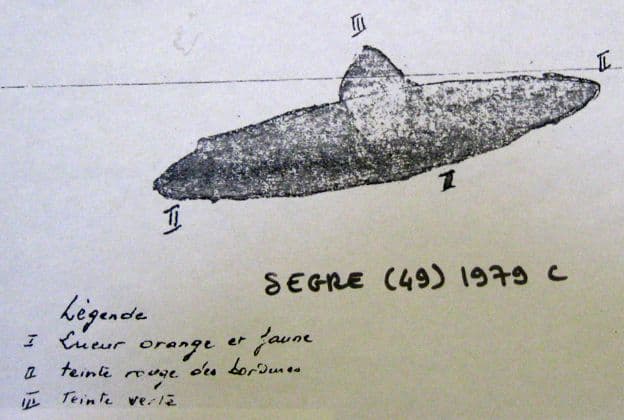
On January 8, 1981, a farmer in the small French village of Trans-en-Provence reported something extraordinary: a metallic disc-shaped object had landed in his field, leaving behind physical evidence. What happened next reveals how official science can acknowledge the unexplainable while governments work to contain the narrative.
The farmer's account was methodical and credible. He described a lens-shaped craft approximately 2.5 meters in diameter, hovering briefly before departing with a whistling sound. More importantly, the landing site showed measurable physical alterations. The soil was compacted, vegetation was pressed down in a specific pattern, and the ground itself bore traces of chemical change.
France's official UFO investigation body, GEPAN (Groupe d'Etude des Phénomènes Aérospatiaux Non-identifiés), took the case seriously enough to conduct a thorough scientific investigation. This was not fringe speculation. GEPAN was a legitimate research unit associated with France's space agency, staffed by engineers and physicists trained to examine anomalous phenomena with rigorous methodology.
The investigators found something the official explanations struggled to account for. Soil samples contained metallic deposits and showed crystalline alterations inconsistent with conventional machinery or natural phenomena. The compaction pattern didn't match any known agricultural equipment. The physical evidence was documented, measured, and preserved. These weren't vague impressions—they were reproducible, testable observations.
Yet when GEPAN's findings were compiled, key details were classified or compartmentalized. The French government did not suppress the investigation entirely, but it managed information release strategically. The most compelling physical evidence was acknowledged within official channels while remaining obscured from public scrutiny. Researchers could access certain documents through proper channels, but the full scope of metallic analysis and soil composition data remained restricted.
Get the 5 biggest receipts every week, straight to your inbox — plus an exclusive PDF: The Top 10 Conspiracy Theories Proven True in 2025-2026. No spam. No agenda. Just the papers they couldn't hide.
You just read "French Government Hid Details of Trans-en-Provence UFO Landi…". We send ones like this every week.
No one's said anything yet. Be the first to drop your take.
This created a peculiar situation. The case was neither debunked nor fully explained. Official statements acknowledged that "something happened" at Trans-en-Provence without committing to conclusions about what that something was. The evidence existed in official records, but the framing of that evidence remained controlled. Citizens interested in the case had to piece together information from declassified portions of GEPAN's work, which was eventually succeeded by GEIPAN.
The Trans-en-Provence case demonstrates a pattern that repeats across multiple governments and institutions: the simultaneous acknowledgment and obscuration of unexplained phenomena. The French government didn't deny the physical evidence existed. It simply limited how thoroughly the public could examine it.
This matters beyond UFO speculation. When governments classify details of physical evidence that contradicts conventional explanations, they create justified skepticism about official narratives. Citizens begin to reasonably assume that if authorities felt confident in mundane explanations, they wouldn't need to restrict information access. The classification itself becomes evidence of something unusual.
The Trans-en-Provence case reveals that institutional transparency and scientific inquiry don't always align with state interests. A farmer's account was corroborated by physical evidence that persists in official files to this day. Yet most people remain unaware the case exists, let alone that government scientists confirmed anomalous findings.
Public trust isn't damaged by unexplained phenomena. It's damaged when institutions you're supposed to trust appear to be managing information rather than sharing it.
Unlikely leak
Only 8.7% chance this would come out. It did.
Conspirators
~500Large op
Secret kept
45.3 years
Time to 95% exposure
500+ years