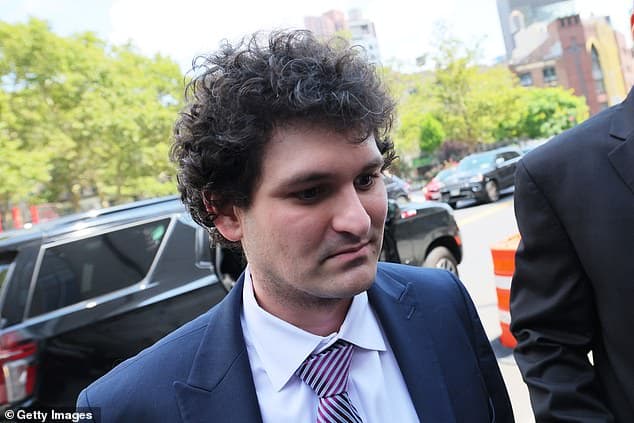
SBF was charged with using misappropriated customer deposits to make over 300 illegal political donations to both Democratic and Republican candidates, totaling $93 million. The scheme evaded individual donation limits and reporting requirements. The DOJ stated it was all 'in service of Bankman-Fried's desire to buy bipartisan influence.' He was convicted on seven federal counts and sentenced to 25 years in prison.
“SBF is using stolen customer money to buy political influence and protection in Washington.”
What they said vs. what the evidence shows
“FTX is fine. Assets are fine. Customer assets are held 1:1.”
— SBF / FTX PR · Nov 2022
SourceFrom “crazy” to confirmed
The Claim Is Made
This is the moment they called it crazy.
When FTX collapsed in November 2022, it looked like a straightforward cryptocurrency scandal: a young billionaire's exchange imploded, customer funds vanished, and thousands of investors lost everything. But as federal investigators dug deeper into Sam Bankman-Fried's operations, they uncovered something that cut to the heart of how money moves through American politics. SBF hadn't just stolen customer deposits—he'd allegedly funneled $93 million of those stolen funds directly into political campaigns across both parties.
The claim that Bankman-Fried orchestrated an illegal campaign finance scheme wasn't immediately obvious. For years, SBF had been celebrated as a legitimate political donor. He gave lavishly to Democratic candidates and causes, making him one of the largest individual donors in the 2022 midterm cycle. Quietly, he was also funding Republicans. At first, this looked like standard—if extraordinarily generous—political participation. Nobody questions a billionaire's right to spend money on elections.
FTX's collapse changed that calculation. Once auditors began examining where the company's missing money went, they found something extraordinary: SBF had used customer deposits—funds that belonged to everyday traders and investors—to bankroll over 300 individual political donations. The scheme worked by disguising the source of the money and breaking donations into smaller amounts designed to evade individual contribution limits and reporting requirements.
In December 2023, the Department of Justice brought formal charges. The indictment was explicit about intent: according to prosecutors, this was "in service of Bankman-Fried's desire to buy bipartisan influence." The DOJ documented how the money moved from customer accounts into political campaigns, creating a clear chain of evidence. CNBC later reported that FTX and SBF had spent the $93 million specifically to purchase access and political power across Washington. Fortune confirmed the scale of the scheme, detailing how systematic and deliberate the diversions had been.
Get the 5 biggest receipts every week, straight to your inbox — plus an exclusive PDF: The Top 10 Conspiracy Theories Proven True in 2025-2026. No spam. No agenda. Just the papers they couldn't hide.
You just read "Sam Bankman-Fried used stolen FTX customer funds to make $93…". We send ones like this every week.
No one's said anything yet. Be the first to drop your take.
Confirmed: They Were Right
The truth comes out. Officially documented.
Confirmed: They Were Right
The truth comes out. Officially documented.
The official dismissal—before the evidence came forward—was that SBF was simply an unusually generous donor. When his political spending became public during the 2022 cycle, political analysts largely treated it as another example of billionaire influence in elections. Some noted it seemed excessive, but excess isn't illegal. What made this case different was that none of the money was actually SBF's to give. He was laundering customer funds through the political system itself.
Bankman-Fried was convicted on seven federal counts in November 2023, and the judge sentenced him to 25 years in prison. The conviction rested on showing that he'd knowingly misappropriated customer deposits and deliberately structured the donations to violate campaign finance law.
This matters because it reveals a vulnerability in our political system that goes beyond typical corruption narratives. This wasn't a case of a politician accepting bribes or a lobbyist writing checks to gain favor. It was a criminal using the entire architecture of political donations—the fundraising infrastructure, the donor networks, the access it buys—as a money laundering operation. The politicians and committees that received the money likely had no idea of its criminal origins. What this case proves is that the systems meant to track and limit political money are porous enough for a sophisticated fraudster to exploit them almost invisibly. That should concern anyone who believes campaign finance transparency matters.
Beat the odds
This had a 0% chance of leaking — someone talked anyway.
Conspirators
~100Network
Secret kept
1 years
Time to 95% exposure
500+ years