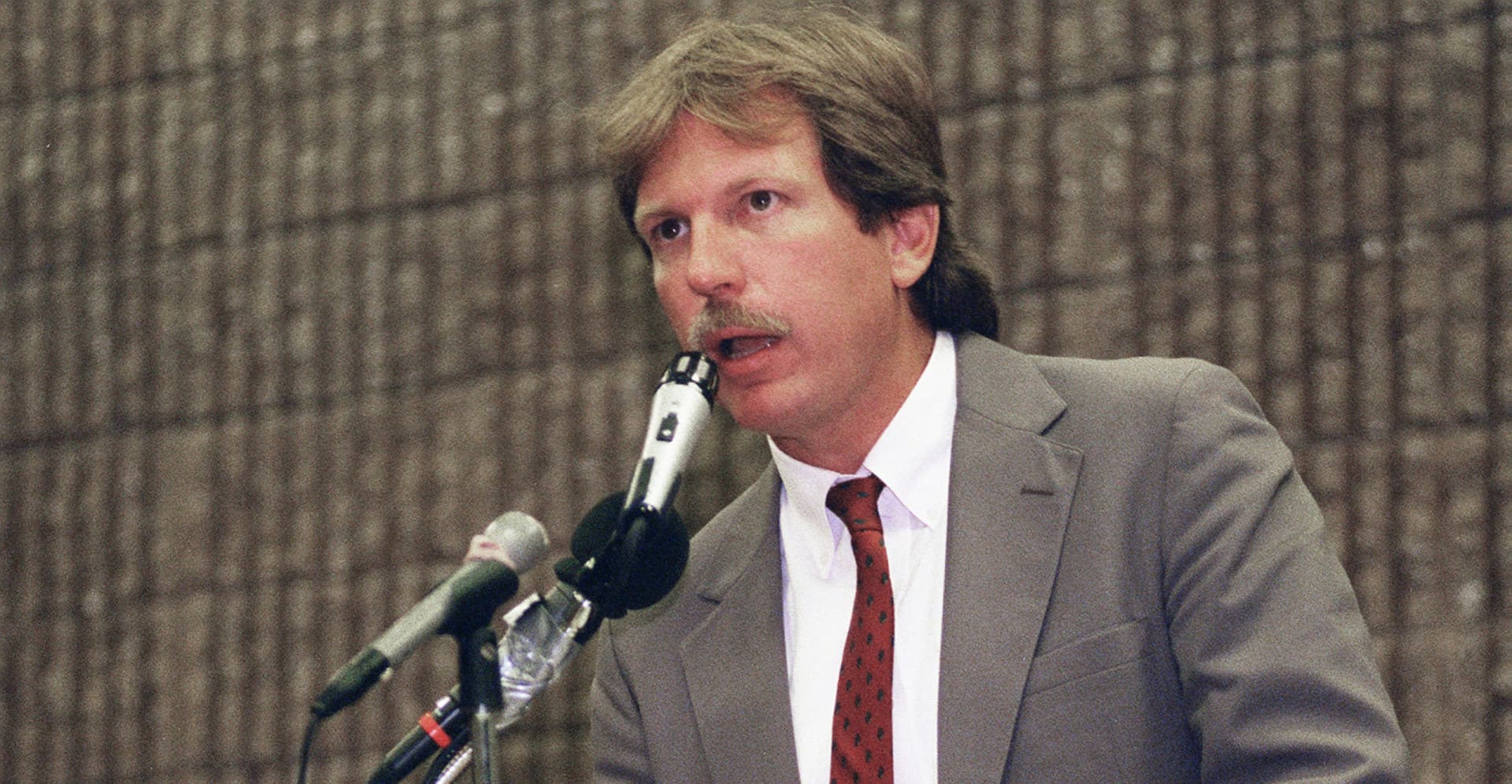
When Gary Webb published 'Dark Alliance' in 1996 linking CIA-backed Contras to crack cocaine flooding US cities, the Washington Post, New York Times, and LA Times devoted massive resources to discrediting his reporting rather than investigating his claims. The CIA's own internal communications (declassified in 2014 via The Intercept) revealed the agency actively managed the media campaign against Webb, tracking coverage and cultivating relationships with reporters writing critical pieces. In 1998, CIA Inspector General Frederick Hitz confirmed CIA ties to drug traffickers. Webb was found dead in 2004 from two gunshot wounds to the head, ruled a suicide.
“The major newspapers didn't investigate the CIA-drug connection — they investigated me. The CIA watched and encouraged the media to destroy me. They managed the nightmare of my reporting.”
What they said vs. what the evidence shows
“Webb's series is a post-hoc rationalization lacking solid evidence. The sweeping conclusions drawn from the evidence were unwarranted.”
— Washington Post / New York Times / LA Times · Oct 1996
SourceFrom “crazy” to confirmed
The Claim Is Made
This is the moment they called it crazy.
When investigative reporter Gary Webb published "Dark Alliance" in the San Jose Mercury News in 1996, he made an explosive allegation: the CIA had knowingly enabled drug traffickers linked to the Contra rebels in Nicaragua, allowing crack cocaine to flood American cities during the 1980s. Webb's three-part series presented documentary evidence and named specific operatives and trafficking networks. It was the kind of story major newspapers should have rushed to either confirm or systematically disprove.
Instead, something else happened. The Washington Post, New York Times, and Los Angeles Times launched a coordinated campaign to discredit Webb himself rather than investigate his claims.
These outlets didn't simply challenge Webb's methodology or sources. They questioned his credibility, his motives, and his journalism in ways that went well beyond standard editorial skepticism. The Post published a lengthy takedown. The Times ran critical pieces. The LA Times—based in Webb's own backyard—joined the effort. Webb's newspaper, facing institutional pressure, eventually distanced itself from its own reporter. Within two years, Webb was forced out of journalism. By most accounts, his career was destroyed.
The official line was consistent: Webb had overreached, made unsupported leaps, and misunderstood the complexity of Cold War foreign policy. The CIA denied any institutional involvement in drug trafficking. Intelligence officials suggested Webb had conflated the actions of individual bad actors with deliberate policy.
Then, in 2014, The Intercept published declassified CIA documents that told a different story. These internal communications, obtained through requests, revealed that had actively managed the media narrative against Webb. The agency tracked press coverage, identified which journalists were writing critical pieces, and cultivated relationships to ensure negative stories about Webb's reporting. It wasn't a passive response to aggressive journalism—it was a coordinated campaign.
Get the 5 biggest receipts every week, straight to your inbox — plus an exclusive PDF: The Top 10 Conspiracy Theories Proven True in 2025-2026. No spam. No agenda. Just the papers they couldn't hide.
You just read "Major newspapers coordinated to destroy Gary Webb after he e…". We send ones like this every week.
No one's said anything yet. Be the first to drop your take.
Confirmed: They Were Right
The truth comes out. Officially documented.
Confirmed: They Were Right
The truth comes out. Officially documented.
In 1998, CIA Inspector General Frederick Hitz released a report confirming that the agency had indeed maintained relationships with individuals involved in drug trafficking, relationships that continued even after the CIA became aware of their trafficking activities. This wasn't speculation or conspiracy theory. It was institutional acknowledgment.
Webb's core claim—that the CIA had connections to cocaine trafficking operations supporting the Contras—was substantiated by the government's own inspector general.
What happened to Webb after his career collapsed remains contested. In 2004, he was found dead from two gunshot wounds to the head. The death was ruled a suicide, though questions about the circumstances have persisted.
This case matters because it illustrates how institutional power operates in democracies. Major newspapers didn't fail to investigate Webb's claims because the evidence was weak. They failed because the story was inconvenient, because official denials carried weight, and because challenging the intelligence community required resources and institutional courage. The coordinated pushback against Webb wasn't a conspiracy theory—it was documented fact revealed only after decades of secrecy.
When the public learns that major institutions worked together to suppress a story that turned out to contain verifiable truth, trust doesn't simply erode. It calcifies into skepticism about whether we can believe official accounts at all.
Beat the odds
This had a 0.7% chance of leaking — someone talked anyway.
Conspirators
~100Network
Secret kept
18.1 years
Time to 95% exposure
500+ years