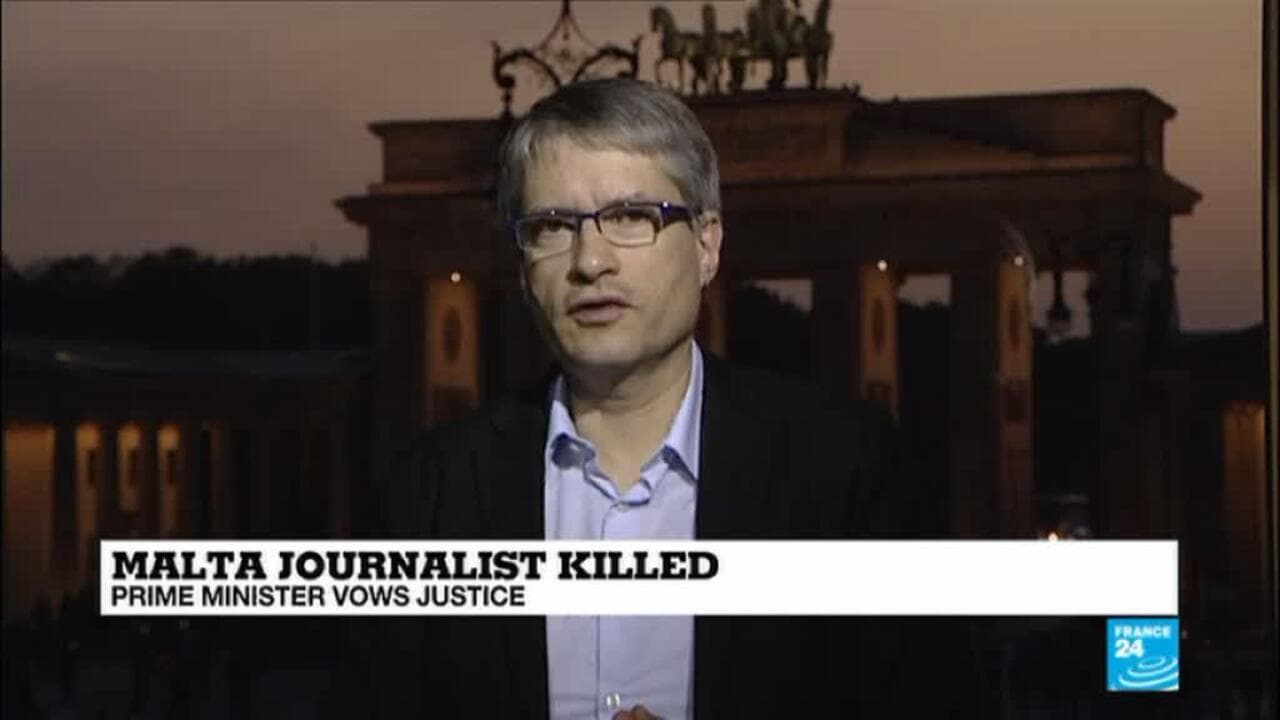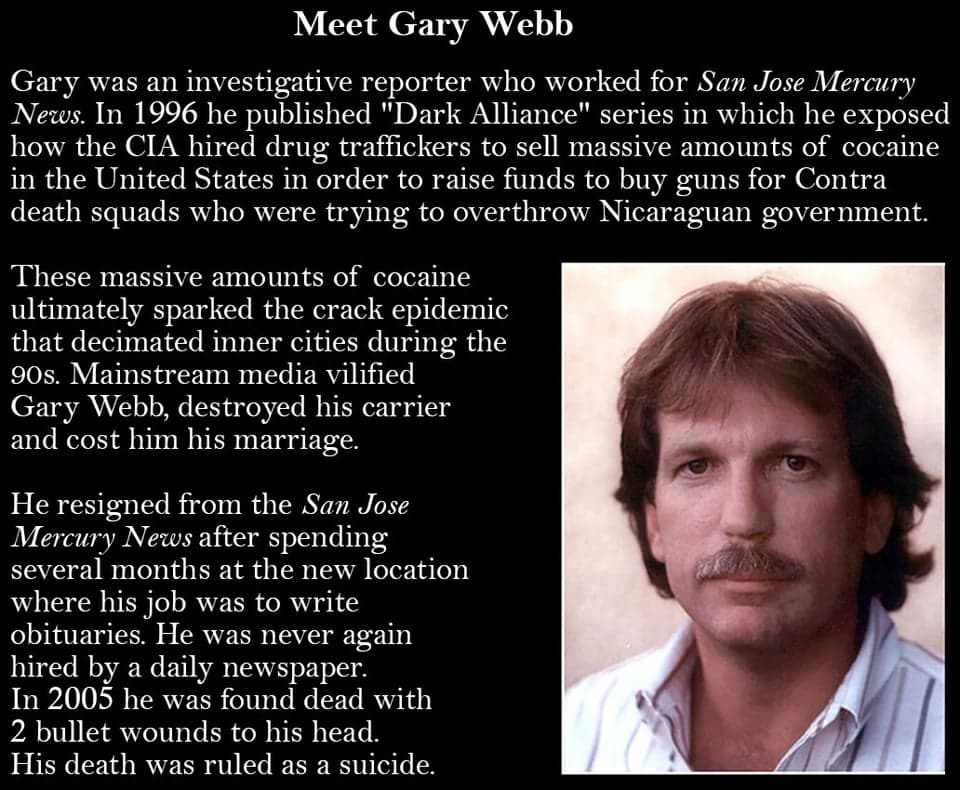
Dark Alliance exposed CIA-Contra cocaine. Career destroyed by media backlash. Dec 10, 2004: two .38 wounds to head. Coroner: 'possible to survive first shot.' CIA later confirmed aspects of his reporting.
“Exposed CIA selling crack. 'Suicide' with TWO bullets to the head.”
What they said vs. what the evidence shows
“First wound not immediately lethal. Possible to fire twice.”
— Coroner Robert Lyons · Dec 2004
SourceFrom “crazy” to confirmed
The Claim Is Made
This is the moment they called it crazy.
On December 10, 2004, investigative journalist Gary Webb was found dead in his Carmichael, California home with two gunshot wounds to his head. The Sacramento County Coroner's Office ruled it a suicide. But the circumstances surrounding Webb's death—and the career trajectory that preceded it—have never sat comfortably with many observers of American journalism and intelligence history.
Webb had made a name for himself in 1996 with a groundbreaking investigative series called "Dark Alliance," published in the San Jose Mercury News. The reporting detailed connections between CIA-backed Contra rebels in Nicaragua, drug traffickers, and the cocaine epidemic ravaging American cities during the 1980s. Webb's work suggested that American intelligence officials had, at minimum, turned a blind eye to massive drug trafficking by their anti-communist allies. At worst, the reporting implied direct involvement in the narcotics pipeline.
The response was swift and coordinated. Major newspapers—the Los Angeles Times, The New York Times, and The Washington Post—launched aggressive critiques of Webb's reporting. Though some of his specific sourcing was indeed challenged, the attacks went beyond media criticism; they effectively ended Webb's career at a major newspaper. He was forced out of the Mercury News, struggled to find steady journalism work, and faced professional ostracism from the industry that had once employed him.
What makes Webb's death notable in the context of this claim is what happened afterward. In 2013 and 2014—nearly a decade after his death—newly declassified documents and official government acknowledgments confirmed that substantial portions of Webb's reporting were accurate. The CIA itself issued a report acknowledging that some of its assets and allies had indeed been involved in drug trafficking. The agency's own inspector general found that CIA officials had failed to report suspected narcotics trafficking by Contra supporters to the Drug Enforcement Administration.
Get the 5 biggest receipts every week, straight to your inbox — plus an exclusive PDF: The Top 10 Conspiracy Theories Proven True in 2025-2026. No spam. No agenda. Just the papers they couldn't hide.
You just read "Gary Webb found dead with TWO gunshot wounds to head - ruled…". We send ones like this every week.
No one's said anything yet. Be the first to drop your take.
The disputed element isn't whether Webb was right—history has largely vindicated his core claims. The question mark hangs over the official manner of death. Webb was shot twice in the head, and the coroner himself noted it was "possible to survive the first shot." Suicide by two gunshot wounds to the head, while not impossible, is statistically rare and raises technical questions that have never been fully explained in public records.
What's relevant here isn't speculation about alternative scenarios. What matters is the documented pattern: a journalist publishes accurate information exposing government wrongdoing, faces professional destruction and personal crisis, and then dies under circumstances marked by forensic irregularities. Whether Webb's death was suicide or something else, the institutional failure is the same.
The case illustrates a critical problem for public trust in both journalism and institutions. When major newspapers collectively discredit a reporter whose work later proves substantially true, and when that reporter subsequently dies under questionable circumstances, the public loses confidence in multiple systems simultaneously. We cannot know what happened in Webb's home that December day. But we do know that one of the most important investigative journalists of his era had his life's work vindicated only after he was gone, and in a manner that prevented him from seeing his vindication.
Beat the odds
This had a 0.4% chance of leaking — someone talked anyway.
Conspirators
~50Network
Secret kept
21.4 years
Time to 95% exposure
500+ years