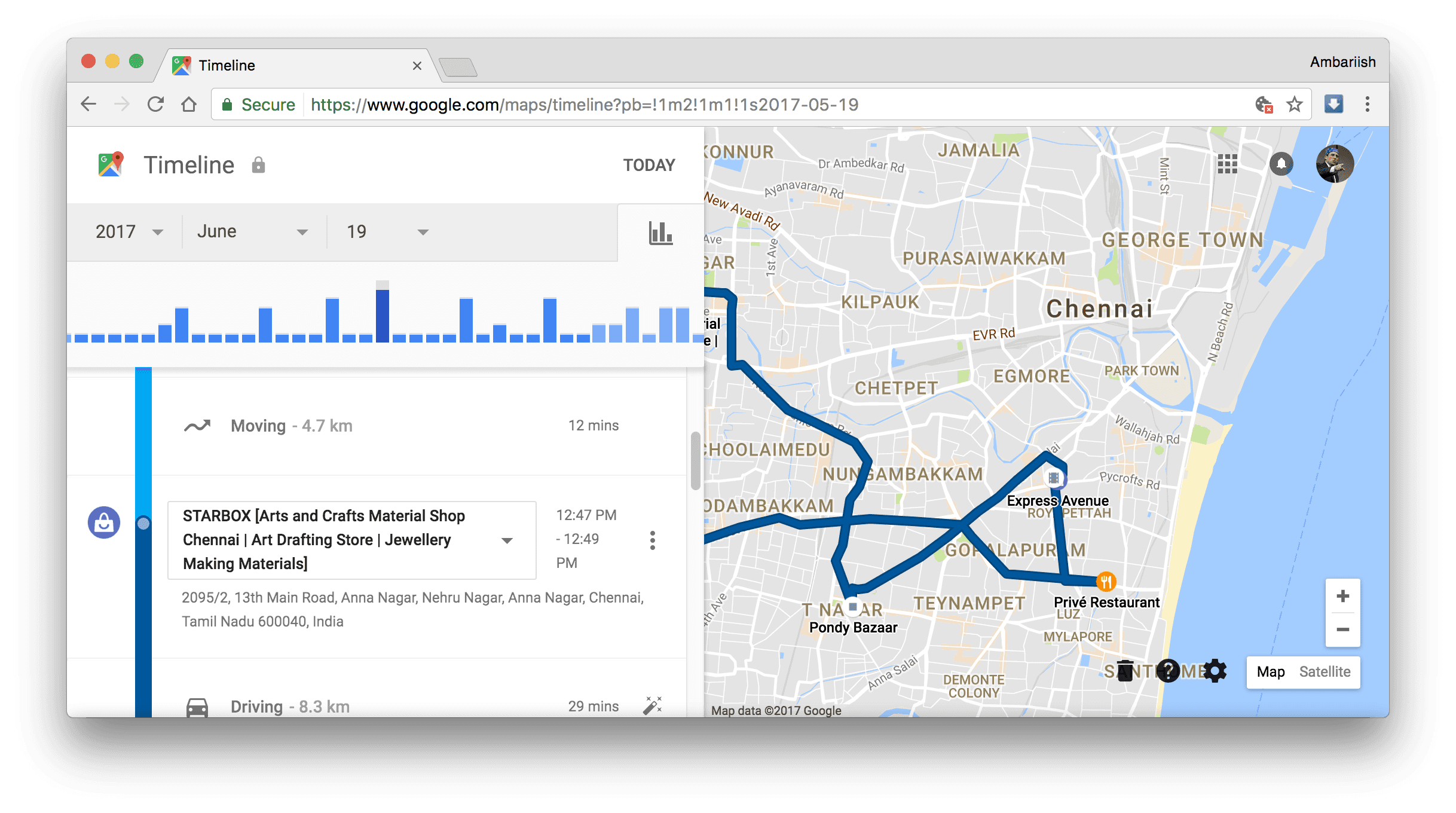
An August 2018 AP investigation revealed that Google continued to track users' physical locations even when they disabled 'Location History' in their account settings. A separate 'Web & App Activity' setting, enabled by default, continued collecting location data. Internal emails showed Google employees knew the settings were confusing. Google was sued by 40 states and settled for a record $392 million. Google Assistant was also found to be recording without consent, leading to a separate $68 million settlement.
“Google is tracking your location even when you turn location tracking off. The 'off' switch doesn't actually turn it off — it's deliberately deceptive.”
From “crazy” to confirmed
The Claim Is Made
This is the moment they called it crazy.
When Google users disabled Location History in their account settings, they believed their physical movements were no longer being tracked. They were wrong. In August 2018, an Associated Press investigation exposed that Google had been collecting and storing location data through an entirely separate mechanism, one that most users didn't know existed and couldn't easily disable.
The claim seemed straightforward: Google was secretly tracking people's locations despite explicit user settings designed to prevent exactly that. Critics argued the company was deliberately obscuring its data collection practices behind confusing menus and default settings that favored surveillance over privacy. Google initially dismissed these concerns, maintaining that users retained full control over their location data through available settings.
But internal evidence told a different story. The AP's reporting revealed that Google maintained location data through a setting called "Web & App Activity," which was enabled by default and operated independently of Location History. Even with Location History switched off, Google continued recording where users were, when they were there, and how they moved between locations. Internal emails from Google employees acknowledged the confusion their dual-tracking system created, yet the company made no meaningful changes to clarify it for users.
The evidence proved damning. Researchers and investigators demonstrated that disabling Location History didn't stop Google from collecting location information. Google's own documentation showed that location data was being harvested through multiple pathways. The Web & App Activity setting, buried in account preferences, operated as a parallel tracking system that most users never discovered. When people changed their settings thinking they had disabled tracking, they had only turned off one of Google's collection methods.
Get the 5 biggest receipts every week, straight to your inbox — plus an exclusive PDF: The Top 10 Conspiracy Theories Proven True in 2025-2026. No spam. No agenda. Just the papers they couldn't hide.
You just read "Google tracked users' locations even when they explicitly tu…". We send ones like this every week.
No one's said anything yet. Be the first to drop your take.
Confirmed: They Were Right
The truth comes out. Officially documented.
Confirmed: They Were Right
The truth comes out. Officially documented.
This wasn't an isolated incident. Further investigation revealed that Google Assistant was also recording audio without explicit user consent, creating an additional avenue for gathering personal information. These practices suggested a pattern rather than an oversight.
The legal consequences were substantial. Forty state attorneys general sued Google, recognizing the scale of the deception. In 2022, Google settled for $392 million—at the time, the largest privacy settlement in history. The company also paid a separate $68 million settlement related to the Google Assistant recordings. These penalties acknowledged that Google had violated users' reasonable expectations about privacy and data collection.
What makes this case significant isn't that a tech company tried to collect more data. What matters is the deliberate architecture of confusion. Google didn't accidentally create misleading settings. Employees knew they were confusing. The company could have made location tracking transparent and easy to disable, but instead it built systems where users thought they had disabled something they hadn't.
This verified claim undermines a fundamental premise of digital privacy: user control. When companies design settings specifically to confuse users while continuing to collect data, consent becomes meaningless. Users followed the instructions as they understood them. They disabled the obvious tracking option. They believed they had regained privacy.
They were correct to distrust their instincts. The lesson from Google's settlement isn't that one company overstepped. It's that the gap between what users think their settings do and what actually happens can be precisely engineered. For anyone who believed their location data was private after disabling Location History, this claim vindicated their suspicion that something didn't add up.
Beat the odds
This had a 0.3% chance of leaking — someone talked anyway.
Conspirators
~150Network
Secret kept
4.3 years
Time to 95% exposure
500+ years