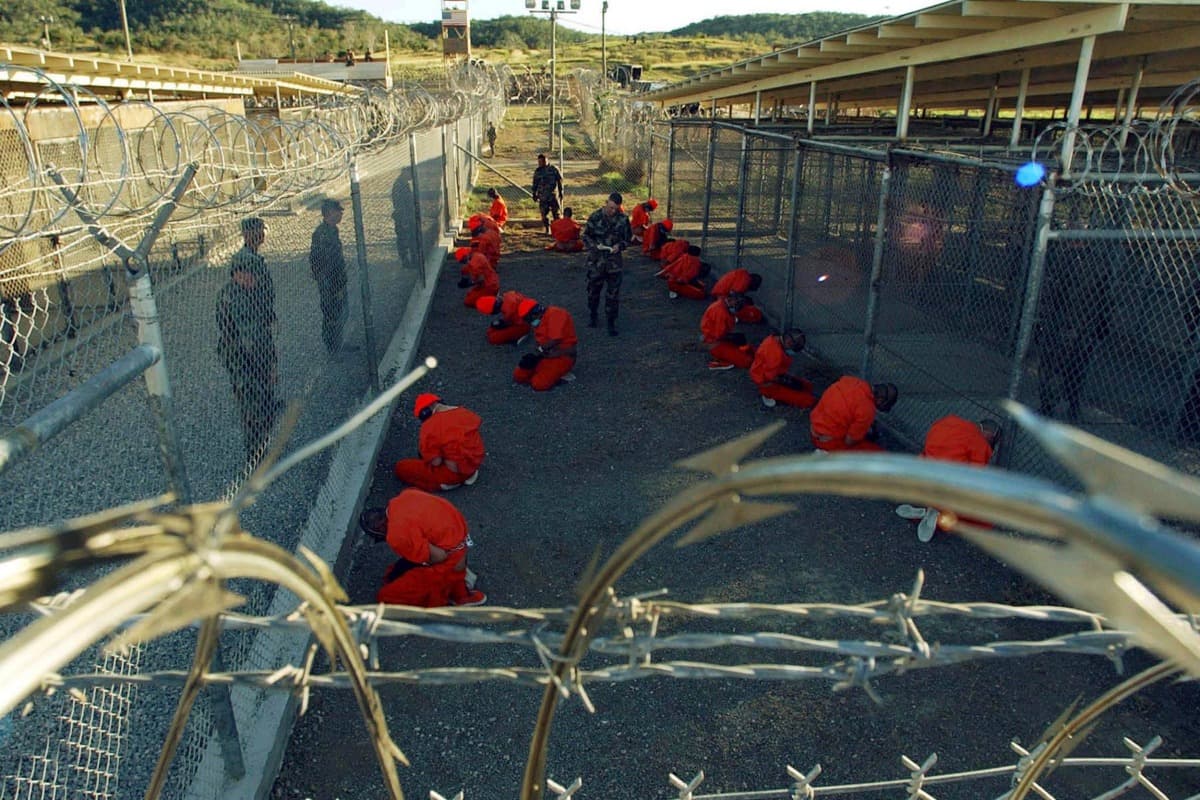
At Guantanamo Bay, hunger-striking detainees were strapped into restraint chairs with immobilized limbs and heads while tubes were forced up their nostrils into their stomachs for liquid feeding — a process lasting over two hours per session. Five UN human rights experts found this constituted torture under the Convention Against Torture. The World Medical Association declared the practice 'never ethically acceptable.' Detainees were held as 'enemy combatants' with no Geneva Convention protections and no criminal charges — some for over 20 years. Senate torture reports revealed detainees were also subjected to 'rectal feeding' and 'rectal rehydration.'
“Prisoners at Guantanamo are being tortured through force-feeding and held indefinitely without charges or trial in violation of international law.”
What they said vs. what the evidence shows
“The feeding procedures are safe, humane, and consistent with established medical practices. We have a duty to preserve the lives of detainees.”
— Department of Defense · Jun 2006
SourceFrom “crazy” to confirmed
The Claim Is Made
This is the moment they called it crazy.
For years, human rights organizations alleged that detainees at Guantanamo Bay were being force-fed through nasal tubes while restrained in chairs—a process that lasted over two hours per session. The U.S. government's response was measured and clinical: this was a necessary medical procedure to prevent detainee deaths during hunger strikes, nothing more. They called it "enteral feeding." The public largely accepted this explanation.
What actually occurred tells a different story. Detainees who refused to eat were strapped into restraint chairs with immobilized limbs and heads. Medical staff then forced feeding tubes up through their nasal passages directly into their stomachs. This wasn't a gentle procedure performed in a hospital setting—it was conducted in detention blocks as a coercive measure, sometimes multiple times daily. The experience left detainees with bleeding noses, severe pain, and psychological trauma.
The evidence of what this practice truly constituted came from multiple directions. The ACLU documented detailed accounts from detainees and medical personnel. More significantly, five United Nations human rights experts formally classified the procedure as torture under the Convention Against Torture. This wasn't opinion or advocacy—it was an official UN determination. The World Medical Association went further, declaring that force-feeding in detention "is never ethically acceptable."
What made the situation even more troubling was the legal framework surrounding it. Detainees were classified as "enemy combatants" rather than prisoners of war, a designation that stripped them of Geneva Convention protections. Many were never formally charged with crimes. Some remained imprisoned for over two decades without trial. The Senate torture reports later revealed the full scope of coercive practices, including what officials euphemistically called "rectal feeding" and "rectal rehydration."
Get the 5 biggest receipts every week, straight to your inbox — plus an exclusive PDF: The Top 10 Conspiracy Theories Proven True in 2025-2026. No spam. No agenda. Just the papers they couldn't hide.
You just read "Guantanamo detainees were force-fed through nasal tubes whil…". We send ones like this every week.
No one's said anything yet. Be the first to drop your take.
Confirmed: They Were Right
The truth comes out. Officially documented.
Confirmed: They Were Right
The truth comes out. Officially documented.
The distinction between the government's framing and documented reality matters profoundly. A "medical procedure" implies clinical necessity and professional standards. Torture describes the deliberate infliction of severe pain to punish or coerce. The semantic choice shaped public perception for years while the physical reality remained unchanged.
This case illustrates how institutional language can obscure reality. Officials weren't lying in the technical sense—they were describing the same acts using different terminology. "Enteral feeding" is medically accurate. But it omits the context: restraint chairs, nasal trauma, psychological coercion, and the absence of genuine medical necessity. It's the difference between describing a punch as "rapid hand acceleration" and calling it an assault.
The verification of this claim matters beyond historical accountability. It demonstrates that official denials don't automatically invalidate controversial allegations, particularly when those allegations come from credible human rights organizations and are later confirmed by international bodies. It suggests we should approach government explanations of detention practices with appropriate scrutiny, especially when independent observers report something drastically different.
For public trust, the lesson is uncomfortable: when institutions control the language used to describe their own actions, and when that language systematically obscures rather than clarifies reality, skepticism isn't paranoia—it's warranted vigilance. The claims about Guantanamo force-feeding weren't vindicated because activists shouted loud enough. They were vindicated because documentation, testimony, and international legal standards contradicted official narratives. That gap between what we're told and what we can verify remains the central issue.
Beat the odds
This had a 3.7% chance of leaking — someone talked anyway.
Conspirators
~1,000Large op
Secret kept
9.5 years
Time to 95% exposure
500+ years