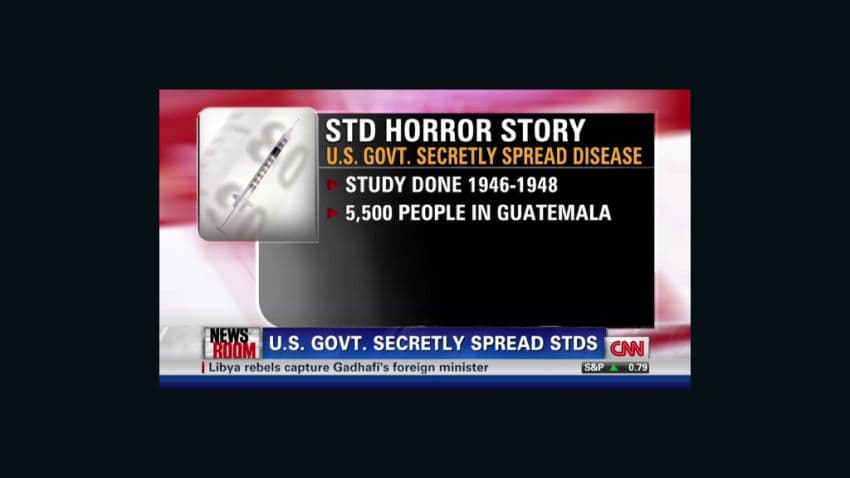
From 1946 to 1948, US researchers led by Dr. John Cutler (who also ran Tuskegee) deliberately infected 1,300 Guatemalans - including soldiers, sex workers, orphans, and mental patients - with syphilis, gonorrhea, and chancroid without their consent. Only 700 received any treatment. The experiments were hidden until historian Susan Reverby discovered them in 2010, prompting a formal presidential apology.
“The experiments involved intentional exposure of vulnerable populations to sexually transmitted diseases without their knowledge or consent.”
From “crazy” to confirmed
The Claim Is Made
This is the moment they called it crazy.
For decades, one of the most disturbing chapters in American medical history remained hidden in plain sight. Between 1946 and 1948, the US Public Health Service and the Johns Hopkins School of Medicine conducted experiments on 1,300 Guatemalans—soldiers, prisoners, orphans, and mental patients—deliberately infecting them with syphilis, gonorrhea, and chancroid without their knowledge or consent. Only about half of those infected ever received treatment. The experiments weren't exposed until 2010, when historian Susan Reverby discovered records while researching another notorious study at Emory University.
The scope of what happened was staggering. Researchers, led by Dr. John Cutler—the same man who would later oversee the infamous Tuskegee syphilis experiment—methodically documented their work. They infected subjects through multiple routes: some through sexual contact with infected workers, others through direct inoculation. The research was conducted with the knowledge and cooperation of the Guatemalan government, though the subjects themselves had no idea what was being done to them.
For decades, the US government simply didn't acknowledge the experiments existed. When questions arose, officials either denied knowledge or claimed the work had been properly conducted and documented. The medical establishment treated it as a non-issue—a historical footnote that didn't require serious examination. After all, if it wasn't widely known, did it really matter?
Then Reverby found the paper trail. Buried in the Emory archives were detailed records: procurement forms for infected subjects, meticulous notes on infection methods, and follow-up documentation. The evidence was undeniable. What had been dismissed as rumor or exaggeration turned out to be meticulously recorded fact. Researchers had photographed their work, filed reports, and created a complete documentary record of their deliberate harm.
Get the 5 biggest receipts every week, straight to your inbox — plus an exclusive PDF: The Top 10 Conspiracy Theories Proven True in 2025-2026. No spam. No agenda. Just the papers they couldn't hide.
You just read "The US government deliberately infected 1,300 Guatemalans wi…". We send ones like this every week.
No one's said anything yet. Be the first to drop your take.
Confirmed: They Were Right
The truth comes out. Officially documented.
Confirmed: They Were Right
The truth comes out. Officially documented.
The response, when it finally came, was a formal apology from President Obama in 2010. The US government acknowledged the experiments had occurred and were "clearly unethical." A settlement was eventually reached, providing compensation to survivors and families. An independent panel reviewed the case and confirmed what the documents showed: this was systematic abuse of vulnerable populations, conducted by respected institutions, with the knowledge of government officials.
What makes this case particularly significant is not just what happened, but how long it stayed hidden and how readily institutions dismissed it before evidence forced acknowledgment. The Tuskegee experiment, conducted on Black Americans from 1932 to 1972, had already exposed the willingness of American medical researchers to deceive vulnerable subjects. Yet the Guatemala experiments—conducted during the same era by many of the same people—remained unknown to the public for over 60 years.
This matters because institutional trust depends on transparency and accountability. When government agencies and prestigious medical centers conduct secret experiments on human beings, apologizing decades later only partially repairs the damage. The real question isn't whether this happened—the documents confirm it did. The question is how many other programs, conducted in secrecy against vulnerable populations, remain undiscovered. The Guatemala experiments remind us that historical claims about government wrongdoing shouldn't be dismissed simply because they sound incredible. Sometimes, the most damning truths are the ones institutions work hardest to keep hidden.
Unlikely leak
Only 12.1% chance this would come out. It did.
Conspirators
~500Large op
Secret kept
64.7 years
Time to 95% exposure
500+ years