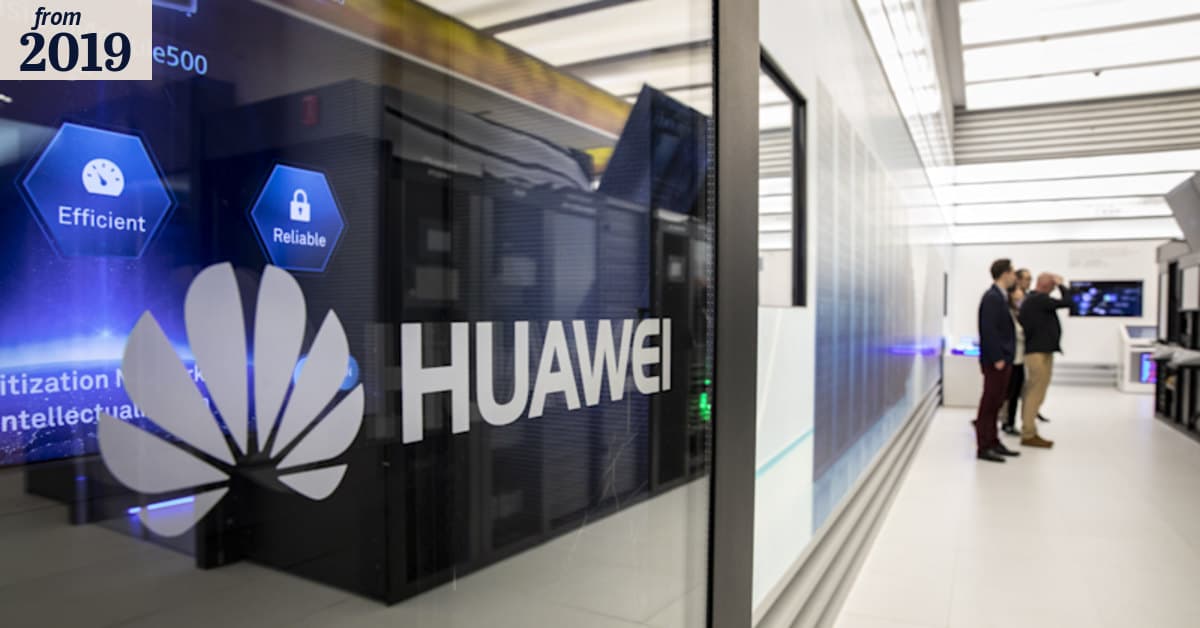
UK intelligence and Dutch security services found undisclosed backdoors in Huawei network equipment. Internal documents revealed the company provided Chinese authorities with customer data and network access.
“Huawei has never been asked by any government to build backdoors into our equipment and we never would”
From “crazy” to confirmed
The Claim Is Made
This is the moment they called it crazy.
For years, Western governments and security experts warned that Chinese telecom giant Huawei was embedding secret backdoors into its networking equipment—passages that would allow Beijing to surveil foreign governments and corporations at will. The company flatly denied it. Huawei executives positioned themselves as victims of geopolitical paranoia, casualties of trade war politics rather than legitimate security threats. They had a simple message: trust us, we're transparent, we follow the rules.
They weren't telling the complete story.
In 2019, Britain's Government Communications Headquarters (GCHQ)—the UK's signals intelligence agency—conducted a detailed technical review of Huawei equipment. What they found was more complicated than simple backdoors, but no less troubling: the equipment contained undisclosed security vulnerabilities that could be exploited by state actors, including those working for the Chinese government. The British intelligence assessment, rather than being quietly filed away, eventually became part of the public record and informed policy decisions that would reshape global telecommunications infrastructure.
But the real evidence came from an unexpected direction. Internal documents obtained by journalists at the Wall Street Journal revealed something more damning than speculative vulnerabilities: Huawei technicians had actively helped African governments spy on political opponents. The company wasn't just leaving doors unlocked. They were actively participating in surveillance operations, providing network access and customer data to authoritarian regimes across the continent.
The scope was significant. In countries like Uganda and Zambia, Huawei staff worked directly with government security services to monitor opposition leaders, activists, and journalists. One documented case involved technicians helping authorities track a prominent opposition politician. This wasn't a rogue division operating without corporate knowledge—these operations involved senior engineers and proceeded with apparent institutional blessing.
Huawei's public response followed a familiar pattern: deny, deflect, claim context was being ignored. The company suggested that helping governments access network infrastructure was standard practice in the telecom industry, that they were simply providing technical support to paying customers. They framed the allegations as part of a coordinated Western campaign to damage Chinese technology companies ahead of 5G rollouts.
Yet the documentation was specific, dated, and sourced from internal communications. This wasn't allegation based on circumstantial evidence or geopolitical suspicion. These were records of actual operations, actual people, actual surveillance targets.
The implications extended far beyond Africa. If Huawei technicians were embedded in government networks in one region, assisting with surveillance operations, what were the limits of such arrangements elsewhere? The discovery validated years of warnings from intelligence agencies that had been dismissed as xenophobic or protectionist.
This case reveals something essential about how institutional deception works. Companies with state backing don't need to lie about everything. They can maintain a façade of legitimacy while compartmentalizing activities that would undermine that legitimacy if widely known. Huawei's denial of backdoors wasn't entirely false—it was carefully worded around the broader truth that they were actively supporting state surveillance operations.
For policymakers and citizens evaluating technology providers, the lesson is stark: verification matters. Claims of transparency deserve scrutiny. When multiple independent sources—intelligence agencies, investigative journalists, internal documents—converge on the same conclusion, dismissing them requires a faith that institutions have not earned.
Get the 5 biggest receipts every week, straight to your inbox — plus an exclusive PDF: The Top 10 Conspiracy Theories Proven True in 2025-2026. No spam. No agenda. Just the papers they couldn't hide.
You just read "Huawei Equipment Contains Hidden Backdoors for Chinese Gover…". We send ones like this every week.
No one's said anything yet. Be the first to drop your take.