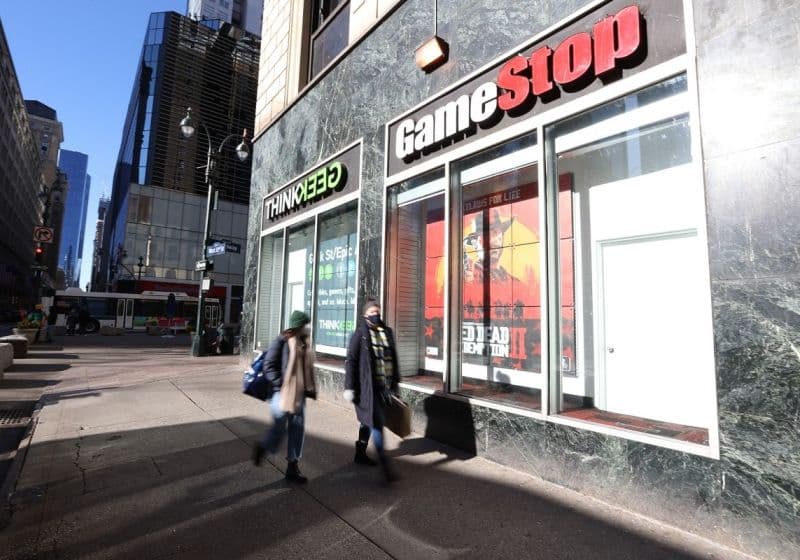
In January 2021, Reddit's r/WallStreetBets discovered GameStop was shorted to 140% of its float -- meaning more shares were sold short than actually existed. When retail investors drove the price up, Robinhood restricted buying while allowing selling, drawing allegations of coordination with Citadel Securities, which paid Robinhood for order flow and had bailed out Melvin Capital. FINRA had previously fined Citadel for mismarking 6.5 million trades as non-short sales.
“GameStop has been naked shorted beyond its total float. The system is rigged -- hedge funds can short more shares than exist, and when retail wins, they change the rules.”
From “crazy” to confirmed
The Claim Is Made
This is the moment they called it crazy.
When thousands of amateur investors on Reddit discovered in January 2021 that GameStop had been shorted to 140% of its available shares, they weren't just finding an interesting market anomaly. They were exposing a mechanism of financial manipulation that Wall Street had long insisted didn't exist in any meaningful way.
The basic math was simple: if only 69.75 million shares of GameStop existed, but short sellers had sold 97 million shares short, someone was selling stock they didn't own or couldn't borrow. This wasn't a technical glitch. It was naked short selling—a practice that had been nominally illegal for years, yet appeared to be happening on a massive scale.
The initial reaction from financial regulators and mainstream market observers was dismissive. Critics suggested that retail investors were misreading data, that the short interest numbers were exaggerated or misunderstood, or that such widespread naked shorting was implausible in a modern market with sophisticated surveillance systems. The narrative pushed by establishment finance was reassuring: the system worked, regulators were watching, and institutional investors simply had better information than day traders on the internet.
But the evidence mounted in ways that couldn't be easily explained away. When Robinhood, a retail trading platform, suddenly restricted buying of GameStop shares in late January while simultaneously allowing users to sell, the coordination began to look suspicious. Robinhood's owner had previously disclosed that Citadel Securities paid the platform for order flow—essentially paying for access to customer trades. Citadel had also recently bailed out Melvin Capital, a hedge fund with significant GameStop short positions.
The historical record provided additional context. In 2020, the Financial Industry Regulatory Authority (FINRA) had fined Citadel Securities for mismarking 6.5 million trades as non-short sales when they should have been marked as short sales. This wasn't ancient history. It was recent evidence of the exact kind of deceptive practice that allegedly created the GameStop situation.
What made GameStop's exposure particularly significant was that it revealed the naked shorting problem wasn't theoretical. The financial system's own data showed shares being shorted beyond the float. When retail investors simply refused to sell and instead bought more shares, the mechanics of the scheme became visible to anyone paying attention. The price had to go up because there genuinely weren't enough shares in existence to cover the short positions.
The real question isn't whether GameStop proved all of Wall Street was engaged in naked shorting. The real question is why a practice supposedly policed by regulators had become so prevalent that a casual look at one stock revealed it was being shorted over 140% of available shares. Either regulators weren't looking, or they were aware and chose not to intervene—until retail investors forced the issue into public view.
This matters because financial markets only function if participants believe the game is played by consistent rules. When retail investors can prove through public data that those rules are being systematically broken, and when trading platforms mysteriously restrict access during crucial moments, public trust in the entire system erodes. GameStop didn't just expose naked shorting. It exposed the possibility that the system's referees might be on the other team.
Get the 5 biggest receipts every week, straight to your inbox — plus an exclusive PDF: The Top 10 Conspiracy Theories Proven True in 2025-2026. No spam. No agenda. Just the papers they couldn't hide.
You just read "GameStop revealed Wall Street's naked short selling problem …". We send ones like this every week.
No one's said anything yet. Be the first to drop your take.