Oct 14, 2020: Post published. Twitter censored. 51 officials: 'Russian disinfo.' FBI had laptop since Dec 2019. NYT/WaPo authenticated 2022.
“FBI knew. Told Twitter. Twitter censored anyway. 51 officials lied.”
What they said vs. what the evidence shows
“We made a mistake.”
— Yoel Roth · Feb 2023
SourceFrom “crazy” to confirmed
The Claim Is Made
This is the moment they called it crazy.
On October 14, 2020, the New York Post published a story about a laptop allegedly belonging to Hunter Biden, containing emails suggesting business dealings involving his father, then-presidential candidate Joe Biden. Within hours, Twitter locked the Post's account, prevented users from sharing the link, and suppressed the story across its platform. The stated reason was that the material constituted "hacked materials," potentially violating election interference law.
The response from official channels was swift and coordinated. Fifty-one former intelligence officials, including former CIA director John Brennan, signed a letter stating the story had "all the hallmarks of Russian disinformation." They didn't claim to have examined the laptop or its contents. They were offering an assessment based on the pattern of the release, not forensic analysis. Major news outlets including The New York Times and The Washington Post initially declined to authenticate the materials and largely covered the story as a potential disinformation operation rather than investigating its claims.
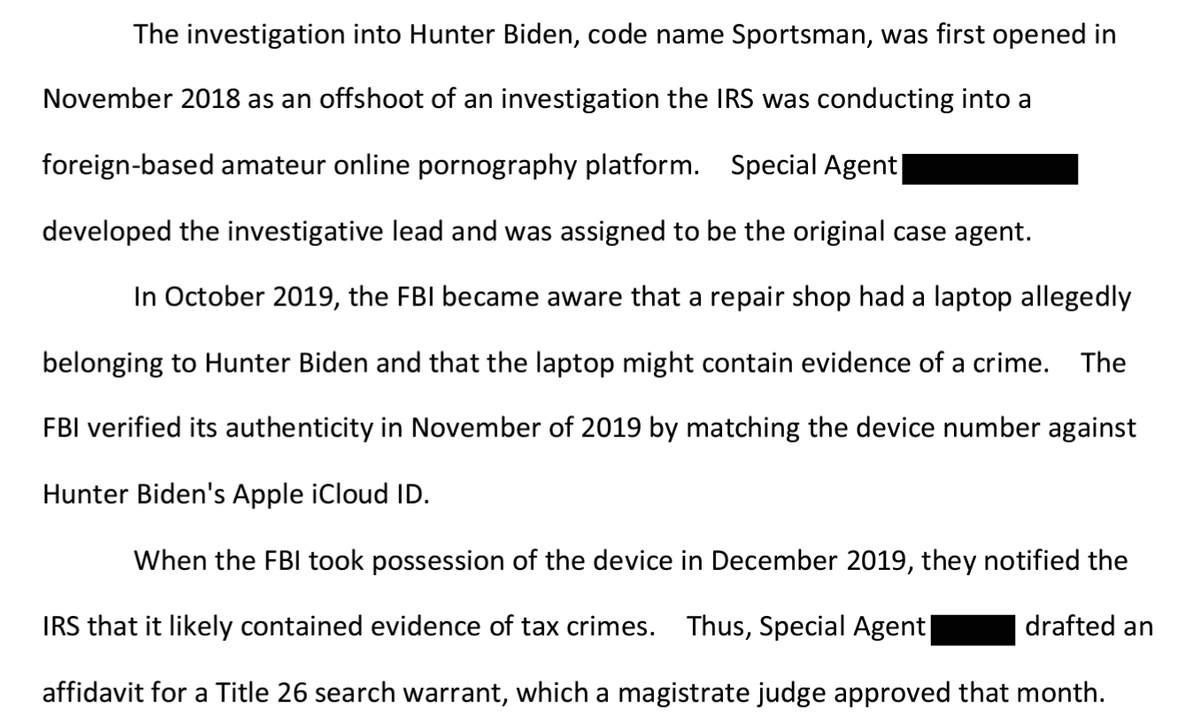
What few people knew at the time was that the FBI had possessed the laptop since December 2019. An Apple Store employee had turned it over to a Rudy Giuliani associate after it was left for repairs. The bureau had the device for nearly a year before Twitter made its censorship decision. The FBI never publicly stated the laptop was Russian disinformation, though the intelligence community letter suggested that conclusion was justified.
The verification came gradually. In March 2022, nearly eighteen months after the initial suppression, The New York Times published an article confirming that materials from the laptop were authentic. The Washington Post followed with similar reporting. Forensic analysis confirmed the emails and other data had not been manipulated. Neither outlet had been unable to verify this information in October 2020—they simply hadn't tried, instead accepting the framing that the story was likely a disinformation operation.
Get the 5 biggest receipts every week, straight to your inbox — plus an exclusive PDF: The Top 10 Conspiracy Theories Proven True in 2025-2026. No spam. No agenda. Just the papers they couldn't hide.
You just read "FBI told Twitter laptop was real the same day Twitter censor…". We send ones like this every week.
No one's said anything yet. Be the first to drop your take.
Confirmed: They Were Right
The truth comes out. Officially documented.
Confirmed: They Were Right
The truth comes out. Officially documented.
The timeline creates a crucial contradiction. On the same day Twitter censored the story, the FBI knew—or should have known—that the laptop and its contents were real. Yet the agency did not publicly correct the false narrative that the materials were potentially hacked or part of a Russian operation. Law enforcement was silent while social media companies made editorial decisions based on intelligence assessments that were either wrong or incomplete.
This case matters because it demonstrates how institutional authority can shape information flow during critical moments. When fifty-one intelligence officials sign a letter, when social media platforms restrict content, when major newspapers decline to investigate—these actions create a wall of official consensus that is difficult for ordinary people to penetrate. The public was essentially told this story was likely disinformation by sources they had reason to trust.
The implications for future elections and public trust are substantial. If government agencies possess information contradicting official narratives but choose not to correct them publicly, the public has no reliable way to distinguish between accurate warnings about disinformation and coordinated suppression of inconvenient information. The laptop story may or may not have changed the 2020 election outcome. But the suppression of the story, done partially under false pretenses about what authorities actually knew, revealed a significant vulnerability in how Americans access information during crucial moments.
Beat the odds
This had a 0% chance of leaking — someone talked anyway.
Conspirators
~100Network
Secret kept
0.5 years
Time to 95% exposure
500+ years