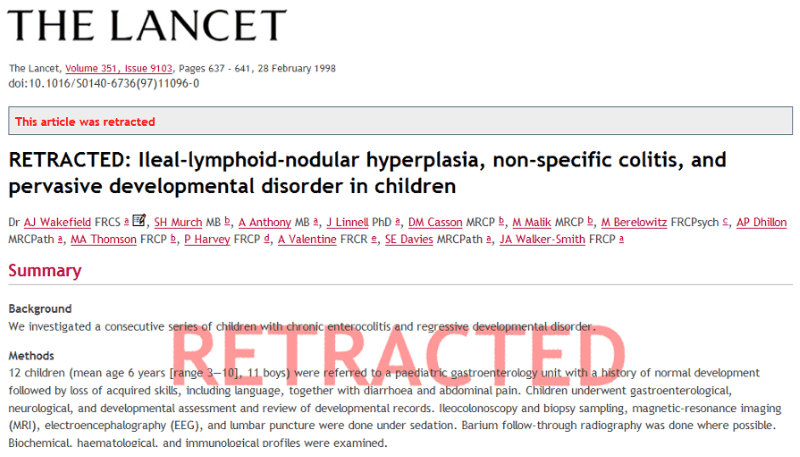
In May 2020, The Lancet published a study claiming hydroxychloroquine increased COVID death risk, causing the WHO and multiple countries to halt clinical trials. The data came from Surgisphere, a tiny company with fewer than a dozen employees that claimed access to hospital records from 671 hospitals across six continents. The study was retracted after authors 'could no longer vouch for the veracity of the primary data sources.' By then, multiple trials had been permanently disrupted.
“We can no longer vouch for the veracity of the primary data sources used in this study.”
From “crazy” to confirmed
The Claim Is Made
This is the moment they called it crazy.
A prestigious medical journal published research that would halt coronavirus treatment trials across the globe. The data behind it came from a shell company that barely existed.
In May 2020, The Lancet—one of the world's most respected peer-reviewed medical journals—published a study claiming that hydroxychloroquine, a drug then being investigated as a potential COVID-19 treatment, actually increased the risk of death in patients. The research was authored by Mandeep Mehra and colleagues and relied entirely on data supposedly aggregated by a company called Surgisphere Corporation.
The implications were immediate and sweeping. The World Health Organization suspended hydroxychloroquine trials in COVID patients within days of publication. The United Kingdom halted its trials. Other nations followed. For patients and researchers hoping the drug might offer therapeutic benefit, the scientific consensus had seemingly shifted overnight based on one major study.
The problem was that Surgisphere didn't really exist in any meaningful sense. The company employed fewer than a dozen people, yet claimed to have instantaneous access to electronic health records from 671 hospitals across six continents. Its founder, Sapan Desai, had minimal public profile and the company's infrastructure couldn't plausibly support the scale of data aggregation it claimed to perform.
Investigations by journalists and other researchers began almost immediately. They discovered inconsistencies in the data that made mathematical sense impossible—like patient numbers that exceeded known hospital bed counts and death rates that contradicted public records from the regions Surgisphere claimed to source from. Independent verification of even a handful of the hospitals proved fruitless.
Within weeks, the authors of the study issued an unprecedented statement: they could "no longer vouch for the veracity of the primary data sources." The Lancet retracted the study entirely. An independent audit of Surgisphere's data never materialized, and the company's leadership became inaccessible to journalists and regulators alike.
Get the 5 biggest receipts every week, straight to your inbox — plus an exclusive PDF: The Top 10 Conspiracy Theories Proven True in 2025-2026. No spam. No agenda. Just the papers they couldn't hide.
You just read "The Lancet published a fraudulent study against hydroxychlor…". We send ones like this every week.
No one's said anything yet. Be the first to drop your take.
Confirmed: They Were Right
The truth comes out. Officially documented.
Confirmed: They Were Right
The truth comes out. Officially documented.
But by then, the damage was done. Hydroxychloroquine trials that had been underway in multiple countries were terminated. Research momentum had shifted. Patients who might have been enrolled in legitimate trials missed opportunities. The study's influence persisted in public health guidance long after its retraction, simply because most people never hear about retractions with the same attention they hear about explosive medical claims.
What remains striking isn't just that fraudulent data made it through peer review at an elite journal. It's that a company with virtually no infrastructure could claim access to health records from hundreds of hospitals across continents, and that claim went unchallenged by editors and reviewers before publication. The incident exposed how even rigorous journals can fail at basic verification when data providers maintain opacity.
The Surgisphere episode matters because it illustrates a critical vulnerability in how medical knowledge gets created and disseminated during crises. When time pressure mounts and stakes feel high, institutional safeguards can weaken. Journal editors face pressure to publish rapidly. Peer reviewers may trust credentials over verification. And once major medical bodies act on published research, reversing course becomes politically difficult even after the underlying data proves fraudulent.
For anyone wondering whether institutions can get things systematically wrong, this case provides a documented answer: yes, and the consequences extend beyond one journal's reputation.
Beat the odds
This had a 0.1% chance of leaking — someone talked anyway.
Conspirators
~300Network
Secret kept
0.5 years
Time to 95% exposure
500+ years