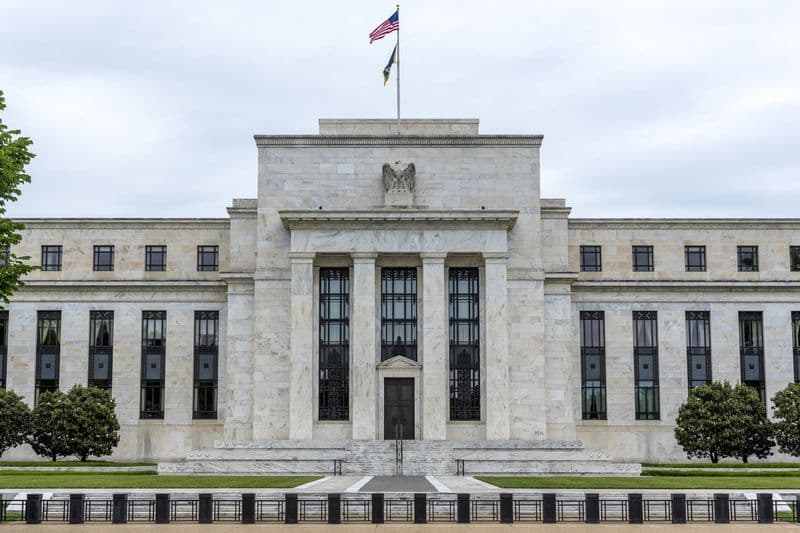
Throughout 2021, the Fed described inflation as 'largely reflecting transitory factors.' Core PCE projections of 1.8-1.9% were dramatically wrong — actual inflation hit 4.5-4.7%. Annual inflation spiked to a four-decade high of 9.1% in June 2022. Mohamed El-Erian called it 'the worst inflation call in the history of the Fed.' Chairman Powell eventually admitted the Fed was wrong.
“The Federal Reserve is lying about inflation being temporary. The massive money printing will cause persistent high inflation.”
What they said vs. what the evidence shows
“We expect inflation to be transitory — these are temporary price increases that will fade as the economy returns to normal.”
— Federal Reserve Chairman Jerome Powell · Jun 2021
SourceFrom “crazy” to confirmed
The Claim Is Made
This is the moment they called it crazy.
Throughout 2021, as prices began climbing at gas pumps and grocery stores across America, the Federal Reserve offered reassurance: don't worry, this inflation spike is temporary. It was a message repeated consistently by Fed leadership, including Chairman Jerome Powell, who described rising prices as "largely reflecting transitory factors" that would resolve on their own. The central bank's models projected core inflation would settle around 1.8 to 1.9 percent. Americans were told to be patient. The situation would correct itself.
It didn't.
By mid-2022, inflation had become the defining economic crisis of the Biden administration. Annual inflation spiked to 9.1 percent in June—a forty-year high that touched nearly every corner of the American economy. Prices for housing, food, and energy surged beyond what most households could absorb. The Federal Reserve's projections weren't just slightly off. Core inflation actually reached 4.5 to 4.7 percent, more than double what officials had predicted. The gap between the Fed's confidence and reality was staggering.
The dismissals had been widespread. When critics raised concerns about sustained inflation throughout 2021, Federal Reserve officials and their allies in media and academia largely dismissed worries as premature or unfounded. The dominant narrative coming from the nation's most powerful financial institution was one of certainty: this was temporary, driven by supply-chain disruptions and pandemic-related anomalies that would fade naturally. Investors, policymakers, and ordinary Americans were encouraged to trust the Fed's decades of experience and sophisticated modeling.
Get the 5 biggest receipts every week, straight to your inbox — plus an exclusive PDF: The Top 10 Conspiracy Theories Proven True in 2025-2026. No spam. No agenda. Just the papers they couldn't hide.
You just read "The Federal Reserve's claim that inflation was 'transitory' …". We send ones like this every week.
No one's said anything yet. Be the first to drop your take.
Confirmed: They Were Right
The truth comes out. Officially documented.
Confirmed: They Were Right
The truth comes out. Officially documented.
But the evidence mounted differently. Month after month in 2021 and into 2022, inflation persisted. It didn't ease as predicted. It accelerated. Economists who had warned about sustained inflation looked increasingly prescient, while Fed leadership looked increasingly out of touch with economic reality.
By late 2022, Chairman Powell himself acknowledged the error. In a striking departure from the Fed's earlier confidence, Powell admitted the central bank had gotten its inflation call wrong. The acknowledgment came too late for millions of Americans who had already experienced erosion of their purchasing power. Prominent economist Mohamed El-Erian, speaking to CNBC, called it plainly: "the worst inflation call in the history of the Fed."
That assessment carries weight. The Federal Reserve has existed for over a century. Its leaders include some of the world's most credentialed economists. Yet El-Erian's characterization suggests this wasn't merely a forecasting miss—it was a historic failure of institutional competence at a moment when Americans most needed accurate guidance.
What matters here extends beyond economics. The Federal Reserve operates with significant autonomy specifically because the public trusts its expertise and independence. Citizens and policymakers defer to Fed judgments on crucial matters affecting employment, savings, and financial security. When that institution confidently misdiagnoses a major economic problem, the consequences ripple outward. People make financial decisions based on official guidance. Policymakers calibrate responses based on Fed analysis. Markets price assets based on Fed projections.
The transitory inflation call revealed something sobering: even our most insulated, expert institutions can fail fundamentally. Not through malice, but through miscalculation. The question now isn't whether the Fed got it wrong—that's established. The question is how that failure should reshape how we evaluate institutional claims going forward.
Beat the odds
This had a 0.1% chance of leaking — someone talked anyway.
Conspirators
~100Network
Secret kept
1.7 years
Time to 95% exposure
500+ years