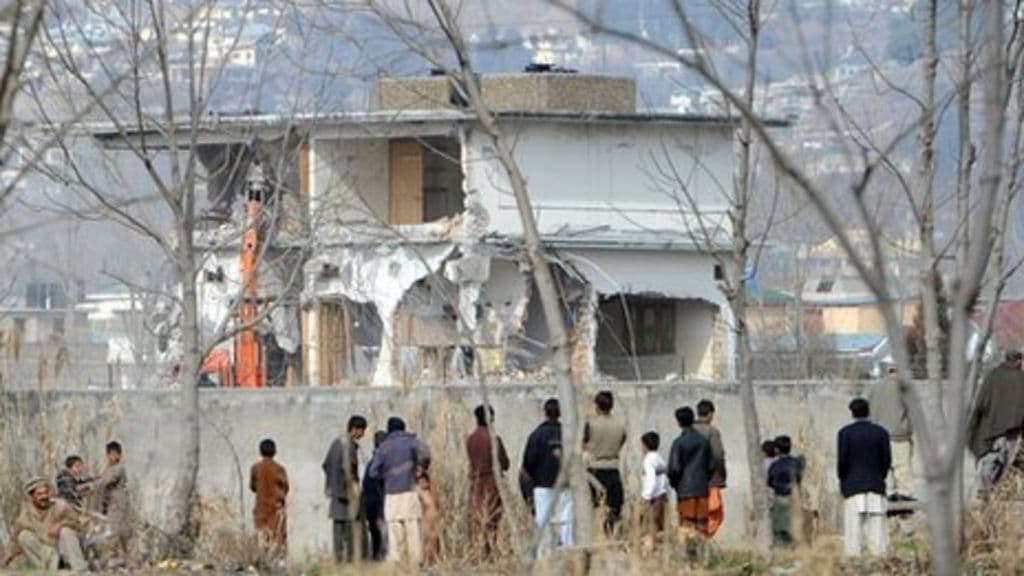
Osama bin Laden lived for years in a compound less than a mile from Pakistan's premier military academy in Abbottabad. Former ISI chief Asad Durrani admitted it was 'more probable than not' that Pakistani intelligence was protecting bin Laden. The compound had no internet or phone lines, 12-foot walls topped with barbed wire, and was custom-built for hiding someone -- yet Pakistan claimed complete ignorance.
“More probable than not ISI was protecting bin Laden.”
From “crazy” to confirmed
The Claim Is Made
This is the moment they called it crazy.
For nearly a decade, the world's most wanted terrorist lived in plain sight in Pakistan, just 875 meters from the Pakistan Military Academy in Abbottabad. When U.S. Navy SEALs stormed the compound on May 2, 2011, killing Osama bin Laden, it raised an uncomfortable question that Pakistan's government has never fully answered: how did the country's intelligence services not know?
The official Pakistani position was unequivocal. Pakistan's military and government insisted they had no knowledge of bin Laden's presence in their own country. Military spokesman Major General Athar Abbas told journalists that the compound's discovery came as a surprise, suggesting that bin Laden had somehow evaded their vast intelligence apparatus. The narrative was simple and deliberate: Pakistan was blindsided, a victim of deception rather than complicit in harboring the world's most notorious terrorist.
This denial began to crumble years later. In 2015, Asad Durrani, who served as chief of Pakistan's Inter-Services Intelligence (ISI) during the 1990s, made a startling admission. In an interview published by Al Jazeera, Durrani stated it was "more probable than not" that Pakistani intelligence had protected bin Laden. He didn't claim certainty, but he offered something perhaps more damaging: institutional credibility to the suspicion that had haunted the narrative since 2011.
The physical evidence supporting this claim is difficult to dismiss. The Abbottabad compound was no ordinary house. Its construction included 12-foot walls topped with barbed wire, a lack of phone lines or internet connections, and a design seemingly purpose-built for concealment. These weren't accidental features. The property's isolation and security measures mirrored what one would construct to hide someone of significant importance from detection. Neighbors reported the occupants were unusually secretive, never leaving the premises or allowing visitors.
Perhaps most telling was the compound's location itself. Abbottabad is home to Pakistan's premier military institution. Intelligence officers, military personnel, and security officials would have moved through the area regularly. The idea that a structure featuring such obvious security measures could exist for years without attracting attention from Pakistani intelligence strains credibility. In a country where the ISI maintains extensive surveillance capabilities, the claim of ignorance became increasingly difficult to sustain.
Get the 5 biggest receipts every week, straight to your inbox — plus an exclusive PDF: The Top 10 Conspiracy Theories Proven True in 2025-2026. No spam. No agenda. Just the papers they couldn't hide.
You just read "Pakistan's ISI Likely Sheltered Osama Bin Laden Near a Milit…". We send ones like this every week.
No one's said anything yet. Be the first to drop your take.
Durrani's qualified admission—that protection was "more probable than not"—reflects the genuine ambiguity that defines this claim. He didn't provide smoking-gun evidence of a formal ISI decision to shelter bin Laden. What he did was offer credible testimony from someone who knew Pakistan's intelligence system intimately, suggesting that institutional knowledge likely existed at some level.
This case matters because it illustrates how governments maintain plausible deniability even when evidence suggests otherwise. Pakistan received substantial American military aid during the war on terror, funding contingent on cooperation against extremism. The prospect that ISI officials might have known bin Laden's whereabouts raises questions about where loyalties lay and what hidden agreements may have existed.
More broadly, Durrani's admission reminds us that truth in international affairs rarely emerges immediately or cleanly. It surfaces incrementally, through whistleblowers, admissions made years after the fact, and the accumulated weight of circumstantial evidence that becomes too heavy to ignore. Public trust depends not just on what governments tell us, but on our willingness to examine what they leave unsaid.
Beat the odds
This had a 0.9% chance of leaking — someone talked anyway.
Conspirators
~200Network
Secret kept
11.2 years
Time to 95% exposure
500+ years