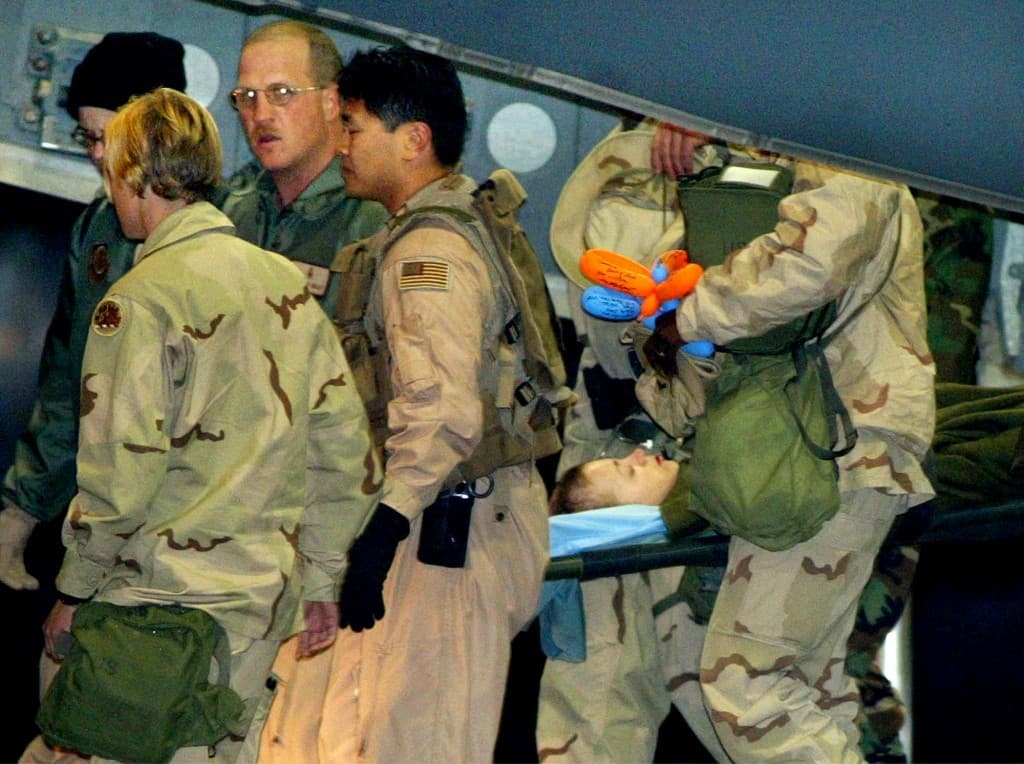
The dramatic rescue narrative was largely fiction created for media consumption. Lynch herself later testified that she never fired her weapon and the rescue was staged for cameras.
“Private Lynch fought fiercely against overwhelming odds before her heroic rescue”
From “crazy” to confirmed
The Claim Is Made
This is the moment they called it crazy.
When Private Jessica Lynch's convoy was ambushed near Nasiriyah, Iraq on March 23, 2003, the media narrative that emerged was almost too perfect: a young American soldier fighting off attackers with her rifle until she ran out of ammunition, captured by enemy forces, then heroically rescued by Navy SEALs in a dramatic midnight raid. The story captivated the American public during the early weeks of the Iraq War and was broadcast across major news outlets as proof of American valor and military prowess.
Within weeks, photographs of the rescue operation were released to the media. Video footage showed soldiers fast-roping from helicopters, weapons drawn, storming a hospital in tactical formation. It was compelling television—the kind of imagery that solidifies public support for military operations. Military officials briefed journalists on the details. The Pentagon's narrative was clear, consistent, and it worked.
What was officially denied or downplayed was any suggestion that the rescue had been staged or embellished. When questions began surfacing about inconsistencies in the story, Department of Defense spokespersons maintained that the operation unfolded exactly as reported. Critics who questioned the narrative were dismissed as unpatriotic or uninformed about the realities of combat.
But the truth, as it often does, emerged through the words of the person at the center of it all. Jessica Lynch herself became the primary source debunking the military's version of events. She testified before Congress that she had never fired her weapon because her rifle had jammed. She recalled losing consciousness after the convoy was hit and had no memory of fighting off attackers. Most critically, Lynch stated that the hospital where she was held was not under enemy control—Iraqi medical staff had actually been caring for her and preparing to return her to American forces.
Get the 5 biggest receipts every week, straight to your inbox — plus an exclusive PDF: The Top 10 Conspiracy Theories Proven True in 2025-2026. No spam. No agenda. Just the papers they couldn't hide.
You just read "Jessica Lynch rescue story fabricated by Pentagon for propag…". We send ones like this every week.
No one's said anything yet. Be the first to drop your take.
The rescue itself, Lynch explained, was conducted without resistance because there were no combatants present to resist. The soldiers rappelling from helicopters and conducting a tactical raid encountered no enemy fire, because there was no enemy there. The operation, while real in its execution, was fundamentally different from how it had been presented to the American public. The Pentagon had transformed a straightforward recovery of a wounded soldier into a cinematic special operations triumph.
Military officials later offered a muted explanation: they had simply reported what they believed to be true at the time based on available intelligence. The implication was innocent error rather than deliberate fabrication. Yet the timing and specifics of how the story was constructed—the convenient photographs, the detailed briefings, the heroic narrative arc—suggested something more calculated than mere confusion.
The Lynch case matters because it reveals how institutional narratives can override documented fact, especially during wartime when skepticism is often treated as disloyalty. A fabricated story about one soldier's capture and rescue doesn't change the fundamental facts of war, but it does change how the public understands those facts. When Americans learned the truth from Lynch herself, it damaged not just the Pentagon's credibility but the broader relationship between government institutions and the citizens they serve. Trust, once broken through deliberate narrative manipulation, is extraordinarily difficult to rebuild.
Beat the odds
This had a 0.8% chance of leaking — someone talked anyway.
Conspirators
~100Network
Secret kept
19 years
Time to 95% exposure
500+ years