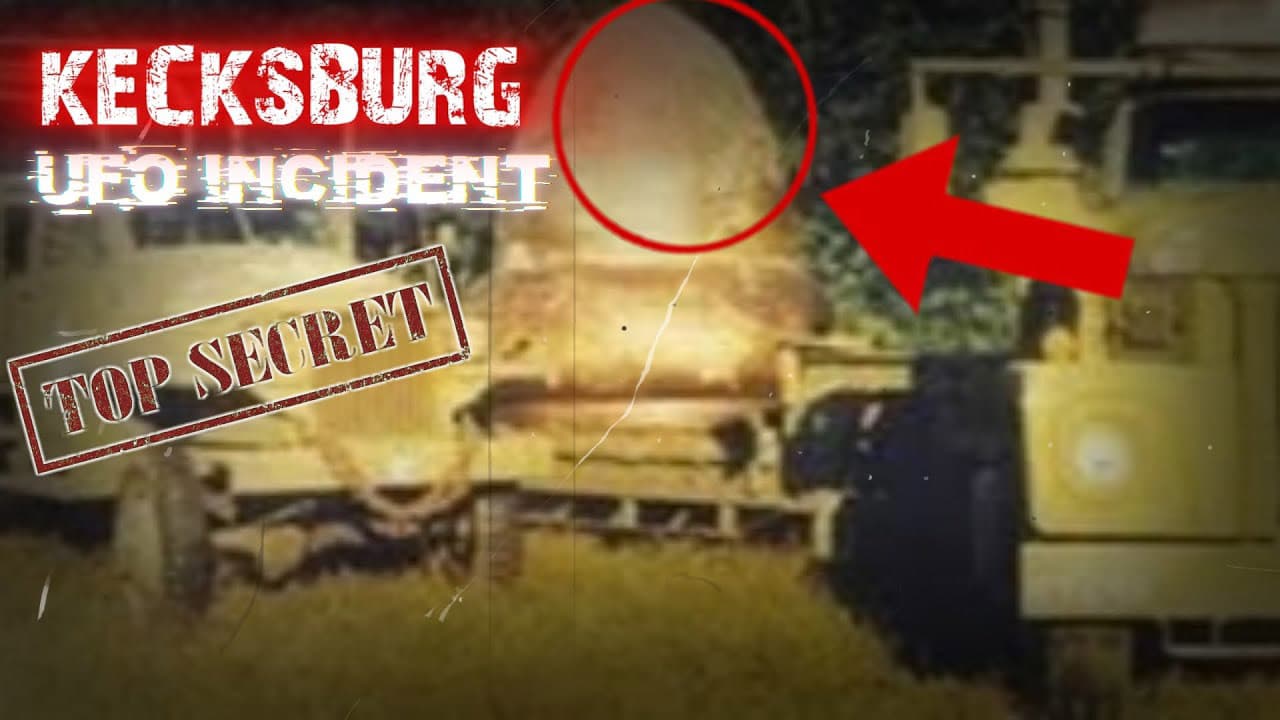
NASA finally admitted in 2005 they examined debris from the 1965 Kecksburg incident, after 40 years of denying any involvement or knowledge of the event.
“NASA has no records of any investigation or recovery operation in Kecksburg”
From “crazy” to confirmed
The Claim Is Made
This is the moment they called it crazy.
For four decades, NASA told the American public the same story: they knew nothing about the object that crashed near Kecksburg, Pennsylvania on December 9, 1965. Thousands of witnesses reported seeing a fireball streak across the sky that evening, followed by military personnel cordoning off a wooded area near the small town. Yet when asked about what happened next, federal agencies responded with consistent denials and a wall of silence.
The original claim came from eyewitnesses and local investigators who reported seeing military personnel, possibly from nearby military installations, removing a metallic, bell-shaped object from the crash site. Descriptions varied—some called it debris, others insisted they'd glimpsed an actual craft. What unified these accounts was the insistence that something had been taken, and that official channels were actively covering it up. Families living in the area had watched the recovery operation unfold, yet government agencies refused to acknowledge it had occurred at all.
For forty years, this remained in the realm of UFO folklore, the kind of story that conspiracy theorists cited but mainstream institutions dismissed outright. The official position was unambiguous: there was nothing to find at Kecksburg, no debris to recover, and certainly no military operation to cover up. NASA, the U.S. Air Force, and the Army each denied involvement or knowledge. The story accumulated footnotes in UFO databases but remained outside the bounds of documented fact.
What changed was a legal weapon ordinary citizens could wield. In 2005, litigation forced NASA to reconsider its position. When sued for records related to the Kecksburg incident, the agency could no longer maintain its decades-long denial. NASA admitted it had indeed examined debris recovered from the 1965 crash site. The admission came quietly, without fanfare or explanation of why the agency had spent forty years insisting otherwise.
Get the 5 biggest receipts every week, straight to your inbox — plus an exclusive PDF: The Top 10 Conspiracy Theories Proven True in 2025-2026. No spam. No agenda. Just the papers they couldn't hide.
You just read "Kecksburg UFO Crash Debris Was Removed by Military Despite O…". We send ones like this every week.
No one's said anything yet. Be the first to drop your take.
The significance of this reversal cannot be overstated. We are not discussing a minor detail or a bureaucratic misunderstanding. We are discussing a federal agency explicitly denying knowledge of an event it had actually investigated. The question of what the object actually was—whether extraterrestrial, classified military hardware, or something else entirely—remains unresolved. But that question becomes secondary to a more fundamental problem: institutions entrusted with public information chose deliberate deception over transparency.
This pattern extends beyond NASA. Government agencies routinely maintain official denials of activities they are later forced to acknowledge through litigation or declassification. The difference with Kecksburg is the specificity. Witnesses described something concrete happening at a specific location on a specific date. Those witnesses were right about the recovery operation, even if mysteries remain about what was recovered.
The implications for public trust are substantial. If citizens cannot rely on straightforward answers to straightforward questions about documented events, what basis remains for confidence in official explanations? The Kecksburg case demonstrates that persistence matters—that documents can be sued for, that denials can eventually be contradicted, that time itself can become an ally of transparency. It also demonstrates that without pressure, institutions will maintain false narratives indefinitely. The question is not whether they knew. NASA's 2005 admission proves they did. The question is why it took four decades and a lawsuit to admit it.
Unlikely leak
Only 11.4% chance this would come out. It did.
Conspirators
~500Large op
Secret kept
60.4 years
Time to 95% exposure
500+ years