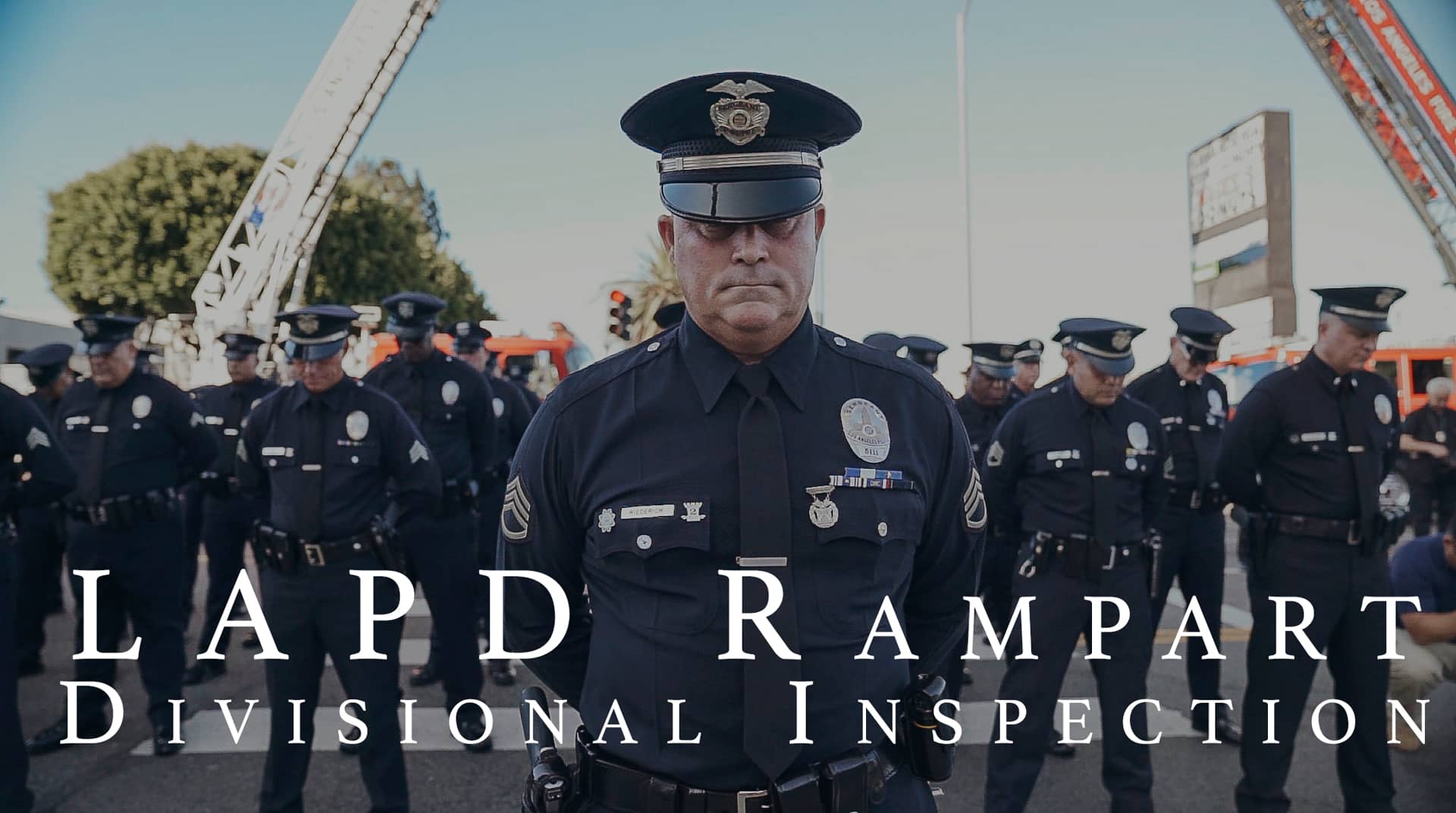
The LAPD's Rampart Division conducted widespread corruption including planting evidence, false arrests, and perjury. Officer Rafael Perez's testimony exposed hundreds of tainted cases.
“The LAPD maintains the highest standards of integrity and professionalism”
From “crazy” to confirmed
The Claim Is Made
This is the moment they called it crazy.
In 1999, the Los Angeles Police Department faced a reckoning that would shake public confidence in law enforcement across the nation. What began as an internal investigation into a single officer's misconduct would unravel into one of the largest corruption scandals in American policing, ultimately calling into question hundreds of criminal convictions.
Officer Rafael Perez worked in the LAPD's Rampart Division, a unit responsible for policing one of Los Angeles' most troubled neighborhoods. When investigators discovered that Perez had stolen cocaine from the department's evidence room in 1998, they expected a straightforward internal affairs case. Instead, they found something far more disturbing.
The official LAPD response at first minimized the scope of the problem. Department leadership initially characterized Perez as an isolated bad actor, suggesting his misconduct was an anomaly rather than a systemic issue. This narrative held for several months as the department conducted what appeared to be a contained investigation.
But Perez had other ideas. When facing criminal charges, he agreed to cooperate with authorities in exchange for a reduced sentence. What he revealed over months of testimony was staggering. Perez detailed a pattern of violence, evidence planting, false arrests, and perjury that involved multiple officers within his division. He described how officers would plant guns and drugs on suspects, fabricate witness statements, and then commit perjury on the witness stand to secure convictions.
The evidence that emerged vindicated what many in Los Angeles' marginalized communities had long suspected but couldn't prove. Court documents and internal LAPD records confirmed that Perez's allegations were credible. His detailed testimony could be cross-referenced against case files, arrest records, and the testimony of other officers who eventually corroborated his claims. Investigators found that the corruption extended beyond Perez to a broader culture within the Rampart Division that rewarded aggressive tactics without adequate oversight.
The scope became impossible to ignore. Over 70 officers were implicated in various forms of misconduct. Hundreds of cases came into question—convictions that may have rested entirely on fabricated evidence or perjured testimony. The city of Los Angeles ultimately paid out more than $125 million in settlements to victims who had been wrongfully convicted or abused.
What makes the Rampart scandal particularly significant is not just that it happened, but what it exposed about institutional accountability. The corruption was not hidden in shadows; it was embedded in the division's operational culture. Supervisors either looked the other way or actively participated. The system designed to catch bad officers failed repeatedly.
This matters today because Rampart was not an isolated incident. The scandal demonstrated that corruption can flourish even within professional police departments in major American cities. It showed how a culture of aggressive policing without meaningful accountability can normalize misconduct. And it illustrated how victims—predominantly poor and people of color—bear the real cost when institutions fail to police themselves.
The Rampart scandal remains a case study in why public trust in institutions requires transparency and genuine accountability, not reassuring statements from leadership.
Get the 5 biggest receipts every week, straight to your inbox — plus an exclusive PDF: The Top 10 Conspiracy Theories Proven True in 2025-2026. No spam. No agenda. Just the papers they couldn't hide.
You just read "LAPD Rampart Division Engaged in Systematic Corruption and F…". We send ones like this every week.
No one's said anything yet. Be the first to drop your take.