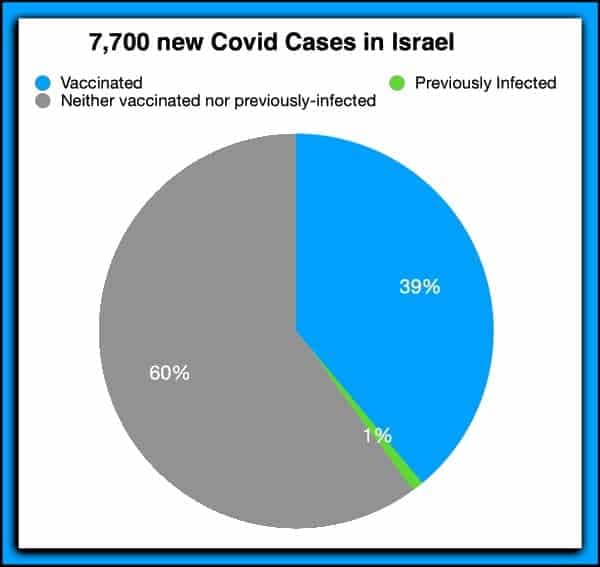
A large Israeli study found unvaccinated people with prior COVID infection were 6-13x less likely to get infected than vaccinated people without prior infection during the Delta wave. Multiple systematic reviews found no study could conclude superiority of vaccination over natural immunity with statistical confidence. Yet social media platforms censored posts about natural immunity, vaccine mandates made no exception for recovered individuals, and the topic was treated as 'anti-vax misinformation.'
“SARS-CoV-2-naive vaccinees had a 13.06-fold increased risk for breakthrough infection with the Delta variant compared to those previously infected.”
From “crazy” to confirmed
The Claim Is Made
This is the moment they called it crazy.
During the height of the COVID-19 pandemic, a fundamental question about human immunity became unexpectedly contentious: could prior infection protect you better than vaccination? A major Israeli study suggested yes. Yet this finding was met with institutional silence, platform censorship, and categorical dismissals from health authorities worldwide.
The Israeli research, conducted by one of the world's largest health maintenance organizations, examined infection rates across different immunity groups during the Delta wave. The data showed that people who had recovered from COVID-19 were 6 to 13 times less likely to become reinfected than vaccinated individuals without prior infection. This wasn't a fringe finding from an unknown lab—it came from rigorous epidemiological analysis of hundreds of thousands of patient records.
For context, this matters enormously. Natural immunity is the most ancient form of protection against infectious disease. Populations have relied on it for centuries before vaccines existed. The question wasn't whether vaccination was worthwhile—it was whether prior infection deserved recognition as legitimate protection, especially in policy decisions affecting people's livelihoods and freedom of movement.
Yet health agencies and governments responded not with scientific debate but with near-uniform dismissal. Vaccine mandates worldwide made no exception for previously infected individuals. In many jurisdictions, the naturally immune were required to vaccinate regardless of their prior infection status. Posts discussing natural immunity were systematically removed from social media platforms and labeled as "misinformation," even when citing peer-reviewed research.
Get the 5 biggest receipts every week, straight to your inbox — plus an exclusive PDF: The Top 10 Conspiracy Theories Proven True in 2025-2026. No spam. No agenda. Just the papers they couldn't hide.
You just read "Natural immunity to COVID was dismissed and censored despite…". We send ones like this every week.
No one's said anything yet. Be the first to drop your take.
Confirmed: They Were Right
The truth comes out. Officially documented.
Confirmed: They Were Right
The truth comes out. Officially documented.
This suppression stands in sharp contrast to what the scientific literature actually showed. Multiple systematic reviews examining the available evidence concluded that no study could confidently demonstrate vaccination superiority over natural immunity with statistical confidence. Some studies suggested natural immunity was equivalent to vaccination; others, like the Israeli data, suggested it was superior. The honest scientific answer was: this question deserves further study, not censorship.
The disconnect between the evidence and the institutional response raises difficult questions. Were authorities protecting public health, or protecting a particular narrative? If natural immunity had been acknowledged, vaccine mandate policies would have looked different. Recovered individuals could have made informed choices based on actual immunity status rather than blanket mandates. Some people lost jobs, educational opportunities, and access to services despite having documented protection superior to what policy acknowledged.
This case reveals something important about how public health institutions function under pressure. Rather than engaging with inconvenient data, they chose suppression. Rather than updating guidance based on emerging evidence, they reinforced existing positions. Social media companies enforced these positions through aggressive content removal, treating scientific discussion as dangerous misinformation.
Why does this matter now? Trust in health institutions requires more than good intentions—it requires intellectual honesty. When evidence contradicts official positions, the default response should be transparent engagement, not censorship. When scientists and researchers find themselves unable to discuss findings without professional consequences, the scientific process itself becomes compromised.
The Israeli study wasn't wrong because authorities dismissed it. Facts don't change based on institutional resistance. What changed was public understanding of how much space there actually is for dissent within established health hierarchies. For citizens trying to navigate complex medical questions, that's a crucial thing to know.
Beat the odds
This had a 0.1% chance of leaking — someone talked anyway.
Conspirators
~300Network
Secret kept
0.9 years
Time to 95% exposure
500+ years