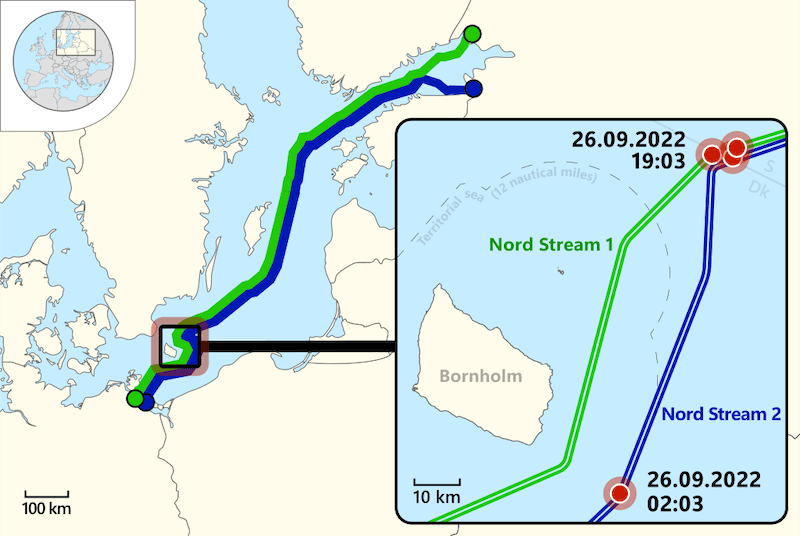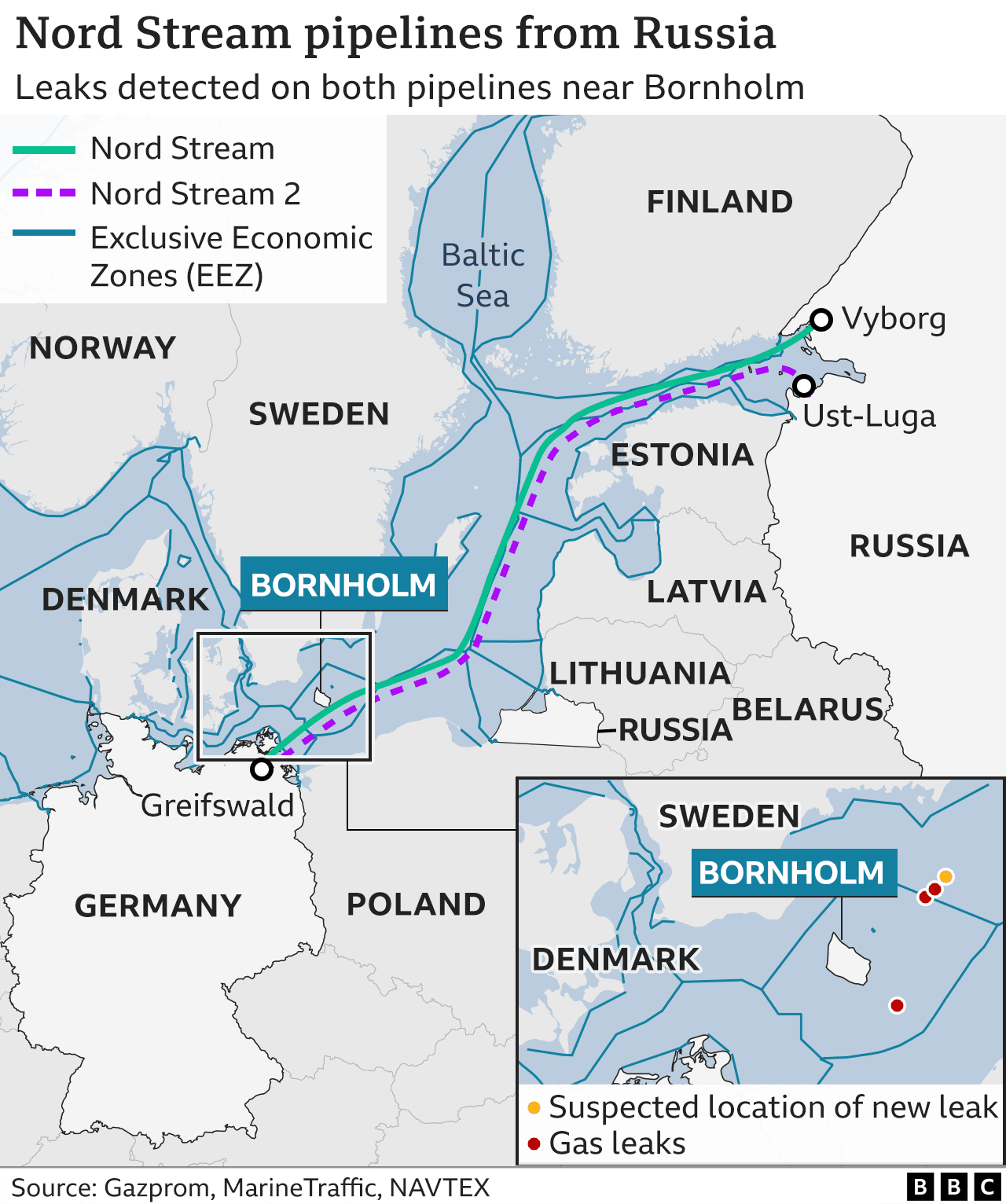
The September 2022 underwater explosions on 3 of 4 Nord Stream pipes were confirmed as sabotage. Germany issued a European arrest warrant for Ukrainian national Volodymyr Z. in August 2024. In August 2025, a Ukrainian man was arrested in Italy charged with leading the operation, using divers from the yacht Andromeda to plant explosives at 70-80 metre depth. Sweden and Denmark closed investigations without assigning blame; Germany's investigation remains open.
“The Nord Stream pipelines were deliberately sabotaged, and governments know who did it but won't say publicly.”
What they said vs. what the evidence shows
From “crazy” to confirmed
The Claim Is Made
This is the moment they called it crazy.
Confirmed: They Were Right
The truth comes out. Officially documented.
Confirmed: They Were Right
The truth comes out. Officially documented.
When underwater explosions ripped through the Nord Stream pipelines in September 2022, the incident immediately became one of the most consequential mysteries of the Ukraine war. Three of four major gas lines connecting Russia to Europe were damaged in coordinated blasts at depths of 70-80 meters in the Baltic Sea. Within days, the question wasn't whether something had happened—it was who had done it, and whether anyone would ever admit the truth.
Initial responses followed predictable patterns. Russian officials blamed NATO. Some Western observers suggested equipment failure or natural causes. Major media outlets treated the incident as an unsolved mystery, a geopolitical Rorschach test where every nation saw the culprit they expected to see. The prevailing narrative in Western capitals held that while sabotage seemed likely, definitive proof would probably never emerge. After all, the Baltic Sea keeps its secrets.
That consensus has fractured significantly over the past three years. In August 2024, Germany issued a European arrest warrant for Volodymyr Z., a Ukrainian national, marking the first official accusation of state-level involvement. The investigation deepened further when a Ukrainian man was arrested in Italy in August 2025, charged with leading the actual operation. Court documents and investigative reporting indicate that operatives used divers deployed from the yacht Andromeda to plant explosives along the pipeline routes.
What makes this claim "partially verified" rather than fully confirmed is the fragmented state of official investigations. Sweden and Denmark, both with Baltic jurisdiction, quietly closed their inquiries without assigning blame to any party—a diplomatic silence that speaks volumes. Germany's investigation remains open, suggesting authorities either haven't yet compiled a prosecution-ready case or are navigating complex political considerations. No Ukrainian government official has publicly acknowledged involvement, and no comprehensive independent audit of all evidence has been published in open sources.
Yet the pattern of evidence has become difficult to dismiss. An arrest warrant, an arrest, reported charges against a specific individual accused of leading a specific operation—these represent a meaningful shift from speculation to documented investigation. The operational details alleged by prosecutors (the yacht, the diving depth, the timeline) are specific enough to be either verified or refuted by technical evidence.
The significance extends beyond settling a three-year-old debate. The Nord Stream sabotage demonstrates how readily major geopolitical events can resist simple narratives. It shows that state actors may conduct significant operations without immediately claiming credit or accepting blame. And it illustrates the gap between what investigators may privately conclude and what governments will publicly acknowledge, especially when allied nations are involved.
For the public trust question, the lesson cuts both ways. Early skepticism of the "accident" narrative proved justified—the unofficial accounts that suspected deliberate action were vindicated. But the slow, partial emergence of accountability three years later also suggests that institutional mechanisms for establishing truth in wartime remain fragile. We've confirmed sabotage occurred, identified probable perpetrators, and documented some operational details. We still don't have full transparency about who authorized the operation, what the complete evidence shows, or why allied nations have handled the investigation so differently.
Get the 5 biggest receipts every week, straight to your inbox — plus an exclusive PDF: The Top 10 Conspiracy Theories Proven True in 2025-2026. No spam. No agenda. Just the papers they couldn't hide.
You just read "The Nord Stream pipelines were destroyed by deliberate sabot…". We send ones like this every week.
No one's said anything yet. Be the first to drop your take.