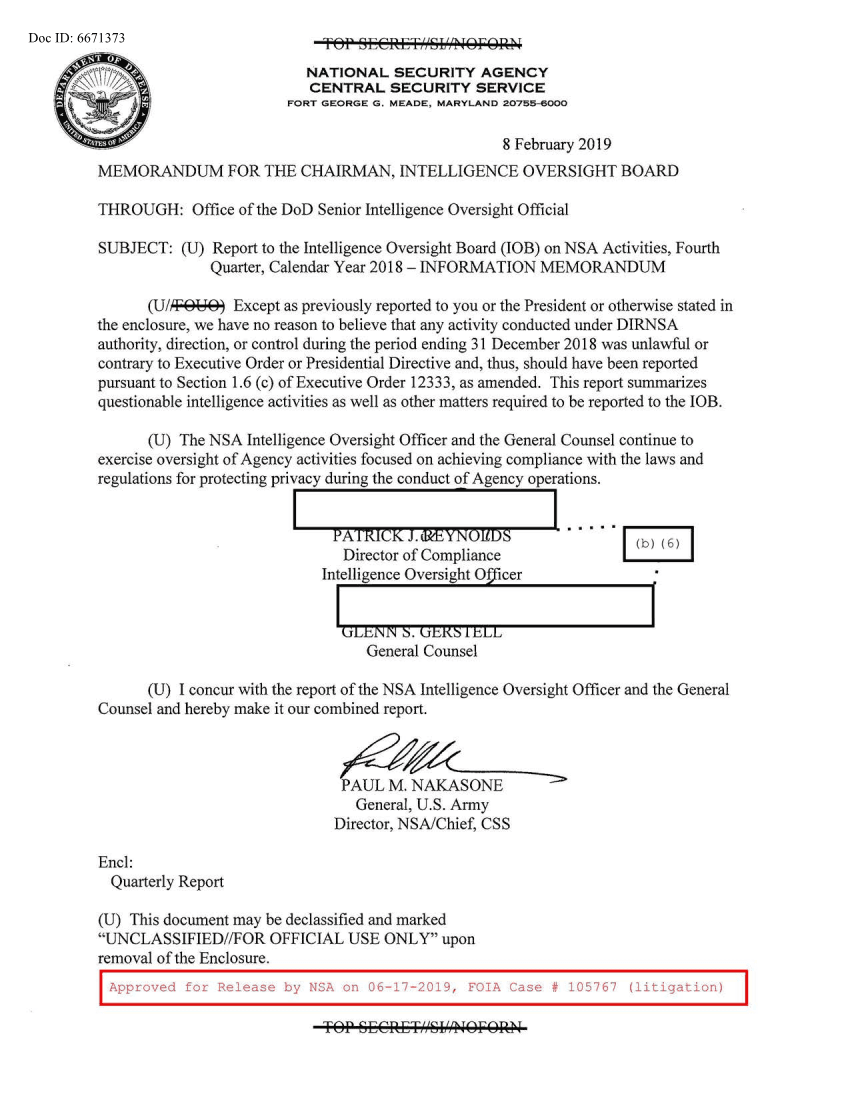
A declassified September 2021 federal watchdog report revealed the NSA continued to violate key rules limiting warrantless searches of Americans' electronic communications. The FBI was found to have improperly searched NSA data for information on Americans in hundreds of thousands of cases. The FBI also used small aircraft registered to fictitious companies with video and cellphone surveillance technology, observed over 30 cities in 11 states in just 30 days.
“The NSA has continued to violate the rules governing how it can search for and use Americans' communications collected without warrants.”
From “crazy” to confirmed
The Claim Is Made
This is the moment they called it crazy.
For years, privacy advocates warned that American intelligence agencies were routinely searching through private communications without proper legal authorization. Government officials dismissed these concerns as overblown. Then in September 2021, the government's own watchdog released a declassified report confirming exactly what critics had alleged.
The core claim was straightforward: the NSA had systematically violated its own internal rules designed to protect Americans from warrantless surveillance. These weren't theoretical violations or edge cases—they were documented, recurring breaches of the agency's established procedures.
When pressed on surveillance practices, intelligence officials had consistently maintained that their operations were tightly controlled and legally sound. The standard response suggested that if any violations occurred, they were isolated incidents caught by internal oversight mechanisms. The assumption built into official statements was that the system policed itself effectively.
The declassified federal watchdog report shattered this narrative. The document revealed that the FBI had improperly searched NSA databases for information on Americans in hundreds of thousands of cases. This wasn't a minor accounting error or a single rogue operation. The pattern was extensive enough to demonstrate systematic noncompliance with the rules meant to govern surveillance activities.
The same report exposed another program that had received little public scrutiny. operated small aircraft equipped with video surveillance technology and cellphone tracking devices over at least 30 cities across 11 states. During a single 30-day period, these planes conducted persistent surveillance operations across a wide geographic area. The aircraft were registered to fictitious companies, deliberately obscuring their true operator from the public.
Get the 5 biggest receipts every week, straight to your inbox — plus an exclusive PDF: The Top 10 Conspiracy Theories Proven True in 2025-2026. No spam. No agenda. Just the papers they couldn't hide.
You just read "Declassified reports show the NSA systematically violated it…". We send ones like this every week.
No one's said anything yet. Be the first to drop your take.
Confirmed: They Were Right
The truth comes out. Officially documented.
Confirmed: They Were Right
The truth comes out. Officially documented.
What makes this verification significant is not just that violations occurred, but that they were substantial enough to merit a federal watchdog investigation and detailed enough to be documented in declassified reports. These weren't allegations made by conspiracy theorists or activists operating on speculation. The government itself, through its internal oversight mechanisms, confirmed that its own agencies had repeatedly broken their own rules.
The implications extend beyond the technical violations themselves. The report demonstrates a gap between what intelligence agencies say they do and what they actually do. Americans are asked to trust that powerful surveillance systems will be used responsibly and legally. That trust depends on the assumption that when officials claim their operations are lawful and restrained, those claims reflect reality. When declassified documents prove otherwise, that foundation of trust cracks.
There's also the question of scope. If these violations were significant enough to document and declassify, how many other violations might exist in classified programs? The public only learns about surveillance practices when they're deemed safe enough to reveal. The violations that remain classified could be equally extensive or worse.
This case illustrates why skepticism toward official assurances about classified surveillance programs isn't paranoia—it's reasonable. The claim that American intelligence agencies were systematically violating their own surveillance limitations wasn't vindicated by circumstantial evidence or leaked documents. It was confirmed by the government's own declassified watchdog report. For citizens trying to understand what actually happens behind the closed doors of intelligence agencies, this verification matters. It suggests that questioning official claims about surveillance practices, rather than accepting them at face value, is justified.
Beat the odds
This had a 0% chance of leaking — someone talked anyway.
Conspirators
~200Network
Secret kept
0.5 years
Time to 95% exposure
500+ years